This article is part of Reset! Yearly Focus 2025: Reclaiming Spaces
Author: Dare Balogun
Vandelay Radio began as an act of defiance—an attempt to carve out space for sincerity, humour, and good music in a cultural landscape that felt sterile. What started as a bedroom broadcast in Swansea became a meeting point for people who cared less about performance and more about participation, connection, and joy. In reclaiming digital airwaves, Vandelay accidentally built a community that resisted what can be felt as forced professionalism and reminds us what shared culture can still feel like when it’s allowed to stay DIY. In a media sphere obsessed with scale, Vandelay’s story is one of taking radio back—not as a business venture, but as a living space for listening, conversation, and belonging.
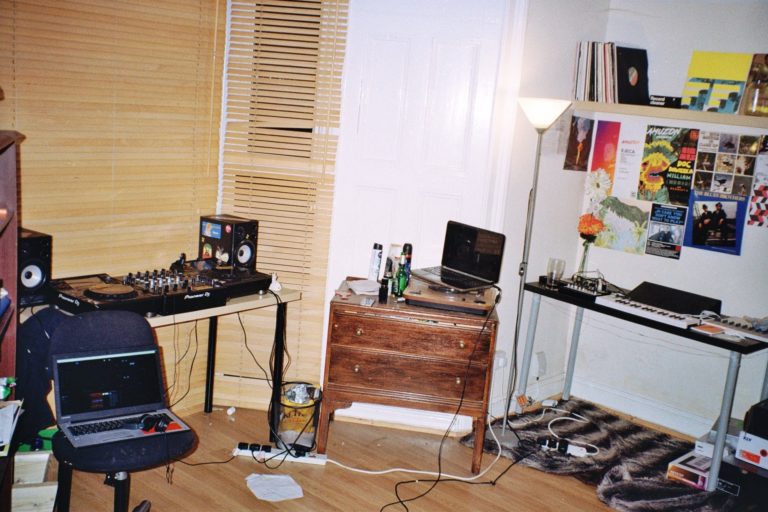
The first Vandelay Radio studio-bedroom. Swansea, Wales, 2018 — © Vandelay Radio
Once upon a time, in a land not so far away, there was an online independent radio station called Vandelay Radio.
Named after a fictional alias invented by the serial liar and latex salesman George Costanza of Seinfeld fame, Vandelay Radio started not from a noble artistic mission, nor from a carefully constructed community blueprint, but from two very human things. One: a complete lack of diversity in the music programming of Swansea, Wales. Two: spite. Pure, unfiltered, righteous spite after I lost the election to be part of the local university radio committee. That’s the truth. That’s the origin myth. There is no romanticised backstory. You are reading the whole mess in its rawest form.
From a Welsh University Room
We started in my bedroom. The only equipment was a laptop and a battered set of decks. We began broadcasting online, uploading playlists and mixes curated by a small team of people who genuinely believed that by broadcasting better music into Swansea, the universe would reward us. Promoters would book DJs who didn’t play the same Spotify top ten that students were being force fed weekly. Venues would suddenly say: “Wait, we can actually make people dance with music that is good.”
Before we proceed any further, it is essential to define what constitutes good music in towns like Swansea or, to be fair, the majority of university centred towns outside London. Good music refers to anything other than the mainstream slop spoon fed to students who don’t know any better. Good music is music that makes you feel something, think something, question something, dance uncontrollably to something. This is not subjective. This is not a matter of taste discourse. This is simple fact. When you compare the conveyor belt of mechanical, factory perfected pop against something with actual humanity, the difference is black and white.
Our original intention failed. Swansea remained Swansea. No mass enlightenment. No sudden cultural awakening. We were not invited to run the local nightlife scene. What happened instead was much stranger. The listeners came, but not from Swansea. They appeared from all corners of the internet. People who genuinely liked what we were doing. People who were, bafflingly, aligned with our ethos. Some were Seinfeld obsessives. Some were musical wanderers drawn to the randomness of our selections. It was bizarre. It was affirming. It was hilarious.
Back when Facebook functioned as a place where communities actually grew instead of a marketplace for conspiracy theories and your uncle’s political meltdowns, there were music groups dedicated to every niche of electronic music. Lengoland. Strictly Lo Fi. Melodic Diggers. These were spaces where people posted their homemade tracks, shared mixes, debated obscure IDs. There was no border between fan and artist. Everyone existed on one plane, driven by obsession rather than performance. It was in those groups that we found our first residents. They were passionate, weird, curious, messy, and interested in nothing except sharing music for the sake of it.
They played monthly. They played without ego. They played with an enthusiasm that would put many career DJs to shame. But we learned quickly that passion was not enough, because our inbox began to fill with people who wanted to play on the station despite being utterly allergic to the Vandelay sensibility. They loved the idea of being on radio. They did not love the idea of putting music before themselves. So we created an ethos.
“Don’t take us too seriously, you’d enjoy yourself more.”
Radio should be fun. DJing should be fun. Music should be shared because you love it, not because you want to climb an imaginary ladder or live out a fantasy of performing seriousness. We didn’t want aspiring professionals chasing validation. We wanted people who would rather talk to you about Seinfeld than their EP rollout strategy. And somehow it worked. Suddenly we had a roster full of jokers, thinkers, nerds, and brilliant selectors from across the world, all broadcasting from a bedroom in Swansea.
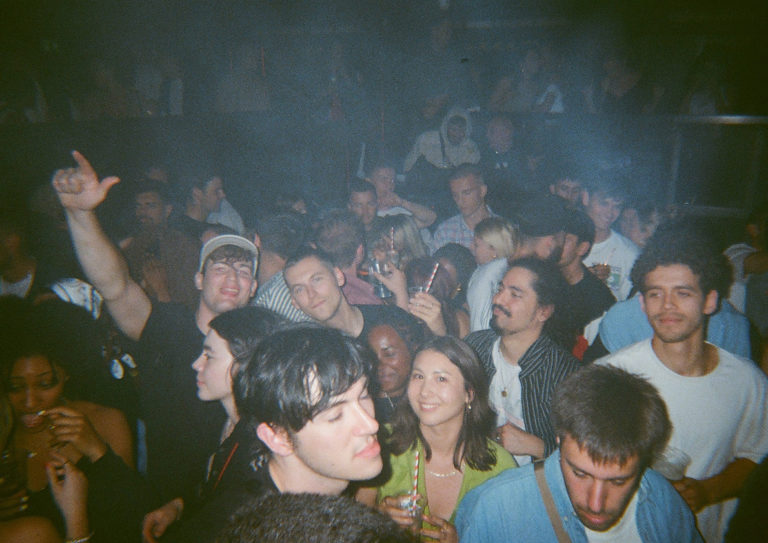
Vandelay's first sold out show in Peckham Audio, London, 2022 — © Vandelay Radio
The London Arena
We graduated and entered the London era. Coming to London felt like entering the mecca of dance music. We left Swansea thinking London would be everything Swansea wasn’t. A place where music culture lived in the open. A place where people actually cared. A place where community meant more than a marketing slogan. From the outside it looked like a paradise for anyone who loved music deeply.
But once we arrived, we realised the surface-level image was just that: surface. What hit hardest was not the egos. It was the silence. The refusal to speak plainly. The absence of critique. The fear of opinion. People played music but never said anything about the culture surrounding it. People participated in nightlife but never questioned the machinery behind it. People claimed to love community but behaved like individuals building personal brands.
The scene was upheld almost entirely by brand partnerships. Everyone spoke like a PR intern. No one had opinions because opinions could cost you sponsorship money. People pretended to care about social issues to boost PR, not to enact anything meaningful. Radio stations charged their residents to play. DJs acted like their existence was humanitarian work. There was such a profound sense of self importance that at times it felt like people were announcing new cures for global crises instead of mixing two tracks together in a dark room.
It was rotten. It was unsustainable. It was capitalism doing what capitalism always does to culture. And after the initial disgust wore off, we realised we could offer a counterpoint. A pressure valve. A place to escape the performance of community and actually experience community. In that atmosphere, Vandelay needed a pressure valve. A release. A place to speak freely.
So we started Vandezine!
Vandezine became our way of saying the things people whispered privately but never said publicly. It was a place where you could call out the absurdity of the scene, laugh at the self seriousness, poke at the contradictions, and actually talk about music, nightlife, culture, and the state of things without worrying who might unfollow you. It was opinion driven because opinions had gone extinct. It was humorous because humour had been replaced by self shaping. It was honest because honesty had become a liability. Vandezine existed because someone needed to say something. And if no one else would, we would.
But while we were writing the newsletter and yelling into the void, we were also doing the one thing we always trusted: playing music loudly in rooms where people actually cared.
Good Music Club was born out of necessity. A refusal to play the London game. We’d camp out at places like Next Door Records for hours, sometimes entire days, decks plugged in, records everywhere, wine on tap, the same chaotic jokes flying around like we were still in Swansea. It felt like the only corner of London where no one was pretending. Just people listening, dancing, arguing about music, recommending tunes, shuffling around racks of records. It felt human.
And then the club nights started. That’s when things got weird. Not internally, internally we were exactly the same idiots. But externally, people thought we’d “made it.” The majority of our shows sold out. Tickets disappeared instantly whenever we announced something. People spoke about Vandelay like it was this unstoppable cultural force.
From the outside looking in, we were ascending.
From the inside looking out, we were drowning.
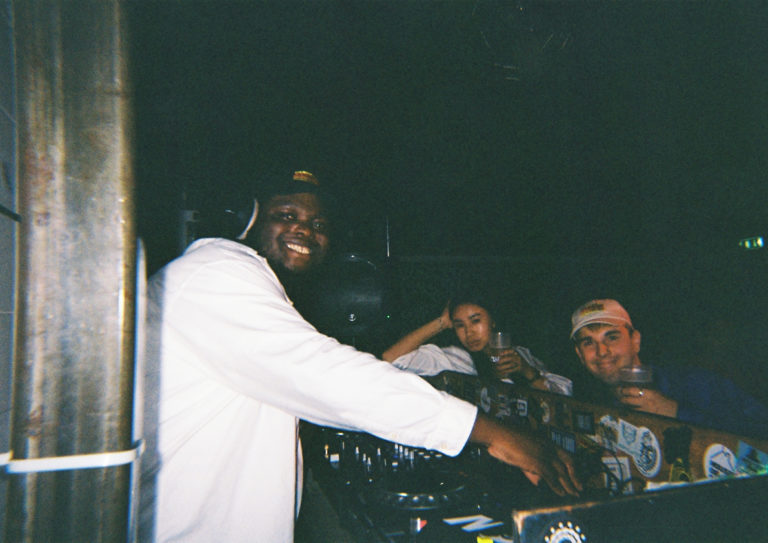
(Some of) the Vandelay Radio team in Grow, London, 2023 — © Vandelay Radio
Being Sustainable?
Because here’s the part people never see: we weren’t making any money. Not real money. Not sustainable money. Just London money, the kind that evaporates before it hits your account.
Every sold out night came with a hidden bill: artist fees, equipment, venue hire, promo, travel, everything. We wanted to pay people properly, and we did, because our ethics weren’t negotiable. But that meant we often walked away with nothing. Some nights we even walked away with less than nothing.
The irony was painful: the more successful we became, the more unsustainable it got.
London rewards the illusion of scale, not the reality of running something properly. And because we were stubborn, idealistic, and allergic to compromising the ethos, the pressure kept mounting. Audience growing. Roster growing. Reputation growing. Demand growing. But the infrastructure? The finances? The sustainability? Absolutely not.
We were becoming “a thing,” and it was killing us. And that’s exactly the moment Vandezine shifted from a side project into a lifeline, the one place where we could tell the truth about everything the rest of the scene pretended not to see. The ego, the hypocrisy, the mythology, the nonsense. It kept us grounded when everything else was trying to lift us into a version of success that didn’t actually exist.
After a few years of running around London, doing shows, writing newsletters, hosting Good Music Club, filling rooms we had no business filling, and generally convincing people we had some kind of masterplan, something shifted. The more our events grew, the more people seemed to project a level of seriousness onto Vandelay that had nothing to do with how we operated. Suddenly there were expectations, and not the fun kind, the grim, structural, administrative ones. People started asking for brand decks, partnership proposals, multi-year visions. We were being treated like an organisation rather than what we actually were: a bunch of people who loved music, enjoyed being unserious, and accidentally built a platform people cared about.
And with that came an uncomfortable truth, running Vandelay at that scale simply wasn’t sustainable for us. Not emotionally, not financially, not structurally. We weren’t making money. We were barely covering costs. Every “successful” night came with the financial reality of being in London, where breaking even is treated like a luxury reserved for hedge funds. The pressure to grow, to capitalise, to act like a “proper” station, was becoming suffocating. We found ourselves doing more admin than radio, more pitching than playing, more strategising than laughing, and that was the exact opposite of why we started any of this.
So we stopped.
Not because we wanted to, but because continuing meant becoming something we were never supposed to be. We went on hiatus, thinking it would be a quiet, dignified fade into the background where we could reassess privately. Instead, the industry responded like we’d been dramatically killed off. Suddenly we were being written about everywhere. Titles that ignored our emails for years finally found their enthusiasm, except it wasn’t enthusiasm for the work, it was enthusiasm for the collapse. It genuinely felt like people were covering our failure with more energy than they ever covered our existence, which is both hilarious and depressing in equal measure.
There was something uncomfortable about watching people publicly mourn a thing they never supported when it was alive. But it also clarified everything for us. The hiatus wasn’t the end; it was the first time we’d been able to see Vandelay clearly without the distortion of other people’s expectations. We realised that if we were ever going to bring the station back, it couldn’t be on the terms London tried to impose on us, the endless grind for partnership money, the self-commodification, the forced growth. It had to be on our terms. The original ones. The simple ones. The fun ones.
So now we’re on hiatus, not out of defeat but out of necessity, rebuilding slowly with the intention of returning in 2026 only doing work we actually want to do, not work we feel obliged to do in order to appear functional or “serious.” If it doesn’t feel like Vandelay, genuinely Vandelay, we’re not touching it. The point is no longer scale or optics or being perceived as an institution. The point is to only make things that feel good, honest, human, funny, and rooted in the same instinct that made us start this in the first place.
So please don’t take us too seriously, you will enjoy yourself more.
Published on December 16th, 2025
About the author:
Dare Balogun is the founder of Vandelay Radio, an independent online radio station. He works across radio, writing, and music, with a focus on community, humour, and resisting the over-seriousness of contemporary music culture.