Author: Salomé Duhoo
Across Europe, the independent cultural sector is facing an existential threat as public funding contracts under the pressure of conservative austerity agendas. Recent decisions in Berlin and Nantes mark a turning point: in both cities, drastic regional budget cuts have struck at the heart of non-profit cultural networks that nurture social, cultural, and artistic experimentation. What seemed a shared European commitment to cultural pluralism is now at risk of unraveling, as these precedents reveal a widening political rift between institutions and grassroots cultural scenes.
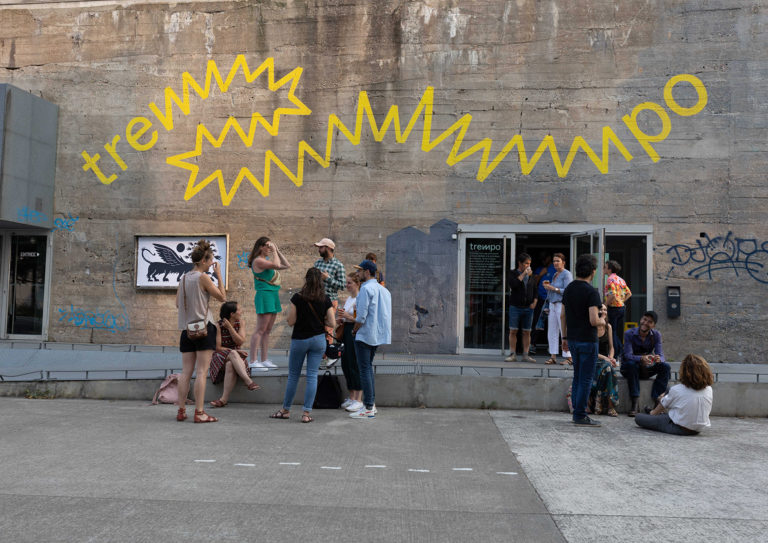
Trempo tribute to One hit wonders. Nantes, France – © Romain Charrier
Across Europe, many public bodies, from national Culture Ministries to city councils, are seeking to decrease funding for non-profits and civil society organisations.
This trend presents several concerns for the independent cultural sector, since these organisations traditionally balance activities that are lucrative (e.g. ticket sales revenues) with community-oriented projects. The latter cannot have profit as their main goal if they are to truly benefit the groups they aim to protect. Funding cuts weaken this second set of actions, which happens to have a lasting impact on the entire field. For example, when amateur practice becomes unaffordable, it affects the whole up-and-coming generation of professional artists.
At the end of 2024, two cities were severely affected at a regional level: Berlin, the capital of Germany, and Nantes, the largest city in western France. The state of Berlin announced that €130 million in funding for culture had been cut. Meanwhile, Christelle Morançais, president of the Pays de la Loire region, whose capital is Nantes, abruptly announced at the end of 2024 that the region would reduce the funding to cultural organisations by 73% in 2025.
France and Germany are usually considered as leading countries in terms of European integration and cooperation. However, cuts to public funding for independent culture in both countries threaten diversity and dialogue within European societies, ultimately undermining the European Union’s social and cultural integration project.
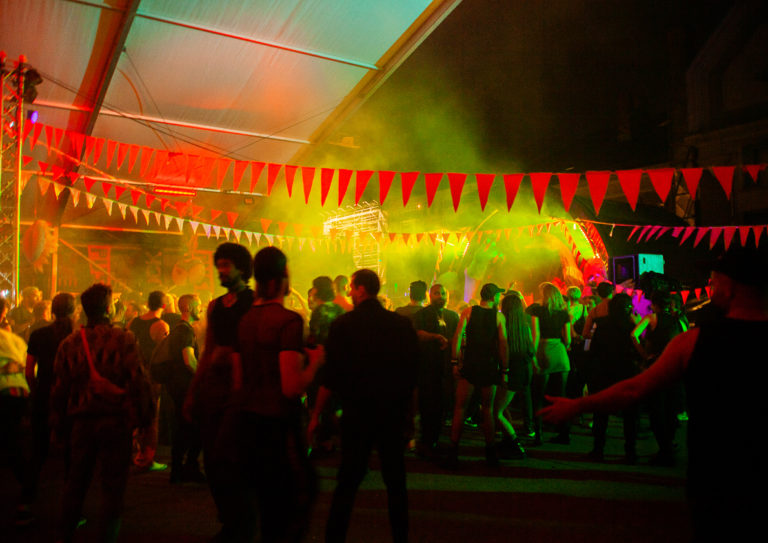
Buttons, TDC21 – © Andrea Rojas
Berlin’s Culture and Nightlife Against Institutional Censorship
For decades, Berlin has been a symbol of alternative and countercultures. One of its most iconic cultural symbols is its world-famous club scene, but the city is also home to a wide range of artistic practices: music, visual arts, performing arts, or cinema.
At the end of 2024, the state of Berlin (Berlin is both a city and a regional administrative unit) announced that it had to make savings of €3 billion on its global budget, including €130 million for the cultural sector, i.e. a 12.5% cut in funding for culture. These cuts have primarily affected DEIA (diversity, equality, inclusion, and accessibility) programmes led by independent cultural actors in Berlin. Indeed, DEIA programmes focus on marginalised and economically fragile population segments. To be effective, they need to be implemented in the long-term, which requires an investment that many independent players cannot afford without institutional support.
Clubcommission Berlin is one of the organisations representing the local Berlin cultural scene. Founded in 2001, it is an association dedicated to club culture, with a focus on advocacy and building network for clubs, artists, and club cultural organisers. With more than 350 members, it develops new formats and strategic planning and liaises with political actors on topics related to club culture. Emiko Gejic, Clubcommission’s spokesperson, explains that in Berlin’s cultural sector several programmes including support to refugees, the queer community, and other marginalised groups have been shut down. Many projects for social innovations in Berlin’s clubs have been affected and will not be renewed. For example, the Clubtopia project, helping clubs to achieve ecological transition, has come to an end in 2024 due to these budget cuts. This is despite Berlin’s claims to shifting towards carbon neutrality.
Until 2023, the state of Berlin was administered by a left-wing coalition, but it shifted to a coalition led by conservatives from the Christian-Democratic Union (CDU). This shift brought forward Joe Chialo, the man who engineered the drastic €130 million cuts to Berlin’s cultural funding. Former Universal manager, he was until May 2025 Berlin’s Senator for Culture. In this role, he was responsible for implementing budget cuts. He has been criticised by Berlin’s cultural players not only for these cuts, which will have a lasting impact on the sector, but also for the way he handled them. Indeed, it is quite standard for a conservative party to cut public funding for social and cultural projects. Nevertheless, Chialo was pointed out for continuing with the cuts without any intention or effort to include the independent scene in negotiations to compromise. He claimed to want to maintain Berlin’s “cultural and artistic excellence,” which for him means supporting established, institutional theatres and museums at the expense of independent actors.
He also sparked outrage among independent players by attempting to enforce an “anti-discrimination law” (Antidiskriminierungsklausel) for artistic productions, in which the definition of antisemitism raised concerns about potential weaponisation to silence those voicing concerns about the ongoing genocide and humanitarian crisis in Gaza. Indeed, since October 7th, 2023, Western conservative forces have attempted to silence people and organisations criticising the situation in Occupied Palestinian territories, where numerous war crimes have been documented, by deeming any criticism against the Israeli government as antisemitic.
Even though Joe Chialo resigned in May 2025, Emiko Gejic feels like his mandate as Senator for Culture in the state of Berlin instigated heightened conservative backlash, political pressure, and institutional censorship and will have a lasting effect on Berlin’s cultural scene.
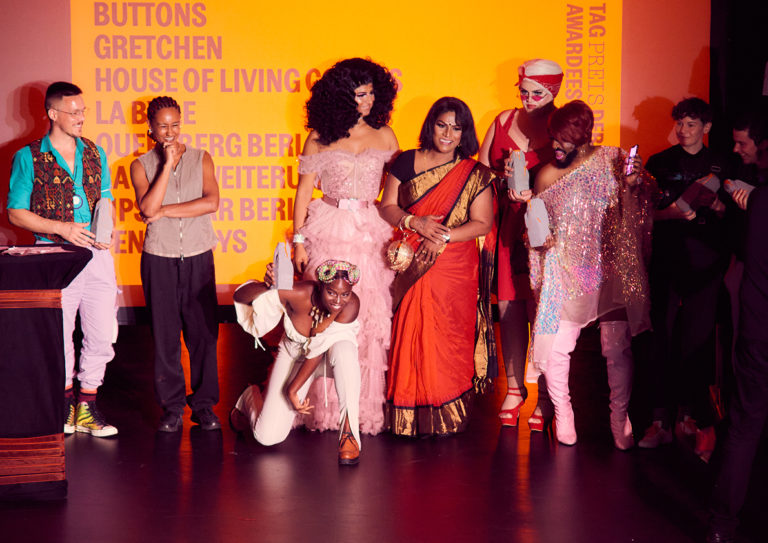
Club Commission Awards, September 21st, 2015 – © Club Commission
Outcry in Nantes: A Conservative Assault on the Cultural Sector As a Political Symbol
Nantes is led by a political coalition committed to supporting cultural organisations. However, the blow that hit the city came from the regional council, which is far more conservative and economically neoliberal.
It all started at the end of 2024 when the French government presented an austerity budget and demanded that regional budgets be significantly lowered. Christelle Morançais, the president of the Pays de la Loire region, seized this opportunity to exceed what was asked of her: instead of cutting €40 million off her region’s annual budget, she presented a budget with €100 million cuts, including a 73% decrease in funding for cultural organisations. In practice, this meant that she withdrew all funding that the region was not contractually obliged to provide (through pluriannual partnership conventions, for instance). This decision was a blow to all cultural organisations in the region. In November 2024, public funding for culture in France was already being cut across the board due to the policies introduced by Emmanuel Macron with the intention of reducing the budgets of local administrations. These massive cuts were added to several funding contractions from institutional partners at all territorial levels.
Trempo is a leading independent cultural organisation in Nantes and a “space for up-and-coming music” dedicated to amateur, pre-professional, and emerging musicians. This key player in the city endured substantial shrinkage in its 2025 budget. Overall, the organisation lost €157,000 in public funding. Not only did the region rescind a €135,000 grant, but the district also reduced its budgetary contribution to the organisation’s activities by €22,500. Olivier Tura, Trempo’s director, shares what it concretely means: Trempo has had to make four employees go redundant, and reorganised its activities by reinforcing its lucrative activities, to bolster its financial resources. Meanwhile, a smaller share of resources is now allocated to strategic support to pre-professional and young professional musicians, a core of Trempo’s mission since its creation.
Olivier Tura emphasises that “continued education is one of the region’s required jurisdictions.” And it is Trempo’s programmes that help to achieve this goal. As such, these funds were in no way a handout on public funds, as Christelle Morançais has implied, but a partnership between institutions and independent organisations to ensure public services. In that perspective, Trempo had proven to be a trustworthy partner. For 15 years, their grant was renewed each year, a sign of trust and cooperation that is now gone.
What makes this situation specifically worrying is the violent way in which the decision was carried out. As stated before, this decision was sudden: Olivier Tura explains that as a significant organisation in the region, Trempo is regularly in touch with the institutions. He shared that during an informal discussion in September 2024, the cut to Trempo's grant was not discussed at all. Nevertheless, it was cancelled outright two months later. This modus operandi made appealing the decision very difficult.
Secondly, and by far more threatening, is the rhetoric used to justify this decision. Wanting to decrease public funding in order to reduce national debt is traditional right-wing rhetoric. However, Christelle Morançais specifically targeted the independent cultural sector, which accounted for only 2% of the regional budget, yet was subject to more than 25% of the budget cuts. She justified this decision by labelling independent cultural actors as “radical-left public funds junkies.” This discourse raises suspicions about an entire professional field and calls into question its social utility.
Olivier Tura points out that this type of communication profoundly affected Trempo’s employees. It was one of the topics he chose to touch on when he discussed the current struggles with Alexandre Thébault, the region’s counsellor for culture.
Although the French Republican party has traditionally ruled over the Pays de la Loire region, there has recently been a shift in position from traditional Christian democracy to a reactionary, ultra-conservative right. Alexandre Thébault is a symptom of this shift: he started out in politics in the anti-gay marriage organisation Sens Commun and has ties with Pierre-Édouard Stérin, a French billionaire who has recently made himself known for funding far-right and Christian conservative cultural and media initiatives in an attempt to reinforce the far-right, civilisational discourse in public spaces. Therefore, his advocacy for cutting public funding for culture does not seem to be coincidental.

Trempo's Summer Camp Party, July 3rd, 2025 — © Margaux Martin
A European Reactionary Wave Is Putting the Independent Cultural Sector at Risk
It appears that the situations in Nantes and Berlin are quite similar: both cities are known for their dynamic cultural scenes, but have experienced massive budget cuts initiated by a context of reduction in public funding, which have been exacerbated by a generalised right-wing distrust of independent cultural players.
This similarity is both symbolic—France and Germany are considered the driving forces in the European Union—and symptomatic of the rise of illiberal discourses against civil society across Europe, driven by the rise of far-right movements, gentrification, and increased inequalities in EU countries. For instance, the new right-wing municipality in Palermo is looking into handing over spaces at the Cantieri Culturali alla Zisa to private investors instead of non-profit organisations. In Slovakia, the Culture Minister has been actively dismantling the independent cultural sector since 2023, in a manner similar to Viktor Orbán's Hungary. Of particular concern is that the attacks in Nantes and Berlin came from the ‘traditional’ and republican right wing, which is becoming increasingly influenced by far-right rhetoric and ideologies. This means that the ‘cordon sanitaire’ has been broken or seriously injured to say the least. What solutions exist for independent cultural actors in such a context? Emiko Gejic explains that Clubcommission Berlin designed working groups to develop alternative funding and to promote the importance of the independent art scene, with the aim of building a movement of cultural resistance. Meanwhile, Olivier Tura believes that the independent cultural sector is in the midst of a transition regarding the importance of cultural policies. However, he also thinks that we, as cultural players, must fully embrace this transition as a political fight in order to further reflect on and implement the values that we claim to uphold and defend.
Even in such a grim context, the European independent cultural sector has proven its resistance and determination not to back down. Many political counter-discourses have emerged recently, particularly online. The Cartocrise website lists all the French organisations facing budget cuts, highlighting the effects of regional policies. In Slovakia, the OK! platform led to the creation of the Bratislava Declaration, which is a powerful call to EU leaders to protect independent cultural organisations from far-right backlash. A harsh political battle lies ahead, but community and solidarity offer an alternative perspective.
Published on December 9th, 2025
About the author:
Headquartered in Rennes, Brittany, Salomé Duhoo is the head of Sieben Kulture. She is an administrator, specialised in live music and performing arts. She advises theaters, artistic companies, festivals, and cultural venues on financial and legal management, as well as CSR policies (equality, inclusion, sustainability, etc.) in cultural events.