Author: Manon Moulin
Renewed annexation threats from Donald Trump have thrust Greenland into the geopolitical spotlight once again, placing the island between colonial legacies and contemporary power plays. Beyond diplomatic tensions and military posturing, this escalating pressure is reverberating through Greenland’s cultural and media landscape, intensifying long-standing debates about autonomy, representation and infrastructure. The situation raises questions about how external ambitions and overwhelming international attention are reshaping the realities of Greenland’s independent cultural sector, and how artists and cultural workers are responding.
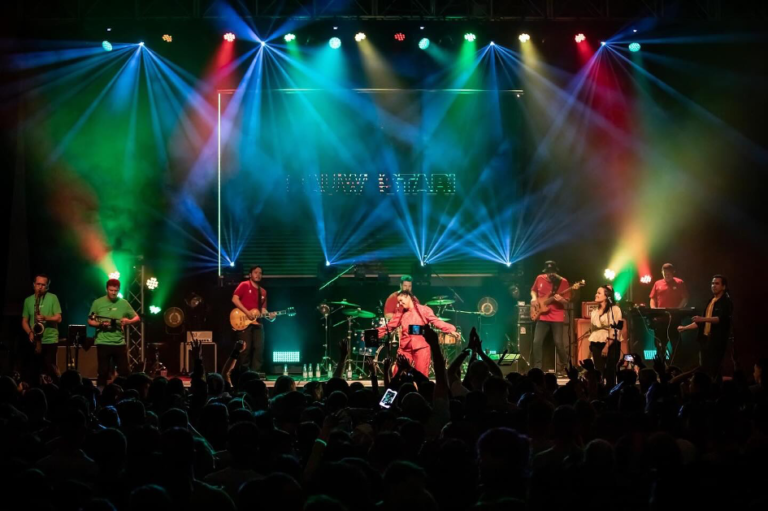
Greenlandic reggae band Sauwestari at Akisuanerit Festival. Jonas Lundsgaard Nilsson plays the drums – © Sauwestari
Donald Trump has expressed interest in Greenland on various occasions throughout his two terms in office, from his desire to “buy” the island during his first administration (2017-2021), to threats of seizing it militarily in his second term (2025-2029). These threats have put Greenland in the spotlight, raising questions about the colonial rule and interests it has been subjected to over the years, as well as the resistance of the Greenlandic people and their cultural players.
A Historically Disputed Territory
Greenland has been an autonomous territory of the Kingdom of Denmark since 1814, although it underwent colonisation from the 10th century onwards. Since then, the largest island in the world has been at the centre of many colonial disputes involving European powers such as Norway and Denmark, as well as the US. After briefly ruling the island during World War II to substitute Nazi-dominated Denmark, the US returned it to Copenhagen while retaining extended military bases in Greenland. Unfortunately, the island has never gained independence. In 1953, Denmark refused to enter a decolonising process under incentives from the UN and instead transformed the island’s status as a colony into an official region of Denmark. Over the years, Greenland has gained some guarantees for its autonomy, such as Greenlandic representation in the Danish parliament and a local government.
However, as in all colonial contexts, the integration of Greenlanders into Danish society has been difficult. Denmark-based with Greenlandic roots composer and musician Anja Tietze Lahrmann talks about the stigmatisation of Greenlanders living in Denmark and expands on the concept of cultural hybridity as “a restless sense of not belonging in Greenland or Denmark” (experienced by Greenlanders living in Denmark, including her mother from the 1970s). This feeling of “homelessness” is shared in lasting colonial contexts—that some may be calling ‘postcolonial’ with an unclear definition of what ‘post’ is here—and highlights the lack of consideration for local realities and culture, both on and off the island.
And the colonial outlook on Greenland has taken a new turn in recent years. Indeed, since Trump returned as US President in January 2025, he has made it clear that he wants to take over Greenland, by force if necessary. While the threat may originally have seemed ridiculous, its repetition, coupled with Trump’s clear violation of international law in Venezuela by kidnapping Venezuelan President Maduro in January 2026, has instilled fear in Greenland, as intimidation now appears to be a more serious prospect.
“What worries me most is not one statement in itself, but the repetition. When ideas like this are repeated often enough, they slowly stop sounding unthinkable,” says Jonas Lundsgaard Nilsson, musician and Head of Culture in Kommuneqarfik Sermersooq. While the situation has cooled down somewhat as talks have begun between Greenland, Denmark and the US, instability remains a defining feature of US foreign policy.
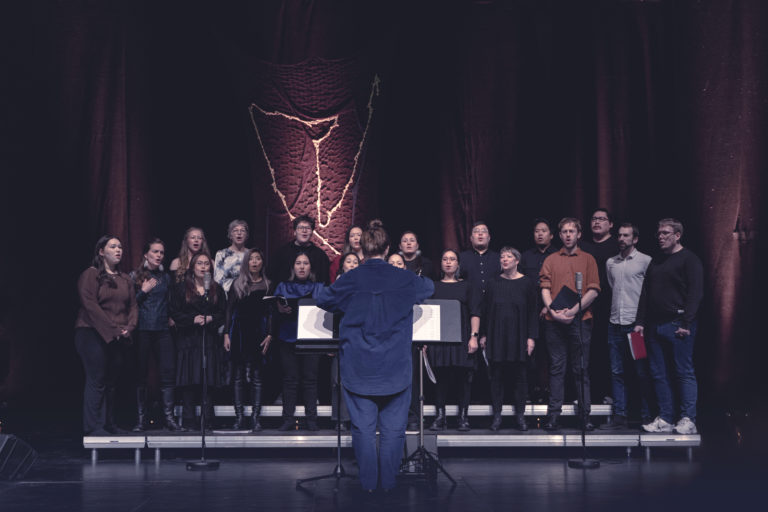
Greenlandic choir Ingiulik performing “Det Yderste Hav" taken in Nuuk cultural centre Katuaq, February 2025 at the release of the album — © Daniel Johnsen
Overwhelming Attention
These repetitive attacks have, of course, drawn a lot of attention to Greenland. “The media coverage is and has been monumental,” says Anja Tietze Lahrmann. On the one hand, this extensive reporting has allowed Denmark and other European countries to recognise the severity of the situation. Consequently, an EU office has opened in Nuuk, which is seen as an “important and very concrete signal [that] several European countries have been clear in their backing of Greenland,” according to Jonas Lundsgaard Nilsson. France and Canada have also opened consulates on the island to demonstrate their solidarity, as Anja Tietze Lahrmann points out.
However, the media coverage has also given rise to feelings of “disbelief, anger, fear, and fatigue among Greenland’s population”, as Jonas Lundsgaard Nilsson explains. Both interviewees emphasise that Danish and international coverage has not centred Greenland and its people in the discourse. “Prejudices and limited knowledge of Greenland’s colonial history still heavily dominate the common narrative among some people,” says Anja Tietze Lahrmann. Jonas echoes this sentiment, explaining that there is “a tendency to speak on behalf of Greenland instead of amplifying Greenlandic voices.” This sensationalism, which has dominated for over a year, shows that the island is seen as an object rather than a subject—the colonised are then “something to be claimed, negotiated or taken,” rather than “a place where people live,” as Jonas Lundsgaard Nilsson explains. He continues, explaining that “for many Greenlanders, this is not a new story, but a recurring reminder of how external powers tend to talk about Greenland rather than with Greenland.”
The dual consequences of the increased attention on Greenland have, of course, also been felt by the island’s cultural scene. This represents a small ecosystem with a “strong commitment and local anchoring,” according to Jonas.
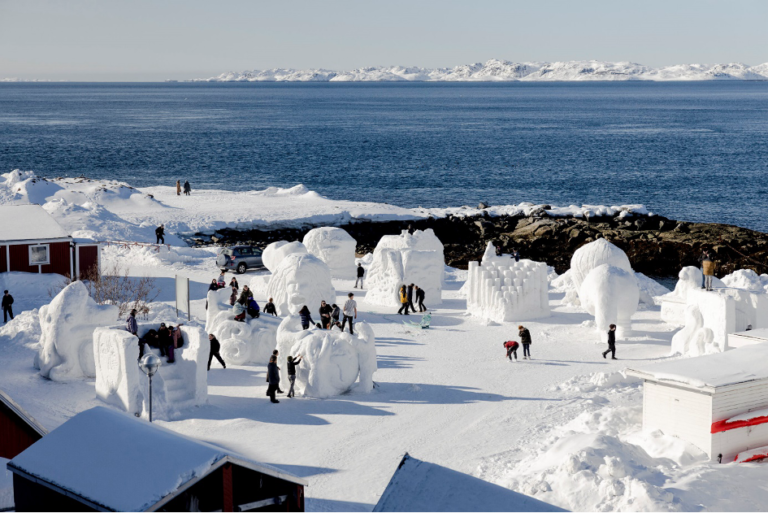
Nuuk Snow Festival – © Oscar Scott Carl – Visit Nuuk
A Necessary Long-Term Support for Culture
This duality can also be found within Greenland’s cultural scene. Jonas explains that, although it is characterised by “immense creativity, resilience, and ambition,” it also finds itself in a fragile situation. He describes it as follows: “Limited funding, geographic isolation, small audiences, and heavy reliance on a few key individuals who often have more than one role in the culture sector.” The situation is exacerbated by the current US threats, as most public cultural bodies must spend time and resources responding to external attention. Cultural players are then under pressure and extremely fatigued. The situation would only worsen if the US were to annex the island, as Jonas imagines: “It would fundamentally alter funding structures, cultural policy frameworks, and the conditions for free and critical cultural expression.”
Nevertheless, the situation has also put Greenlandic culture in the spotlight, with its artists, writers, musicians, and cultural organisations addressing the situation through programming, public conversations, and artistic work. It has even brought institutional and independent Greenlandic cultural organisations closer together, as Jonas notes, stating that there is a “stronger tendency towards collaboration” and insisting that this is one of the few positive outcomes of the situation.
In Denmark, Anja Tietze Lahrmann has noted that “Greenlandic virtues and cultural heritage have recently been praised.” Cph Stage, the biggest performing arts festival, even featured a series of performances by Greenlandic artists in May 2025. She goes on to discuss the international opportunities this has created for some Greenlandic artists, citing the example of “Greenlandic photographer Inuuteq Storch, who is exhibiting their socio-realistic photos in MoMa despite the current circumstances.”
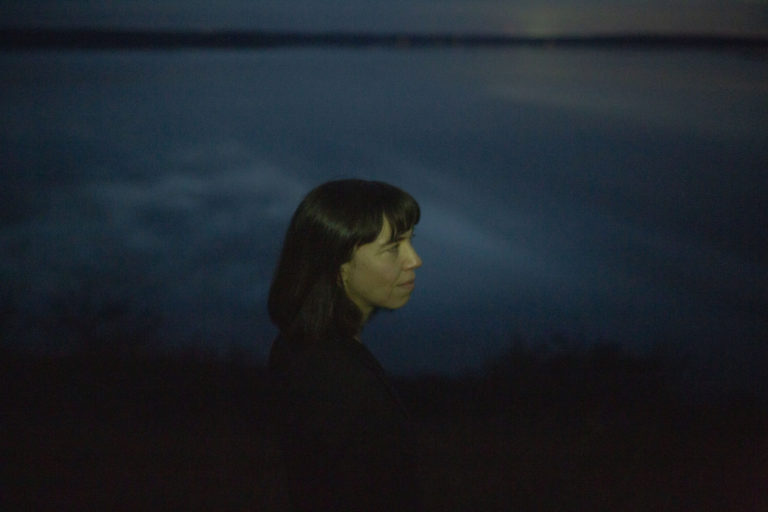
Anja Tietze Lahrmann — © Stephanie Staal
The future of Greenland is still very uncertain, but one thing is certain: we must take a stand against colonial narratives, stand in solidarity with our Greenlandic counterparts, and reaffirm the need for long-term cultural support, not just in times of crisis.
“Yes, solidarity is expressed. Through statements, collaborations, protests and cultural events. However, there is still room for deeper, more equal partnerships. True solidarity requires listening, long-term commitment, and shared risk,” concludes Jonas Lundsgaard Nilsson.
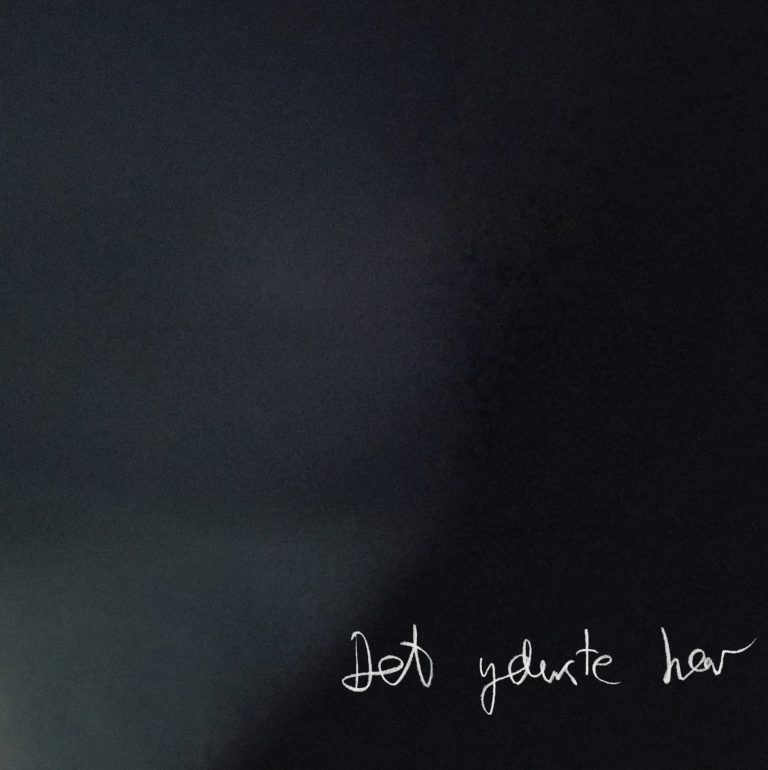
Anja Tietze Lahrmann’s Det Yderste Hav
In February 2025, Anja released an album, thought as a sonic document, entitled Det Yderste Hav (The Outermost Sea). She has worked on the project since 2021, and aimed at making an electronic, choir-based album. She has recorded it in collaboration with the Greenlandic choirs Ingiulik and Crescendo, and released it via the Danish independent The Lake Radio.
“The sonic document / album “Det Yderste Hav” wasn’t intended to have a political agenda when I started working on it back in 2021. However, as Trump and his administration began articulating their proprietary dreams, political counter-messages somehow seeped into my work, which they might hadn’t if the political situation hadn’t escalated the way it did.”
Listen to Det Yderste Hav here.
References
Rikke Lie Halberg, “Did the US ever ‘give back’ Greenland to Denmark, as Trump claims?,” The Conversation, January 29th, 2026
Sebastian Starcevic, “US talks on Greenland went well but threat remains, Danish top diplomat says,” Politico, January 29th, 2026
“Rutte fremhæver Danmark: Nu tager Europa markant større rolle i Nato” (Rutte highlights Denmark: Europe is now taking on a significantly greater role in NATO), Sermitsiaq, February 12th, 2026
“Regeringen skal mødes med Rubio på sikkerhedskonference” (The government is to meet with Rubio at a security conference), Sermitsiaq, February 13th, 2026
Greenland, unmuted (series), Stegi Radio
Published on February 19th, 2026
About the author:
Manon Moulin is the editorial coordinator of all European projects for the non-profit organisation Arty Farty. She specifically works on the European network of independent cultural and media organisations Reset!.