
Author: Eden Maclachlan
As Bulgaria enters a new political chapter following years of instability, questions remain over whether press freedom and independent journalism can finally recover in one of the European Union’s most fragile media environments. After months marked by anti-government protests, corruption scandals, and growing concerns over political pressure on journalists, the country’s April 2026 parliamentary elections have raised cautious hopes for reform. Yet for many reporters and independent outlets, the challenge now is whether promises to strengthen media freedom will translate into concrete protections for journalism in Bulgaria.
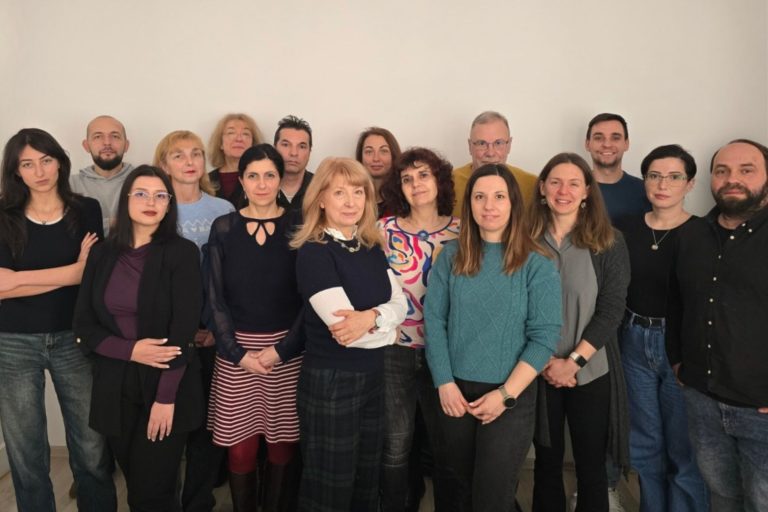
Mediapool team — © Mediapool
Last December, a few days before Christmas, Maria Tsantsarova, a prominent news anchor on bTv, a private Bulgarian National Television channel, known for her tough questioning, high-profile investigations, and widely considered a critical voice towards politicians, was taken off air amid widespread social unrest which raised serious concerns about possible political interference.
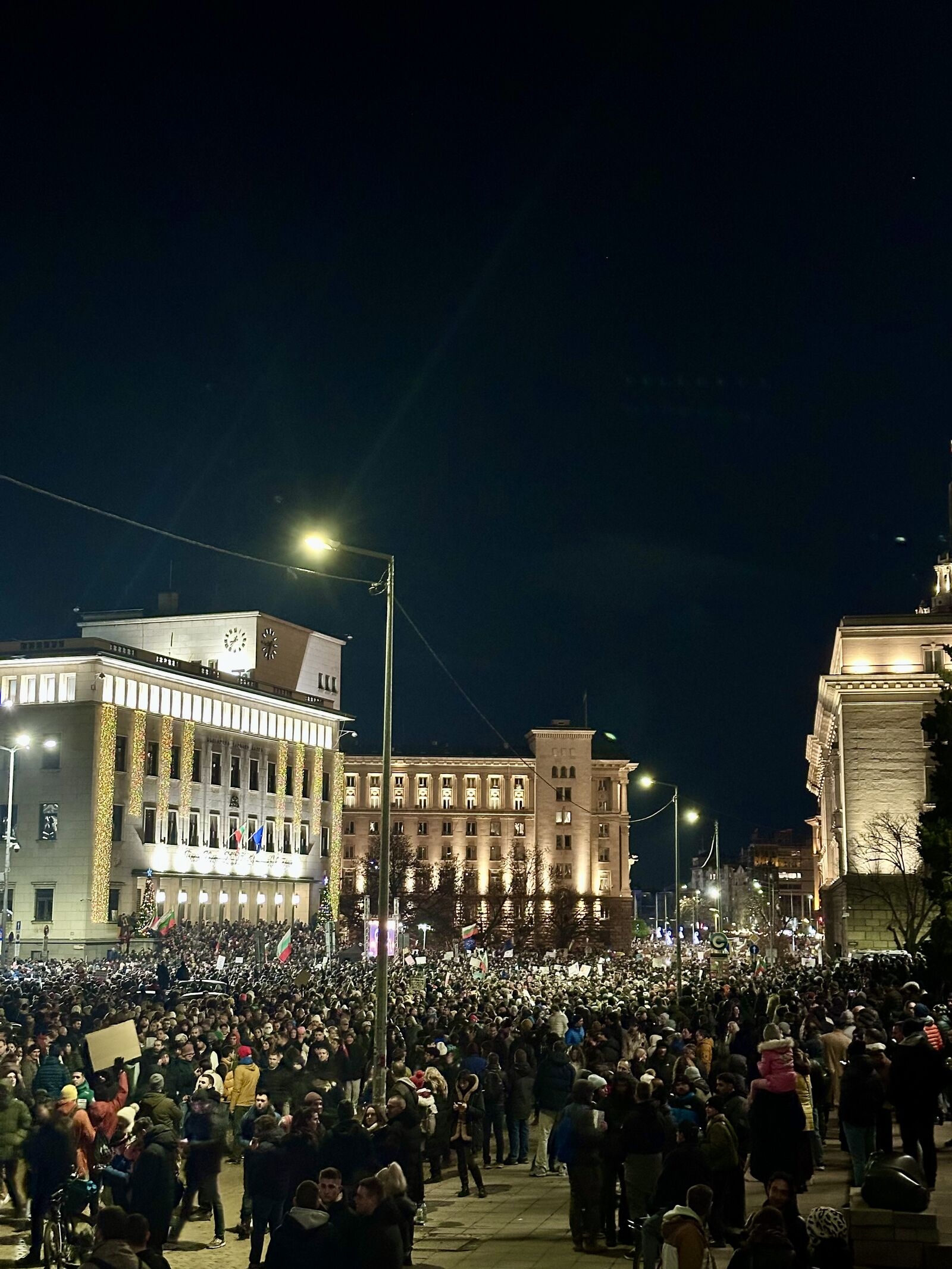
At the time, Bulgaria was undergoing a wave of countrywide mass protests over the government’s economic policies and perceived failure to tackle corruption. Those protests ultimately resulted in the resignation of the center right prime minister of GERB, Rosen Zhelyazkov, and his cabinet in December, which led the Balkan country to its eight parliamentary elections in five years.
The ousting of Tsantsarova, a leading critical voice, sparked a backlash with citizens and journalists showing support to the former TV host and her co-host Zlatimir Yochev, who was also removed, by gathering outside bTv’s headquarters. The Association for European Journalists-Bulgaria (AEJ-Bulgaria), who called on the protests outside the television channel office, said that they were concerned about “another “emptying of seats” for critical voices on the Bulgarian national airwaves” and that the situation felt like “another brutal act of political pressure against free journalism in Bulgaria.”
A Typical Case on Press Freedom
Bulgaria, a country of 6.5 million inhabitants bordering the Black Sea, transitioned to a democratic republic in 1990 after 45 years of single-party communist rule. According to Stoyana Georgieva, the editor in chief of independent Mediapool.bg, there has always been huge problems with independence of media and free speech since the early days of Bulgarian democracy until now. She said that one of the struggles of independent media is the lack of well-established democratic institutions in Bulgaria.
“I see this struggle for independent journalism as a part of the struggle to be a liberal democracy,” said Georgieva.
Back in 2001, Georgieva and other like-minded journalists created Mediapool.bg, Bulgaria’s first online news media, with the aim of establishing an independent media to provide factual news and in depth analysis, to inform citizens and public opinion, as she believes “that only well-informed citizens are pivotal for the choices and the political development and economic development of every society.”
In Tsantsarova’s case, although she hasn’t been reinstated, she recently launched Off Air (Izvanefir), an independent political journalism platform, funded by its audience and free from editorial and political influence, aiming to build journalism that asks difficult questions, investigates abuses, and holds those in power accountable.
Yet, the removal of Tsantsarova is symptomatic of the struggle of independent media and journalism in Bulgaria, where even the most popular profiles are vulnerable. According to Pavol Szalai, the Head of the EU/Balkans Desk at Reporters Sans Frontières (RSF), “Bulgaria is a typical case of the pressures on press freedom that we observe in Europe and internationally.”
While Bulgaria’s press freedom did increase following the departure of the government of Boyko Borissov in 2021, as some pressure on the media eased off, Szalai said that the resulting political instability led to an absence of strong press freedom measures, a lack of measures to protect journalists, and that Bulgaria was now paying the price for not having a stable government in the past half a decade.
“The recent lack of measures to protect media independence and press freedom lead to deterioration and Bulgaria again has been falling in the index,” he said.
In its latest World Press Freedom Index, RSF stated that: “Press freedom is fragile and unstable in one of the poorest and most corrupt countries in the European Union. The few independent media in Bulgaria are under pressure.”
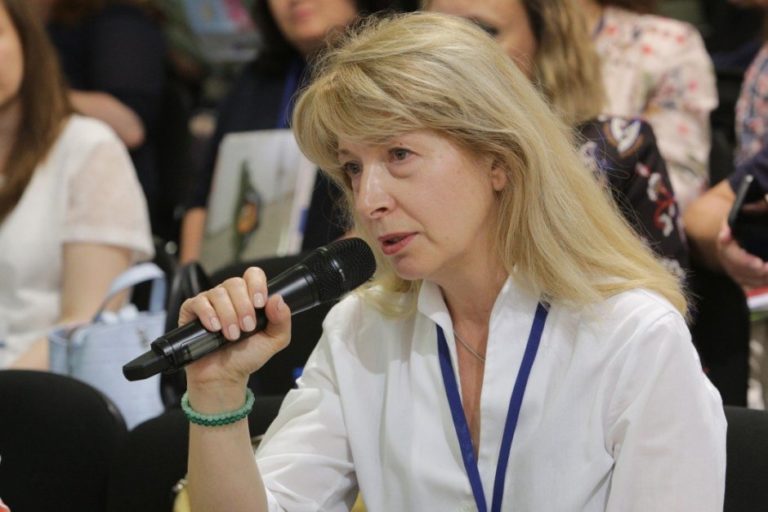
Stoyana Georgieva — © Bulgarian National Radio (BNR)
Political Interference, Legal Silencing
In Bulgaria, the government, the ruling elite, and oligarchs wave considerable influence over the media, ultimately negatively impacting independent editorial lines and where advertising funds are distributed, while the considerable pressure journalists and newsrooms face discourages many from carrying critical and investigative reporting. In the meantime, ownership of media remains opaque.
Maria Cheresheva, the president of AEJ-Bulgaria, which was created in 2010, shortly after Bulgaria joined the EU, with the intention of improving the media environment and the quality of journalism in Bulgaria and to support journalists who are prevented from doing their work, recognised “that independent and investigative media are struggling.” Cheresheva, who is also a journalist, highlighted that there is a culture of pressure towards independent media and journalists with many facing political harassment.
“It's usually by far right parties, but not only. In Bulgaria we've even witnessed parties in government downgrading journalists, harassing them, offending them, and with social media, they have their followers, so they become really aggressive,” said Cheresheva.
Georgieva said that one of the problems is that in Bulgaria there was a widespread culture of censorship and self-censorship. In the meantime, many try to silence the press through legal threats and abusive lawsuits. Last month, investigative journalist Dimitar Stoyanov of the independent outlet Bird.bg saw his bank accounts frozen by the district court of Burgas, in eastern Bulgaria, following several defamation lawsuits filed by local businessman Nikolay Filipov, after the reporter had investigated allegations of corruption and fuel smuggling involving Filipov. The total amount of damages sought is around €50,000.
Stoyanov’s situation is far from an isolated case as Bulgarian journalists often face SLAPP suits, known as strategic litigation against public participation, in order to silence them, with Bird.bg currently facing several. Bulgaria has yet to transpose the EU Anti-SLAPP Directive into national law, in spite of a May 7th, 2026 deadline. Cheresheva said that SLAPP suits are a form of marginalisation and ultimately exhaust the reporting team with never ending bureaucracy and legal expenses preventing journalists and media from doing the core of their work.
“If you’re a small team with a limited budget, you’re really struggling,” said Cheresheva.
The safety of journalists still remains an issue with threats and physical assaults towards journalists still persisting. At the turn of the year, Ivelin Mihaylov, the leader of far-right Velichie, said on his YouTube channel that journalists from Bird.bg should be “stoned when seen on the streets”, following publications from the investigative outlet revealing Mihaylov’s and his wife’s liabilities to the National Revenue Agency (NRA) and private creditors.
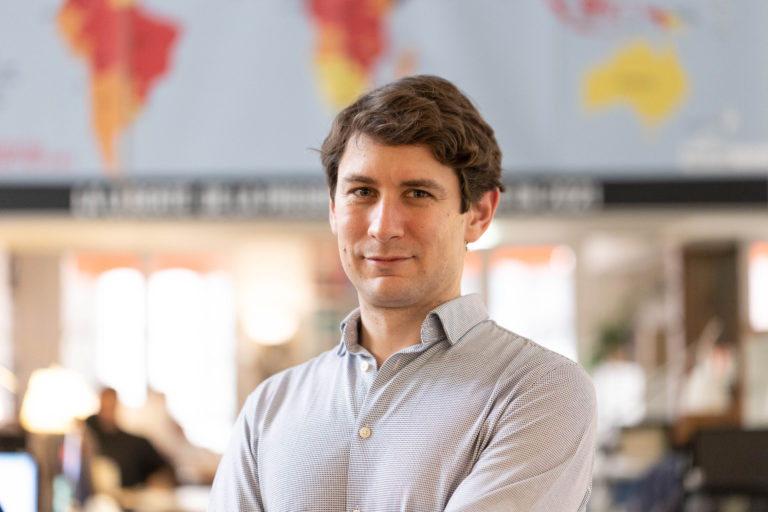
Pavol Szalai – © RSF/Manon Levet
A Struggling Media Economy
Meanwhile, financial challenges are endemic for independent media, as the state doesn’t provide any funds, advertisement tends to be unequally redirected towards friendly media and Bulgarians have a reluctance to pay for news meaning that independent media have to juggle with various revenue streams. Georgieva said that Mediapool.bg relies on a mixture of institutional funds, donors, advertisement, and European projects, while emphasising that salaries in the media industry tend to be quite low.
Cheresheva said that this stream of revenue limbo can be unsustainable and argued that there are different models that could be explored to fund independent media. For instance, she has been advocating (with AEJ-Bulgaria) that people could choose to deduct part of their taxes to civil society organisations or independent non-profit media. “Having the possibility to decide that 1 or 2% go somewhere could be a game-changer,” said Cheresheva.
Hopeful Elections Results?
Yet, the road to improve the situation of independent media and press freedom is long. Before the Parliamentary elections in April 2026, RSF drew a list of 10 recommendations to protect and improve press freedom in the Balkan country. It features the need to transpose the EU Anti-SLAPP Directive and adopt comprehensive anti-SLAPP legislation, fully implement the European Media Freedom Act or even combat disinformation and foreign propaganda. Meanwhile, Szalai noted that “for a big leap forward, Bulgaria needs a stable government with support in the parliament.”
Therefore, the results of last elections may bring hope as “Progressive Bulgaria”, the party of former President Rumen Radev, who resigned in January, won a full majority for the first time since 1997, offering the possibility to bring some concrete changes. Last year, in an address as president, Radev stressed the importance of free and independent media in the democratic development of society and noted the intention to improve press freedom in its electoral programme. This week, on an official visit to Germany, Radev told reporters that his cabinet monitors media freedom very closely, considering it crucial for democracy and efficient to fight against corruption. Meanwhile, he added that the two most important points for strengthening media freedom are the transparency of media ownership and to ensure the financial stability of the public broadcasters.
Nevertheless, Szalai said that he “is cautiously optimistic about the future of Bulgarian media” and hopes that Radev, who ran on an anti-corruption ticket, will be consistent and will address pro-Russian disinformation. Cheresheva said that the government can improve the situation for independent media and can guarantee a healthier environment in line with European standards, yet, she said it remains to be seen if they will.
“It's a chance for important laws to be voted on, and if they want, they can change anything in this country. If they will, we will have to see,” said Cheresheva. “They have the instruments to actually vote for the European Anti-SLAPP directive which had to be transposed on the 7th of May.”
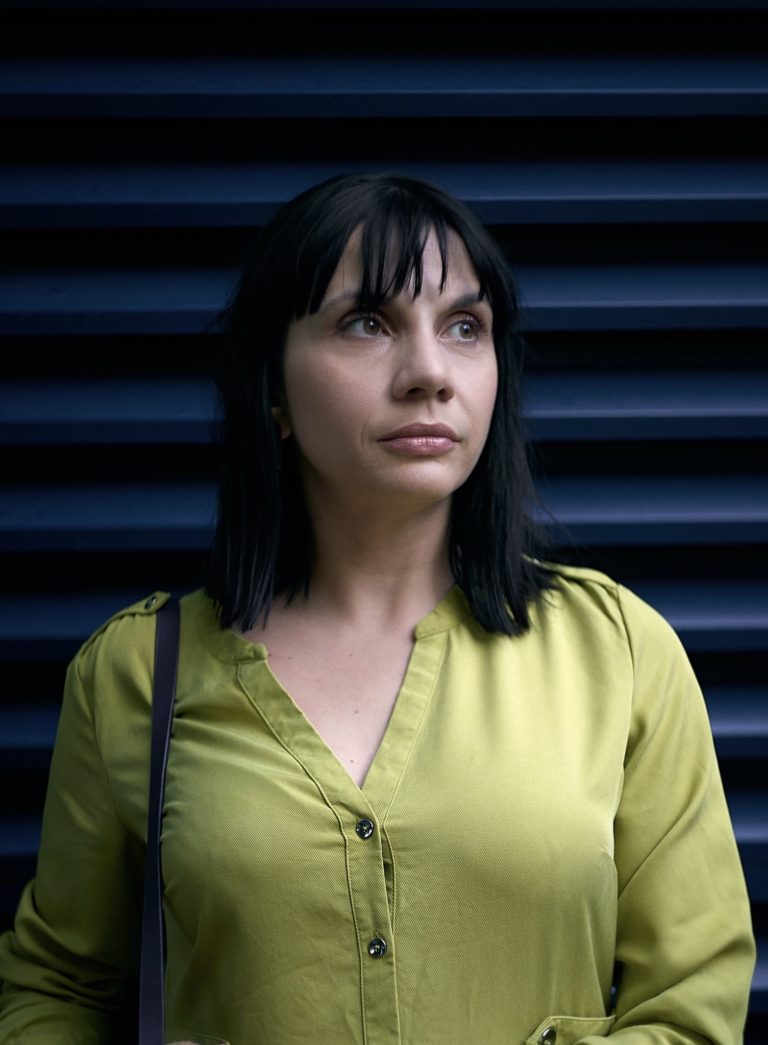
Maria Cheresheva – © Krasimir Dimitrov
Both Cheresheva and Szalai emphasised that the change needs to be owned by the country and the local stakeholders, with Cheresheva underlining that journalists, newsrooms, and even the mainstream media need to be part of this change.
Meanwhile, Stoyana Georgieva highlighted the crucial role of independent media in democracy as “they are an essential part of this democratic establishment” and that “ when there is this influence of AI, propaganda, and disinformation campaigns, we need this factual lifeline of independent journalism.”
The Mediapool.bg editor-in-chief believes that for independent media to prosper and flourish, the entire Bulgarian society needs to be more independent.
“I wish for the future that in Bulgaria to have more independent businesses, when we have more independent business environments, we will have a more independent society,” she said. “Because most of the small businesses in small towns, they are heavily dependent on local authorities, mayors, or local oligarchs. And therefore, I think, if there is an independent business environment, it will be the soil to nourish independent media.”
Published on May 21st, 2026
About the author:
Eden Maclachlan is a freelance journalist based in Sofia, Bulgaria. He works frequently for The Times, The Guardian and co-operates regularly on cross-border journalism projects, including investigations.
