

Author: Steven MacKay
This municipal-run festival appears to be a Portuguese representative for progressive culture and programming. But how has this legacy communist-party project survived?
FMM in Sines, 2019 — © Courtesy of the Municipality of Sines
What Is It?
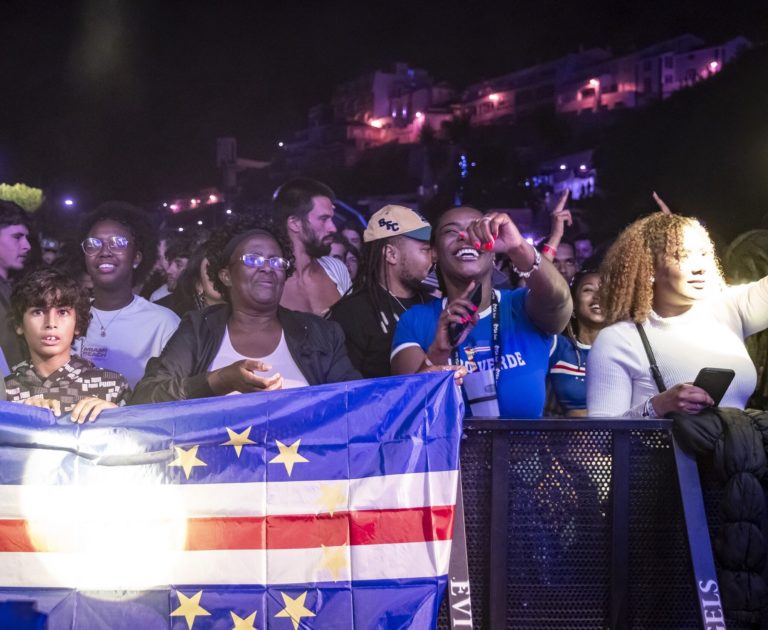
The FMM is one of the most notorious amongst Portuguese music lovers. It’s a place where immigrant communities flock to see their home-nation heroes, and open-minded southern Europeans learn and experience the most innovative programming the country has to offer.
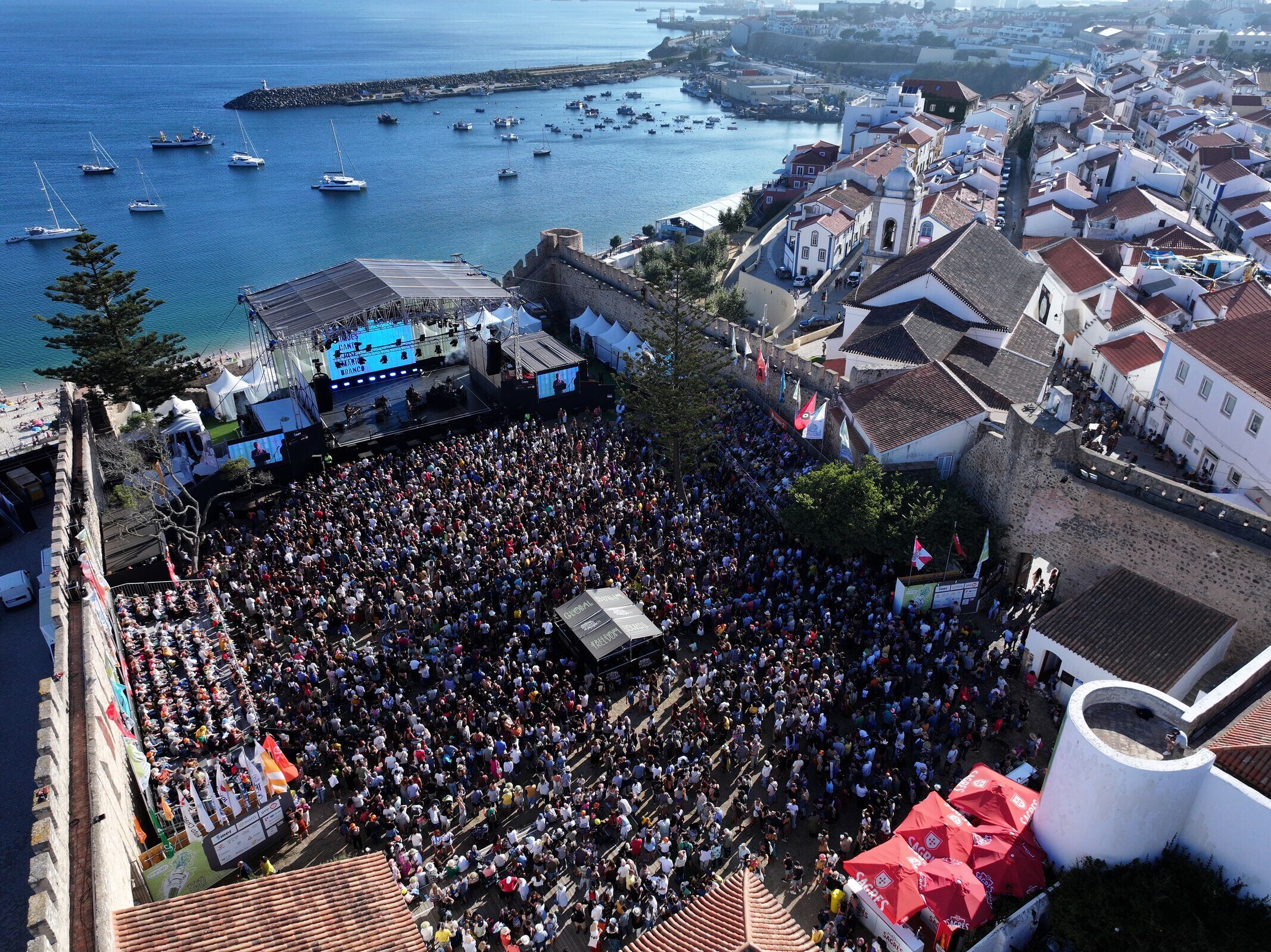
The festival occurs over two weekends between the two Atlantic towns of Porto Covo and Sines. The towns, typically filled with beach-seekers from up and down the country and further afield, open their doors to hoards of festival goers seeking an inclusive musical learning experience.
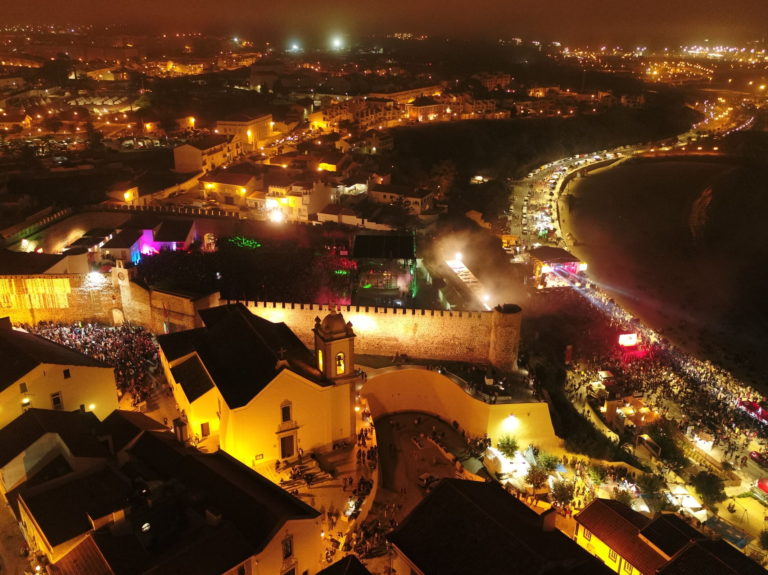
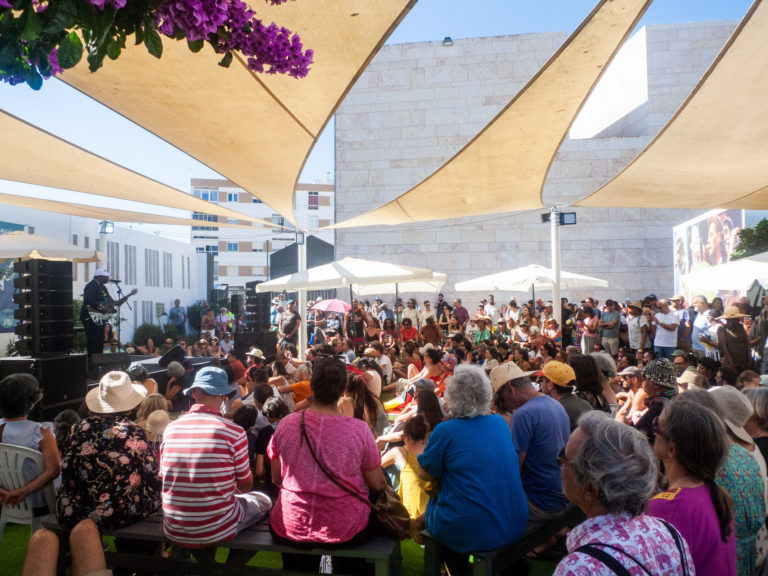
In late July, the festival begins in the idyllic beachside town of Porto Covo with 3-4 concerts each night on the opening weekend, before moving 15km north to Sines where it shifts into a different gear. The main events in Sines take place from 7pm to 1am in the historic Sines castle, with daytime events happening in the local arts centres and late-night after parties going until 6am in the huge 15,000 capacity beach stage on the final weekend.
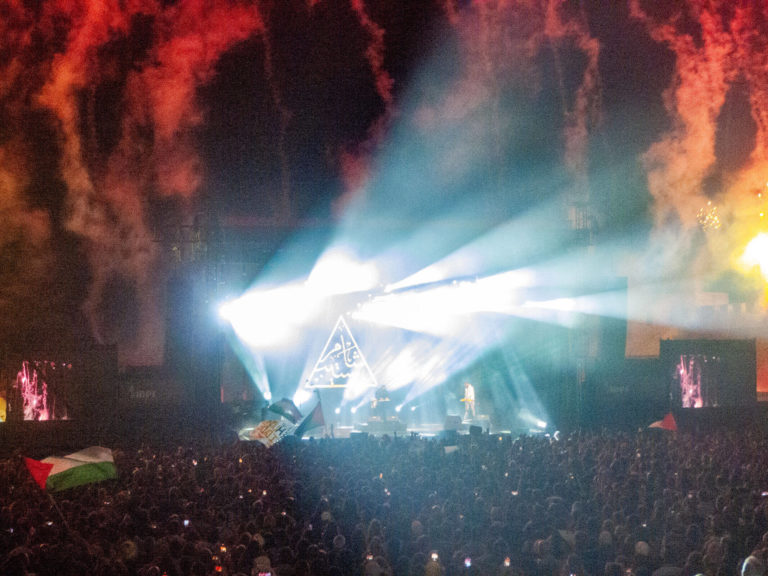
The programming ranges from traditional Portuguese fado, Brazilian punk, Palestinian hip-hop, and Mongolian dubstep. Highlights include Cape Verdean funana bands punching out 4 4 chesty kicks at 5am with Europeans taking turns to traditional dance with the west Africans. Or the crowd turning wild as Brazilian band Nação Zumbi turns the 6,000 capacity castle monument into a makeshift pit. There’s also often a couple of big hitting bands from Northern Europe with Kokoroko headlining the castle in 2025. Over the past 25 years, the festival has played host to some historic big names including Femi Kuti, Gogol Bordello, Lee Scratch Perry, and Tony Allen.
© Alexandre Marin
The festival is directed at a leisurely pace with one stage starting after the previous one closes meaning it’s possible, although difficult, to see every single act. The curation is also almost entirely live with only one afro-house & amapiano DJ making the programme in 2025.
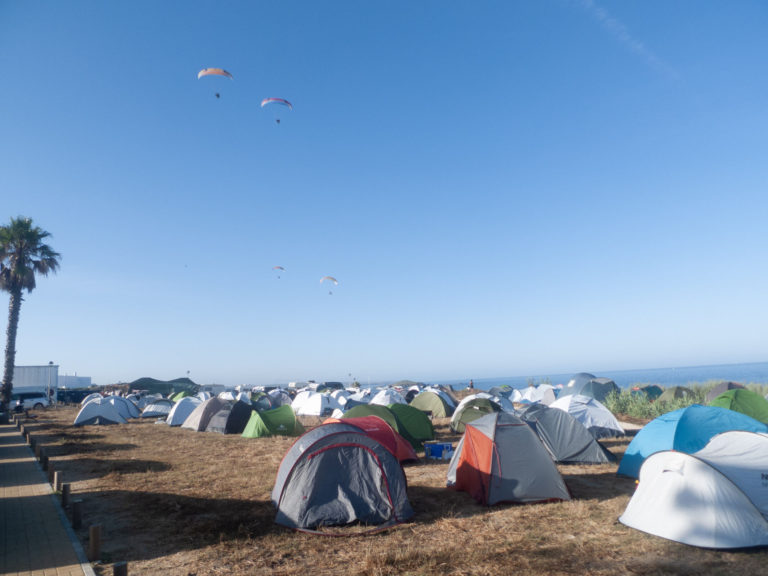
Best of all, the festival is almost entirely free entry, the only paid shows being small concerts in the arts centre auditorium and 3 of the castle evenings which are sold for a modest €30-45 for a 3 act show.
© Alexandre Marin
How Did They Do That?
The festival is almost entirely unique for this scale, in that it is run entirely internally within the municipality. The head of PR of the festival is in fact the head of press for the local council, and the municipal team spends much of their year gearing up for their and the region’s biggest event.
The director of the festival is no less than the actual mayor of the county of Sines, a role held by that position for the entire 25 years and the lead programmer, Carlos Seixas, 73, has also been there from the start when he was invited to the castle by then communist party mayor Manuel Coelho.
It seems the festival was started between Seixas and Coelho, when the pair struck an agreement to build the project together and for the first 14 years between 1999 and 2013, the festival was run by the pair. Nuno Mascarenhas replaced him as mayor in 2013, and will be replaced himself this coming year by the newly elected mayor Álvaro Beijinha.
© Alexandre Marin
It would be great to inform you of which pot of funding they won or how they applied but it didn’t happen like that and still doesn’t. There wasn’t, nor has there ever been a public tender. There was no vote, no open application, no interview process. The festival was developed on a personal relationship between the lead programmer and the mayor and it seems like they developed it as a kind of joint project, or that the municipality hired Seixas as a curation freelancer. Maybe at first to promote their heritage sites and give something back to the residents, and now to encourage tourism more broadly.
Perhaps even more concerningly, there has never been any financial transparency into how much the municipality has invested into the festival or investigation into the benefits for the local tax payers. Even when interviewing head curator Seixas, the current mayor Nuno Mascarenhas and the head of press, none of them can give exact figures of any of the past festivals—alarmingly. After repeatedly pressing them, the best we can reach is approximate investment values of €1.5 million in 2024 and €1.7 million in 2025.
Mascarenhas was also caught up and arrested during the corruption scandal that mistakenly led to the Portuguese Prime Minister’s resignation in 2023. In fact, he was forced to step back in the final year of his 3-mandate mayorship with his vice-president taking his place. This could and should be cause for some alarm, but somehow the festival team have managed to keep the trust of their citizens.
Interviewing people on the ground, there’s definitely some words of doubt from the locals, but it’s more on the state of the towns with litter and lack of facilities rather than political misuse of funds. It is surely a set-up which would come under intense scrutiny in a bigger city but it seems like the majority of the local population see the festival as a force for good.
The year 1999 in rural Portugal was a different era, only 25 years after the collapse of the Salazar dictatorship, the country was surely a world away from the accelerating commercial development it’s experiencing now. So yes, of course there was less regulation, of course there wasn’t the same funding scrutiny and structure.
Given it is a hugely successful project, should we judge its creation based on the modern democratic tools we have rather than the post-communist era Portugal climate barely two decades after the dictatorship fell?
© Nuno Pinto Fernandes
Lessons?
The FMM (Festival Musicas do Mundo) is not independent, but it is an anomaly legacy communist era project that really is a must see. It’s also one of the most musically diverse festivals out there bringing together many migrant communities from all over Portugal and the Iberian peninsula.
The nature of the structure of the festival being highly reliant on politics is a fragile one, the newest Mayor of Sines, Álvaro Beijinha, elected in late 2025 will only be the 3rd leader of the project in 26 years and is yet to comment on the future of the festival. But Beijinha representing the CDU—an electoral and political coalition between the Portuguese Communist Party and the Ecologist Green Party—is definitely a sign of resilience where the far right is making gains all over rural Portugal.
From an international perspective, with politics taking a sharp right turn all over the world, is this regional festival showing us how we can use our voices to broadcast a message of hope, diversity, and cultural exploration in a time of misinformation and fear? The 25th anniversary of the festival ran with the slogan ‘freedom sounds like this’ printed-on cups, t-shirts, and a huge banner beaming down over the beach. A bold but perhaps necessary message?
Published on March 24th, 2026
About the author:
Founder and President of Arroz Estudios Association, Steven MacKay is a creative with a technical background innovating at the forefront of arts & technology. Originally from Manchester, UK, Steven spent his early 20s programming venues, festivals, creating immersive arts installations & DJing. After moving to Lisbon in 2018, Steven created the social project Arroz Estudios and went on to found Rare Effect technology & arts festival.
Now working globally as a curator and music journalist, Steven is a deep thinker and activist around social & digital topics in Portugal & beyond.
