Author: Yuliya Ruzhechka
In the wake of photography’s 200th anniversary, Europe’s visual landscape is undergoing a quiet yet profound transformation. Two international platforms—Parallel and Futures—born in 2017, have become places of experimentation where images move as freely as ideas, connecting artists, curators, and institutions across borders. As these networks foster collaboration, mobility, and creative exchange, they also redefine what it means to make and share photography while navigating social challenges.
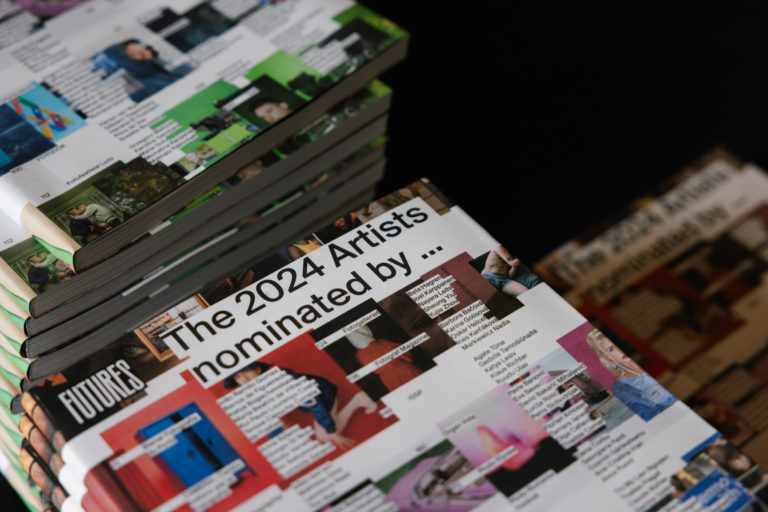
FUTURES Annual Event Zagreb, 2024 – © Luka Pešun
As photography marked its bicentennial in 2024—having evolved from a scientific tool and the idea of visual retranscription of reality into a critical artistic medium—Europe is quietly reshaping its photographic landscape through two international platforms established in 2017.
Created to circulate images, ideas, and people, Futures and Parallel have grown into ecosystems where institutions, curators, and artists meet, collaborate, and challenge the limits of what European photography can be.
How do the communities they create engage with current social issues, shape the European cultural landscape, and influence how we represent today’s concerns? And how do these initiatives reduce isolation for institutions and artists while reinforcing the value of each country’s photographic scene?
Let’s dive into the currents of images and meanings, breaking through waves of challenges and trying to see deeper.
European Photographic Platforms
The European photographic scene counts numerous museums, galleries, festivals, magazines, publishers, curators, editors, and photographers. Yet these actors—of different scales and tied to different kinds of photography—rarely have the chance to connect, each moving along their own path. Mobility, whether geographical or creative, becomes a natural way to counter this isolation.
Thus, in 2017, two European photographic platforms were created through the Creative Europe programme “European platforms for the promotion of emerging artists” among 16 platforms of different disciplines, aiming to foster mobility and professional growth of emerging European artists, while strengthening cultural diversity, solidarity, and access to culture.
Both platforms grew out of cultural structures experienced in visual arts and international cooperation, they unite a wide range of actors across Europe—artists, curators, festivals, and institutions—chosen above all for the quality of their work, aiming to spark new dynamics, open opportunities, shift power structures, and build inclusive ecosystems where everyone can be empowered.
Parallel – European Photo Based Platform, initiated by Procurarte (Portugal), ran three cycles through 4 years with 18 international partners from 16 countries, pairing emerging photographers and curators through a mentorship-driven process that led to exhibitions across partner institutions. This dual focus was particularly valued: “As artists need more exposure in the field of photography, it is the same for the curators,” explains Lea Vene, curator of the international photography festival Organ Vida (member of both Parallel and Futures platforms). Over four cycles, Parallel gathered 81 artists and 19 curators.
The Netherlands-based Futures Photography now brings together 21 institutions across Europe (and from neighbouring countries), offering education, networking, promotion, and showcase opportunities for the artists. “The whole platform is focused on year-long education for artists which includes how to place oneself within the art market, the exhibition field, how to learn new practical skills, something about history of photography and about current practices,” Lea Vene explains. Each partner selects five artists annually, and by 2025 the platform has gathered more than 650 artists. For founder Menno Liauw, Futures is “more like an infrastructure to do projects… a multiplier.”
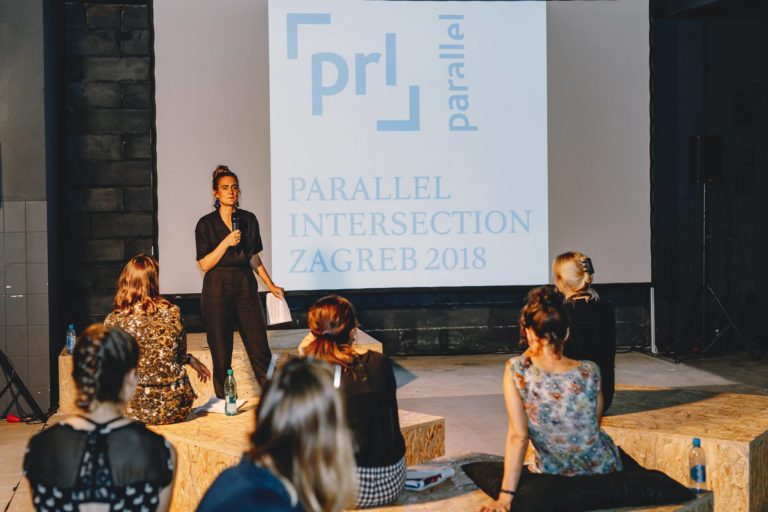
Anastasia Taylor-Lind lecture and PARALLEL Intersection event in Zagreb, 2018 – © PARALLEL archives
Photographic Platforms as Changemaker Tools
While the aim of creating synergies between international actors seem clear, there are also changes happening locally for the partners, such as strengthening their images and making national funds more accessible and thus their organisations more sustainable.
“Some of our members use the fact that they are a gateway to Europe for their community,” Menno Liauw explains. “For example, PhotoIreland (also a member of both Parallel and Futures) offers Irish artists international opportunities that are simply not available locally.” In 7 years, while being active members of European photographic platforms, they grew from a bookshop in Dublin (while running international festival of Photography and Visual Culture) to operating the Museum of Contemporary Photography of Ireland.
For Lea Vene, being part of international dynamics has both financial and symbolic impact, giving “extra legitimacy” to the organisation: “Being part of the platform gives us financial stability and enables us to have access to local co-funding opportunities for EU projects.”
Franek Amer, curator of Fotofestiwal in Lodz, Poland, mentions that “being a part of the network also builds credibility and helps to get the grants even locally thanks to being shown as an international institution.”
Creating Constellations
In project-management terms these platforms must deliver outcomes, yet the impact of creative processes and collaborations is far harder to measure. For Menno Liauw, the real value lies in what looks like “secondary” impact: members continuing to collaborate beyond the platform itself. “We should get rid of the metrics we in culture are using: how many visitors, how many this and that. That is not a representation of the real value,” he says. Instead, he asks members what they’ve done together that “was not part of the Futures programme, but would not have happened without it”—and the examples keep coming.
Franek Ammer echoes this from a partner’s perspective, noting that repeated meetings generate “many different, bigger or smaller, collaborations,” grounded in trust: “trust comes first and some formal agreement comes in as the last thing.” Łódź Photo Festival, for instance, renewed collaborations with a Parallel artist twice, while Organ Vida built new ties with Ci.CLO, the photographic biennale in Porto and Fotodok in Utrecht.
Franek also highlights a deeply personal value, explaining that joining Parallel in 2017 placed him “in the middle of people already experienced in organising festivals, publishing magazines, or running galleries,” creating an invaluable space to talk, collaborate, and grow. This interpersonal layer turns the network into a real community where trust and shared ground matter. In Futures, “if you were selected in the first year, you are still invited to the networking event every year,” Menno notes—experts meet new artists, and artists connect easily with other professionals.
Another key value is countering the isolation, especially faced by photographic actors far from Western Europe’s major hubs. As Lea Vene puts it, “when being on a periphery of Europe, it's necessary to be part of such a platform, to be able to exchange among all the other people working in the field of photography.” While meeting peers from different countries, hearing “firsthand” what they do and encountering artists from all partners can “really change” how one works and positions oneself, while shared discussions on fees, “sustainability in artistic and creative practices,” and common challenges, as Franek Ammer adds, “bring you closer to what other people do and how they work” and helps one to find graspable solutions.

Lea Vene during FUTURES annual event in Zagreb – © Futures Archives
Europe Beyond Europe
Both Parallel and Futures include members from beyond the EU—Georgia, Ukraine, and artists even from other parts of the globe, such as Brazil or Iran. Futures is now building collaborations with Switzerland, following political and cultural shifts: “They just want to make sure that their emerging photographers and their institutions are connected to the European organisations,” says Menno Liauw. His next goal is to bring the UK back in, as Brexit “really cuts opportunities for their artists.”
For Franek Ammer, these outward connections are essential, with Łódź Photo Festival already acting as an “ambassador” for neighbouring communities such as Belarus and Ukraine, helping give visibility to scenes that cannot currently represent themselves fully and function in their respective countries.
Preventing these platforms from becoming bubbles means keeping “a pool of new people coming in through very democratic processes,” Lea Vene notes, ensuring they stay open rather than “internal” or exclusive. Another safeguard is widening the ecosystem toward the broader visual arts: Organ Vida, hosted at Zagreb’s Museum of Contemporary Art, deliberately breaks the boundaries of the ‘photographic bubble.’ “We really want this more expanded approach to photography because it's actually the reflection of how the visual and contemporary art field functions. With the selection of artists that we do with our programming, with people that we invite, we try to really break this idea that everything happens within the photographic bubble. For us it's equally a text, installation, performance, even film.” This aligns with Futures’ ambition to welcome artists beyond photography, “including digital artists and artists mixing different mediums.”
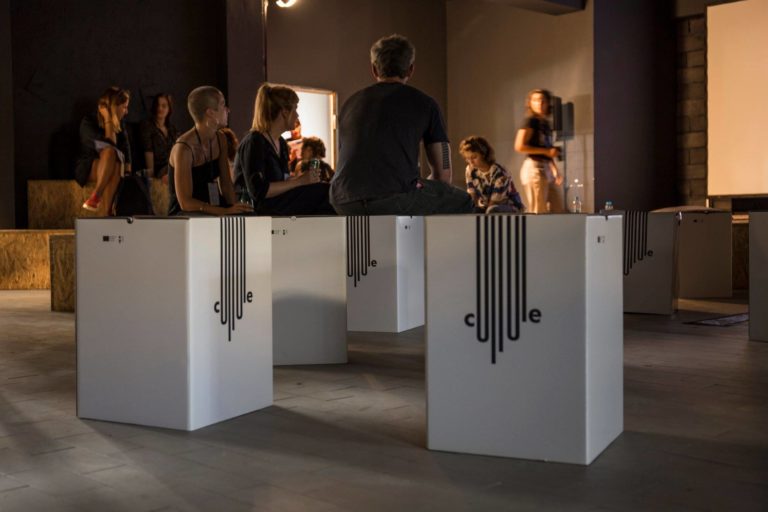
Parallel opening party — © Organ Vida festival archives
New Shapes of Photographic Landscape
While embodying a European ambition to foster collaboration, increasing artistic mobility, and amplifying voices from smaller countries and marginalised communities, the platforms become a tool of cultural diplomacy that strengthen connections across the continent. For Lea, the platforms are “shifting this idea of who the key actors are,” showing that it’s not only major institutions or foundations but also “publishers, smaller festivals… so many different voices, and also a lot of voices from outside of Western European standard or the Central European context, a lot of voices from the edge.”
Through this diversity, photography becomes a space for public dialogue on social issues, circulating far beyond the platforms themselves. “I think it's important that it keeps on being a very inclusive space, not catering to the mainstream but remaining critical,” Lea adds, hoping the platforms can resist “cultural, political, social censoring” and remain places for free, critical expression.
///
Parallel is currently not in an active phase after its EU funding ended, yet the connections built through its cycles endure, with Procurarte continuing its work in Portugal and maintaining links with Parallel partners.
Futures, now renewed for a third round of EU funding, is navigating toward financial sustainability beyond the limits of project-based support. Meanwhile, it continues to expand its residencies and educational programmes, developing new collaborations both within and beyond the platform.
The sustained visibility of both platforms’ outputs to both professionals and audiences via their websites continues to generate meaningful value for the contemporary art field, becoming a curatorial tool for professionals and a showcase for creators.
Published on January 13th, 2026
About the author:
Yuliya Ruzhechka is a Belarusian curator, photographer, and journalist based in France. A double Master’s graduate from Paris 8 University (in Photography and Plastic Arts, as well as in International artistic cooperation), she curated the Month of Photography in Grenoble (2018–2021) and was a selected curator for the third cycle of the European program Parallel Photo-based Platform.
Her work explores memory, identity, and the relationship between photography and society, while her workshops and cultural projects promote visual literacy and collective storytelling. Since 2024, she is hosting Adnym Kadram, a podcast dedicated to Belarusian photography.