Author: Kateryna Pereverzeva
Translation from Ukrainian: Oleksandra Ponomarenko
From its kitchen-table beginnings to a decade of telling Kharkiv’s story, “Lyuk” Media offers a view of the city that defies cliché. While the world sees Kharkiv through images of destruction, “Lyuk” captures its spirit of creativity, critical thought, and everyday life—showing that even in a frontline city, culture shapes how people understand themselves and their home.
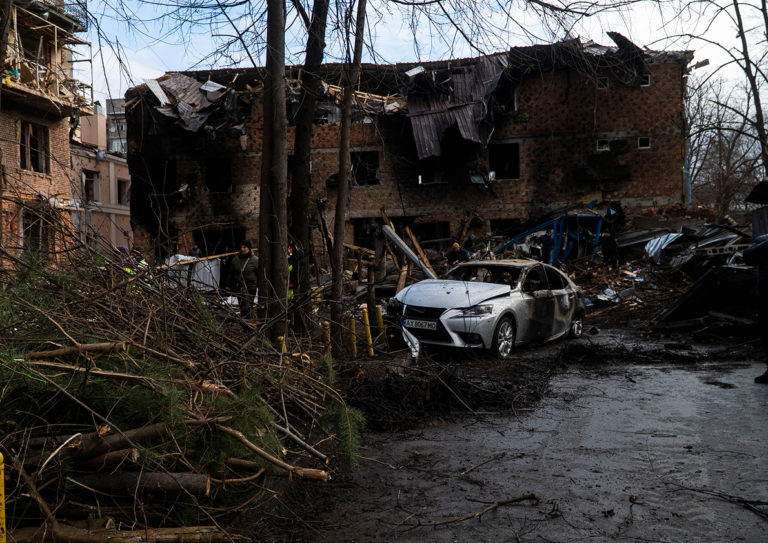
Kharkiv after Russian shelling on December 31st, 2023 — © Kateryna Pereverzeva archives
“Lyuk” is a media outlet that tells stories about Kharkiv, a major city in eastern Ukraine.
For four years now, Kharkiv has been a frontline city. The world knows Kharkiv through footage of shelling and destruction—and that’s one way to talk about the city. But there’s another lens, the one we, at Lyuk Media, chose as the centre of our work.
Ten years ago, when we decided to launch a media project, Kharkiv was different—lighter. The city of creativity, students, freedom, and a certain kind of rebellion. If you described Kharkiv back then as a person, it would be a teenager hopelessly in love with life—someone who loves art and adventure more than anything. And honestly, we still recognise this Kharkiv today, even after four years of constant attacks, even when some streets have been changed beyond recognition by Russian missiles.
And at the same time, today’s Kharkiv is a city that had to “grow up” fast and correct the mistakes of the past, because now it’s literally a matter of survival, for the city and for us as Ukrainians. But then what is it like to build a culture-focused media outlet in Kharkiv today?
How Did We Start?
In 2015, “Lyuk” launched as a local culture media outlet. But politically, it was a difficult time.
In March 2014, Russia tried to stage the so-called “Russian Spring” in Kharkiv: “performers” (hired activists) brought in from Belgorod posed as locals, organised pro-Russian rallies, and created convenient visuals for Russian propaganda—pushing the idea that Kharkiv “felt Russian” and wanted separation from Ukraine. That same summer, people began moving to Kharkiv from the territories occupied by Russia: Donetsk and Luhansk regions, as well as Crimea. I was among them—my hometown, Donetsk, ended up under occupation controlled by the Russian army, and I found a new home in Kharkiv.
Kharkiv avoided occupation, but the threat left its mark. The reminder of how close we are to the border with the aggressor was always in the air. At the same time, the media space was packed with Russian narratives—and attempts to make Kharkiv residents if not pro-Russian, then at least apolitical.
From the very beginning, “Lyuk” worked with this urban identity—urging people to have a political position and be ready to defend it. We kept repeating: being this close to the border means we simply don’t have the right to be indifferent to our city or our country.
At the same time, we focused on artistic practices and cultural phenomena that big national outlets overlooked. Our stories featured local artists, independent cultural projects and institutions, civic activists, and charitable initiatives.
Later, our editorial agenda expanded to include urban processes, the rights of Kharkiv residents, and vulnerable or marginalised groups. And we didn’t just write about these things. We became part of the changes: we initiated and joined peaceful protests, important civic actions, and festivals.
We weren’t only building a media outlet; we were building a community—one with deeper ties than the typical “media and readers” relationship.
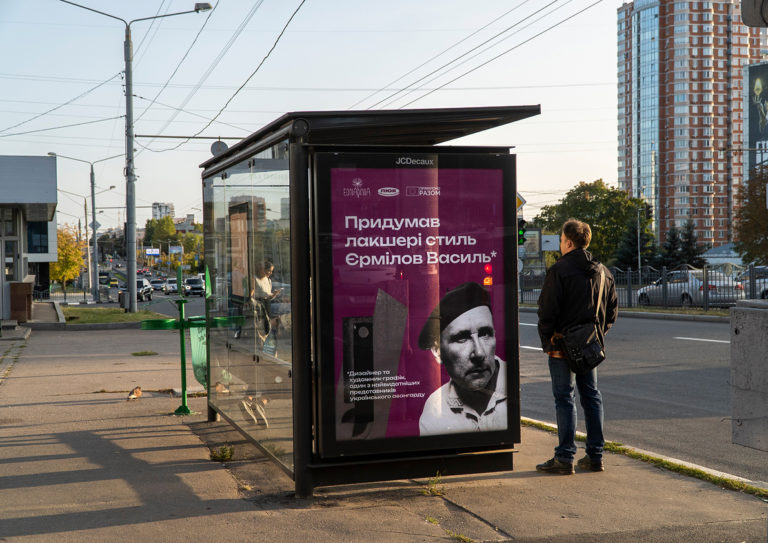
Promo of one of Lyuk's project in the city — © Kateryna Pereverzeva archives
New Lens and New Challenges After the Full-Scale Invasion in 2022
After Russia’s full-scale invasion of Ukraine in 2022, our editorial strategy changed drastically. In the first months, most of the team relocated to safer regions. But once it became clear that Kharkiv would not be occupied, we were back to full-fledged work in Kharkiv.
Alongside culture and social issues, we now cover lived wartime experience—rediscovering the city and its identity under completely new conditions. We pay special attention to self-identification, decolonisation (shedding imposed Soviet and Russian markers), and resilience to Russian disinformation.
Our challenges today are uncertainty, the constant closeness of death, complicated processes in the city, and the team’s overall mental state. You never know what tomorrow will bring: someone you love might be killed at the front; a missile might hit a colleague’s apartment; the power might go out in the entire city after another attack on infrastructure.
It’s hard to write about the deaths of people who should have created so many performances, songs, illustrations—people who now will forever remain on lists “Killed by Russia”. Every obituary sparks the same inner resistance: this should never have happened.
What Do We Value in Our Work?
I agree that our work creates space to feel deeply and to stay open to different experiences and emotions. But the war pushes us in the opposite direction: toward numbness. Living through the sheer number of tragedies Ukraine faces every single day is simply impossible otherwise. You can’t close your newsfeed—you have to react fast, catch the next news hook. And yet you keep catching yourself thinking that news about children dying under rubble no longer triggers anything—no pain, no compassion—only a dry editorial question: do we run it or not?
On December 18th, 2025, our outlet turned ten. Ten years is a highly unusual—almost abnormal—lifespan for an independent regional media outlet in Ukraine. It started as a volunteer project with a budget of 600 hryvnias (about 25 euros), built at a kitchen table—exactly what we paid back then for a domain and website hosting.
Today, “Lyuk” is a multimedia platform: text journalism, audio formats, video projects, and documentary short films. We survive thanks to grants, business partnerships, magazine and merch sales, and most importantly, monthly contributions from our readers.
The project has endured multiple crises, structural shifts, shutdowns and relaunches, team burnout, and changing funding models—yet it has kept its core mission: documenting local processes as part of a broader social and political context.
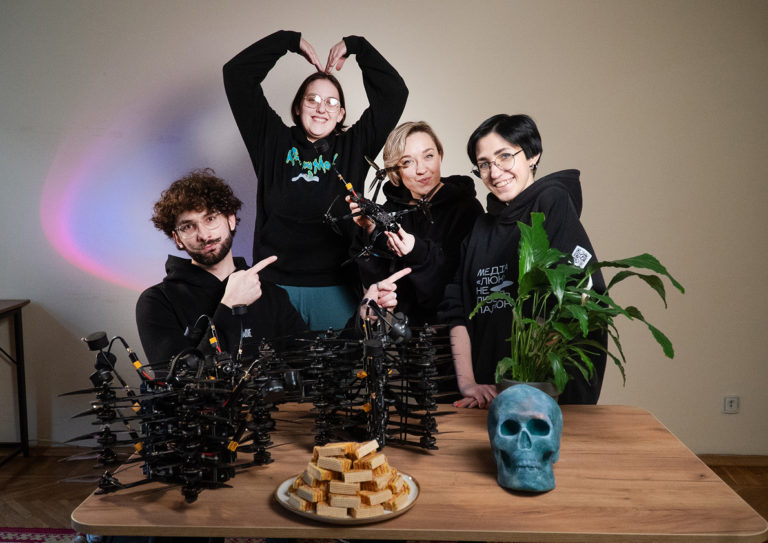
Lyuk team with FPV drones which were funded for the Ukrainian army — © Kateryna Pereverzeva archives
What About Now?
Now we have to invent new survival models for the media, hold both sensitivity and numbness at once, get up in the morning after nights filled with explosions, and keep doing our work.
In late February 2022, when the front pages of newspapers around the world were filled with images of Kharkiv’s destroyed streets, I kept thinking: God has a strange sense of humor—and maybe misunderstood my dreams. I always wanted the world to know Kharkiv—but not through images of people burned alive in their homes. I wanted the world to know the Nafta Theater and Les Kurbas. I wanted “see Derzhprom” to sit next to “see the Eiffel Tower” on someone’s dream list.
It feels like only after 2022 did I understand what I’d been doing all these years: trying to make sure my new beloved city, Kharkiv, would not share Donetsk’s fate. Trying to make sure it would be known not only through the image pushed by Russian propaganda, but through our team’s lens—one made of love and attention, admiration for its constructivist buildings, and real curiosity about Kharkiv’s history and art.
And today, we keep working—because Kharkiv is not just war. It is action and hope in defiance of horror; a stubborn determination to create and to dream of the future, even when you don’t know whether you’ll live to see tomorrow.
Published on January 6th, 2026
About the author:
Kateryna Pereverzeva is the co-founder and the editor-in-chief of Lyuk Media.