This article is part of Reset! Yearly Focus 2026: Digital Independence
Author: Davide Bevilacqua
The values of independent cultural initiatives can shape and be supported by an ethic and a practice of autonomous digital infrastructure. How to foster a new synergy among art and culture servers, independent cultural initiatives and European networks?
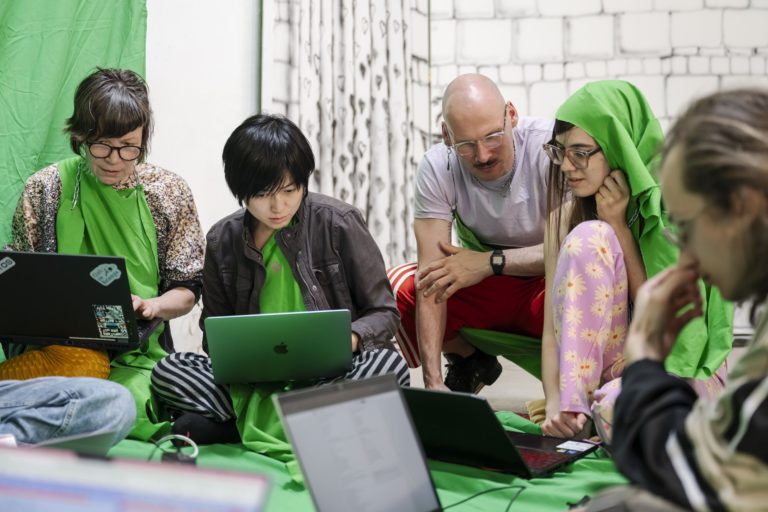
Workshop “Algorithmic solidarity: can colonialism be encoded into algorithms?”, by eeefff, at Art Meets Radical Openness Festival 2024 “Dancing at the Crossroads” (Left)
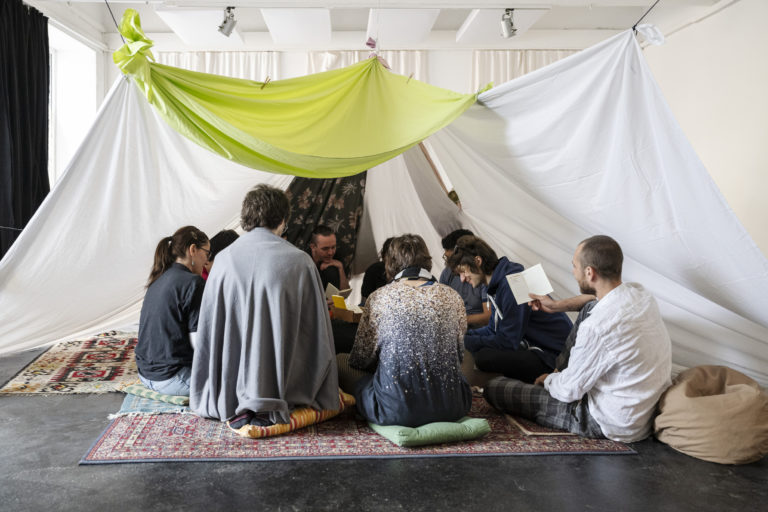
Performance/Workshop "Turning off the Internet," with Ada, Stephen Kerr, Irmak Ertaş, Aglaia Petta, at Art Meets Radical Openness Festival 2024 “Dancing at the Crossroads”, in cooperation with Master of Arts in Fine Art and Design in Experimental Publishing, Piet Zwart Institute, Willem de Kooning Academy Rotterdam (Right)
© Violetta Wakolbinger
In the time of big tech, AI overlords, and techno-optimist-authoritarianism, there is a widespread urgency of discussing techno-politics and ethics of digitalisation in all layers and fields of society, and especially within the field of independent cultural initiatives. Those are namely not only incubators of future cultural phenomena, but effective developers of socio-political values and practices, and digitalisation should be also subject of this value-creation. Discussions on digital ethics should however go beyond the rightful wish to abandon exploitative and unsustainable digital tools. We should be asking; how can initiatives find support for an ethical digitalisation turn?
Waking up in the MAGMA: Why to Escape Toxic Digital Monoculture
Over the past few years, generalised awareness on the extractive and unfair nature of digital infrastructures has been rising. We are not at the point where everyone sees big tech with the same concerns, but the doubts on digital technologies are increasing. For many, big tech turned bad seeing the CEOs present at the inauguration of Donald Trump; maybe someone got concerned with the release of the Snowden Files; a few probably observed how Microsoft, Google, and Amazon provided cloud infrastructure to the Israeli Army during the war in Gaza; and others simply begun questioning digital platforms by feeling a digital fatigue or burnout, and seeing the time and energy they spend with tools that promise to help you free yourself from labour increasing.
How to get rid of this? First, it is important to realise that we have a global dependency on big tech, specifically on GAFAM / MAGMA, an acronym that includes Google (or its parent company Alphabeth), Facebook (or Meta), Microsoft, Apple / Amazon / or in case of creatives, also Adobe. Independent cultural initiatives, like educational ones, occupy a specific position in this dependency, that both makes them particularly susceptible to the promises of big tech, and that contributes to disseminate their “message,” creating long term relationship of users/customers. They are easy targets of the “free tier / free usage” and get temporarily offered with cheaper cloud systems for educational purposes. Structurally underfunded, permanently looking for solutions, and also open for novelty and experimentation, cultural initiatives are usually early adopters of new tools and channels, especially the ones that are free of cost and promise effective operations.
Initiatives are also attracted by the mirage of endless audiences to be potentially reached, combined with infinite storage space and the mantra of creating content and value yourself. Those resonates well in initiatives that often rely on little resources to get the most out of it.
As an effect of such arguments, we observe a mono-culture operated by an oligopoly of companies that regularly make use of their dominance by tweaking functions, subscription fees, and operational logic to extract more value from the collected data.
The recent geopolitical developments, where the alignment of Silicon Valley with the military-industrial complex and their bonds with the autocratic Trump administration may have given new momentum to the existing critique, which found an outlet in the current discourse of just and ethical digitalisation.
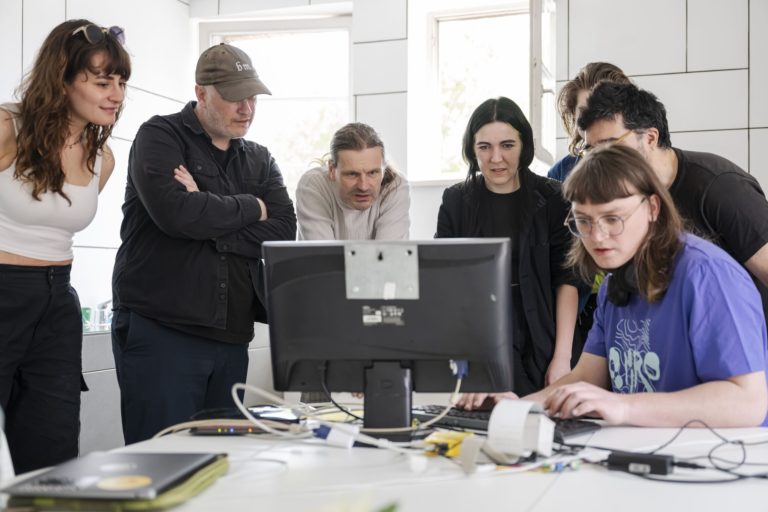
Workshop "Permacomputing your way out of casual dystopia," with Ola Bonati and Brendan Howell at Art Meets Radical Openness Festival 2024 “Dancing at the Crossroads” — © Violetta Wakolbinger (Left)
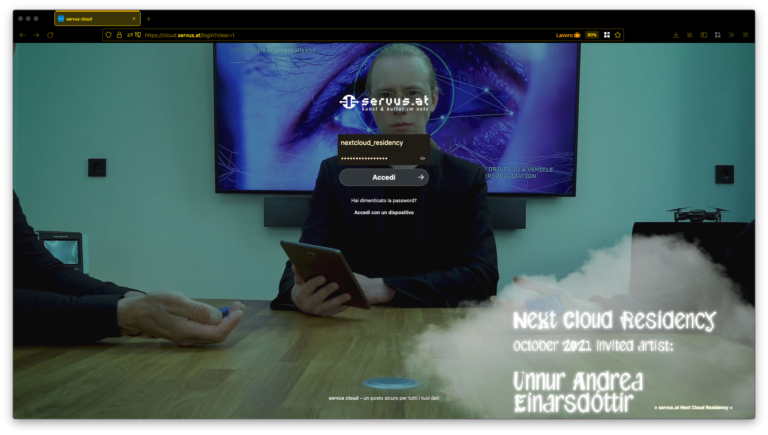
Servus's self-hosted cloud login page became a space for artistic experimentation within the project Next Cloud Residency in 2021. In this image Unnur Andrea Einarsdóttir (Right)
Ethical Digital Should Focus on Alterations, Not on Alternatives
Even before the current wave of criticism, it was relatively well known that the dominant digital technologies are profoundly unethical:
- they have severe environmental costs, as they require a vast amount of energy and water, but also rare earths for production, and are toxic when disposed;
- they rely on extraction and appropriation of data, of authored material, of cultural common goods;
- they are exploitative of their users, of individuals (typically in the global south) for moderation and labelling of datasets, and society at large, as they aim at reaching everyone;
- their operation is also completely dependent on venture capital, and is therefore devoted to gain at all costs;
- they promote a toxic idea of what the intersection of technology and life should be—based on surveillance, constant online presence and response availability, and overproduce, overcommunicate, overconsume, and doom scroll.
While these aspects of unethical digitalisation can be seen now as public knowledge, it is much less clear what an ethical, alternative choice could be. A lot of the current discourse on digital (or technological) sovereignty is namely directed towards changing the tools for non-US companies, sometimes looking for European companies offering similar services or looking for open source alternatives. This also seems straight-forward to implement: take one of the many lists of alternative software tools that are circulating—like the ones from the French association Framasoft or by Canadian journalist Parix Marx—look for a fairly similar toolset, begin using it, and you are done!
After doing the first steps, however, it becomes rapidly apparent that this process is never a simple swap. Product like Google Drive can only exist as part of the Google infrastructure and big tech logic. Any detail of that software has been developed with the accumulation of user data in mind. An exact alternative would require that very same socio-economical-technical stack based on large computation, venture capital, monopoly, surveillance, and political alliances that we previously labelled as unethical. But even if one switches from an ethical tool to another one there is a friction that requires labour and adaptation. The time—usually years—spent on a specific toolkit trained the user to look for specific buttons or functions which are in a new tool no longer there, for a different interaction logic or operational functioning. This is extremely frustrating and time consuming. It requires a huge rethinking of habits and workflows.
The research and exploration of alternatives is nonetheless a fundamental step for a process of liberation from big tech. Many do it by seeking technological sovereignty through European, open-source tools, which are often understood as the opposite of GAFAM. There are however some aspects worth keeping in mind. ‘European’ likely means “operating in a legal system with more attention to the user data.” This might be in principle true compared to many other countries with strong tech-lobbying, but this is also a self-appointed badge of values that we (as Europeans) believe we carry. In reality, too much attention is also given to money here. EU Institutions have already started to water down the GDPR and the AI Act by introducing business-friendly regulations, such as the Digital Omnibus. The “made in Europe” argument also does not address the implementation of MAGMA data centres and business branches in European countries. This will offer same products allegedly complying with European data regulations but as we see with all the law infringements from big tech, these entities cannot be trusted. We should not want a European Amazon or Facebook, because their toxicity lies not only in their country of origin, but in their operational logic.
‘Open Source’ per se is not more ethical than a non-open-source one. Open Source is a software distribution model that allows—with some limits as well—a specific production flow for a project. This possibly enables a better technical oversight on software bugs and the possibility of knowing exactly what the software does, so no hidden malicious behaviours, but it does not guarantee ethical tech.
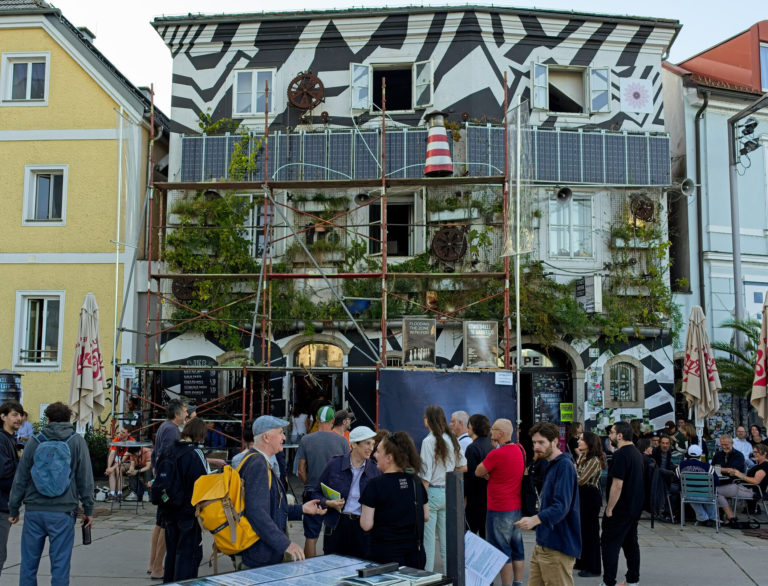
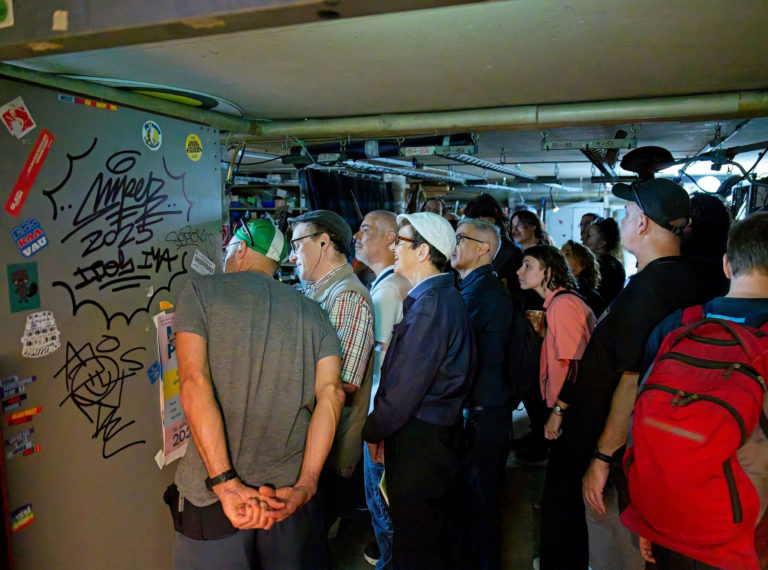
Stadtwerkstatt in Linz, Austria, where the servus.at works, produces festivals, and operates own internet infrastructure (Left)
Datacentre visit tour “Putting the Fog in Boxes Unbox the permanently growing inhouse net (infra)structures” (Right)
© Westley Hennigh-Palermo
What Can Be a Digital Ethical Choice?
In its 2024 Atlas “Dismantling Digital Dominance in Culture: Exploring Alternatives Models to Tech Giants”, the Reset! network collected a neat list of qualities of an ethical digital practices: as something directed “towards the adoption of fairer, more independent, and Europe-based and led digital platforms.” Such platforms should be “free, fair, secure, respectful, generous, economic, and ecological”, but also, we should want a “diverse and resilient digital ecosystem that values pluralism as well as cultural and artistic freedom.”
To develop an operative framework, however, such terms need to be translated into techno-social operative scenarios: what are good and bad behaviours in relation to technologies? The Reset! definitions should then be followed by technical reflections to translate it in the technological realms: Building secure tech requires the constructions of different functions if you want to keep your data safe or if you want to have a communication space where harassment is effectively moderated and contained.
We are not used to have a say in this anymore, as over the years the production and deployment of digital tools has been successfully professionalised and compartmentalised in the “world of technology and technologists.” This has decoupled technology from a lot of ethical reflections that would be useful to evaluate each tool. As users and as independent cultural initiatives, we should roll this back and begin positioning again ourselves in a framework of socio-political values and choosing tools that do not contradict and sabotages our operations.
The question “which tool do I need to get rid of this unethical one?”, could be rephrased through the sub-question “which kind of need do I solve through this tool that I now want to abandon? Which tool or workflow do I now want to use instead?” Such questions make space for alterations and reflection in the operational toolchain, till asking what kind of computation or also mediated socialisation do we really need as organisations.
This is the occasion to actually think about values and perhaps finding tools or solutions that align with the values the specific cultural organisation is supporting.
For example, an initiative doing work with particular care on environmental issues might find ethical to have a website that requires as little energy as possible. Or a group with a focus on dismantling gender bias and developing consent mechanisms could find its infrastructure through the practice of feminist IT. Like many try to serve organic or locally produced foods and beverages, running your organisation on forms of sustainable and ethical IT could become an added value.
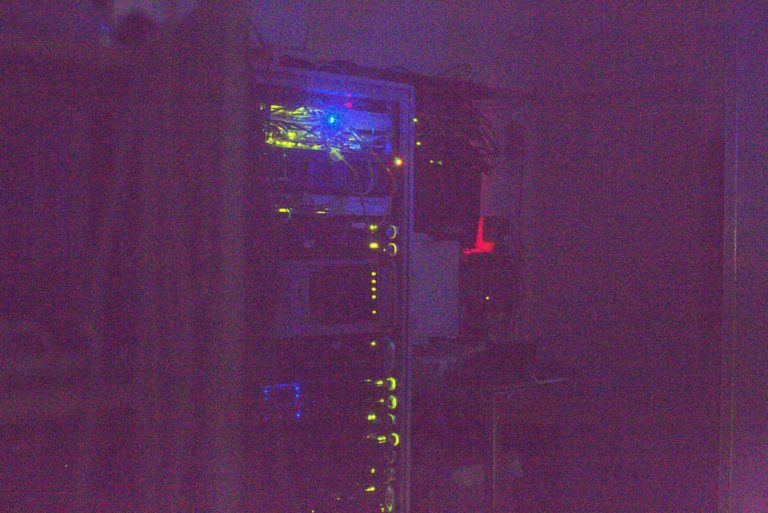
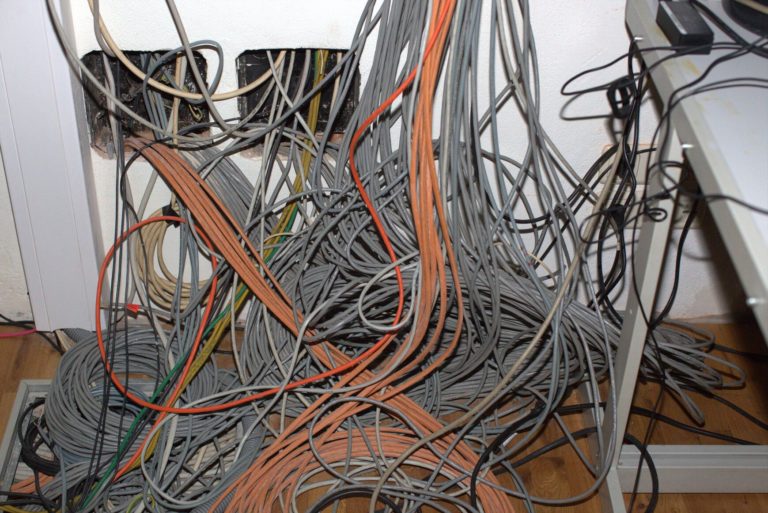
Images from the self-maintained datacenter at servus.at — © Sophie Morelli
Looking for Support: Where are the Network Initiatives?
This editorial on independent cultural infrastructures is being written through the context of the Austrian network initiative servus.at—an association working in the field of critical media art practices for over 30 years. Servus organises artistic productions and festivals addressing internet art, network cultures, and current socio-political and technical phenomena regarding the digital. To produce such art and research, servus runs a cultural data centre where it manages digital tools and communication infrastructure. It hosts its own email and webspace, cloud, newsletter & mailing lists, and several other collaboration tools that are shared with all the 300+ members, which are other cultural associations and individuals for a total of almost 3,000 users. The tools are self-hosted (yes, because open source), and are run through values of autonomy, privacy, independence, non-commerciality, and mutual help—data stays private and is not used to generate profit somewhere else.
The technological stack at servus is something that slowly changes and evolves according to the needs of such members: if someone needs a specific software for a project, this gets evaluated, tested, installed, configured, and—in general—made available also to all the other members. This often requires having dedicated sessions, which are the moments in which the values that form the needs and tools are exchanged and discussed, and also provide the hints for possible direction for developing further the infrastructure.
Servus is part of a wider scene of initiatives operating autonomous digital infrastructures for groups of artists or communities of cultural producers, and that call themselves “art servers” or “cultural infrastructures”, or more generally “community servers.” Some are independent cultural associations, others artist collectives or cooperatives, some might even take a business structure, but they all make clear that fairness and ethics have priority.[1]
Cultural Servers are interdisciplinary by nature, already supporting independent culture like independent stations or autonomous cultural centres. They strive for independence also in the technical and infrastructural sense, promote digital literacy, explore aesthetics and cultures within autonomous media. Through their practice, cultural servers contribute and shape the cultural understanding of technological sovereignty and digital self-determination.
It is important to note that this is not a nostalgic leftover of a different era of the internet. Some like servus have indeed begun operating in the late nineties, however they cooperate with actors that grew up in a time already dominated by big tech, who are not satisfied with the current scenario of digital exhaustion and infrastructural dependencies. This forms an active movement that constantly questions the technological status quo and looks for ethical tools. In a time of rising ethical questions, they can be important partners for the development of a digital infrastructure that actually supports the value of independent cultural initiatives.
References
[1] You can find a non-exhaustive list here: https://monoskop.org/Community_servers or at https://switching.software/.
Published on February 24th, 2025
About the author:
Davide Bevilacqua is a media artist and curator researching the environmental and social impact of internet technologies and platforms, looking critically at digital greenwashing and seeking escape routes from platform capitalism. Davide is currently manager & programme curator at servus.at, a cultural association dealing with and online art and cultures and open source internet infrastructure. Within servus.at activities, Davide organises the community festival AMRO Art Meets Radical Openness and the d*signweek.