“Balzac is a student media outlet, and it will remain one”
Author: Nora Balkanyi
Alongside the opposition’s success across diverse segments of society, the young generation played a key role in Hungary’s recent historic and influential elections—and they unequivocally chose Europe. It is their voices that an independent student media platform seeks to represent. They are Balzac.
© Balzac
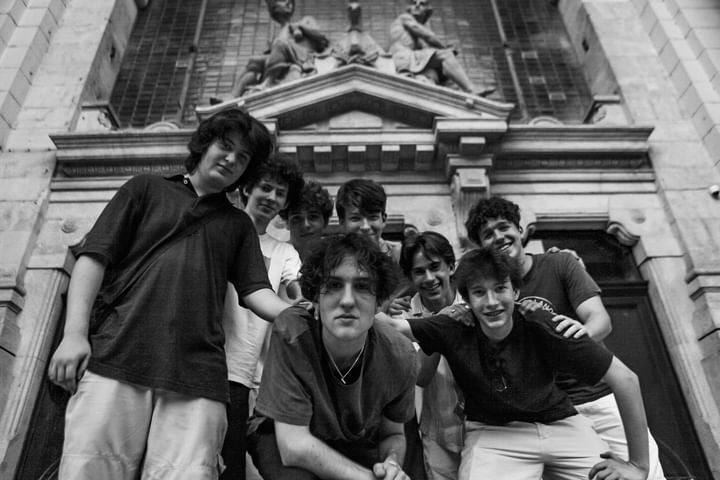
Since 2010 in Hungary, journalists of media independent from the state party have worked in a political system that considered them enemies. Under such circumstances, the last three and a half years have seen the emergence of a new media outlet called Balzac, built up solely by students. “The idea is that at some point we age out of Balzac. Those who want to can stay on as mentors, but we make space for the next generation. We’ve set the age limit at 25. Balzac is a student medium—and it will remain one.”
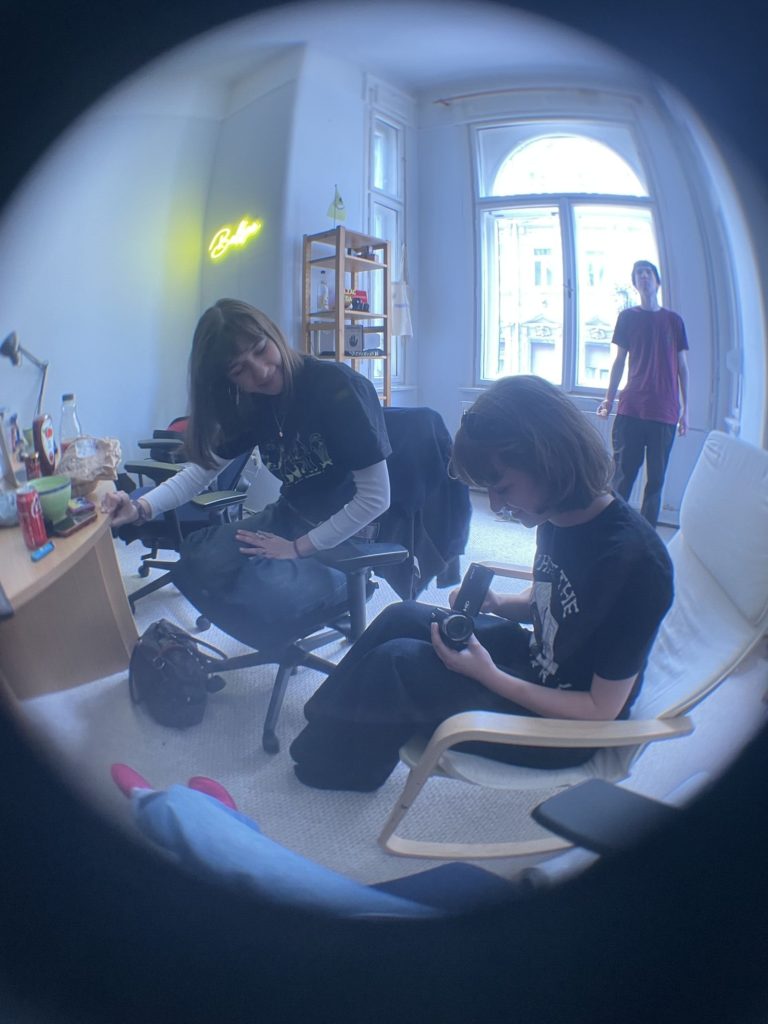
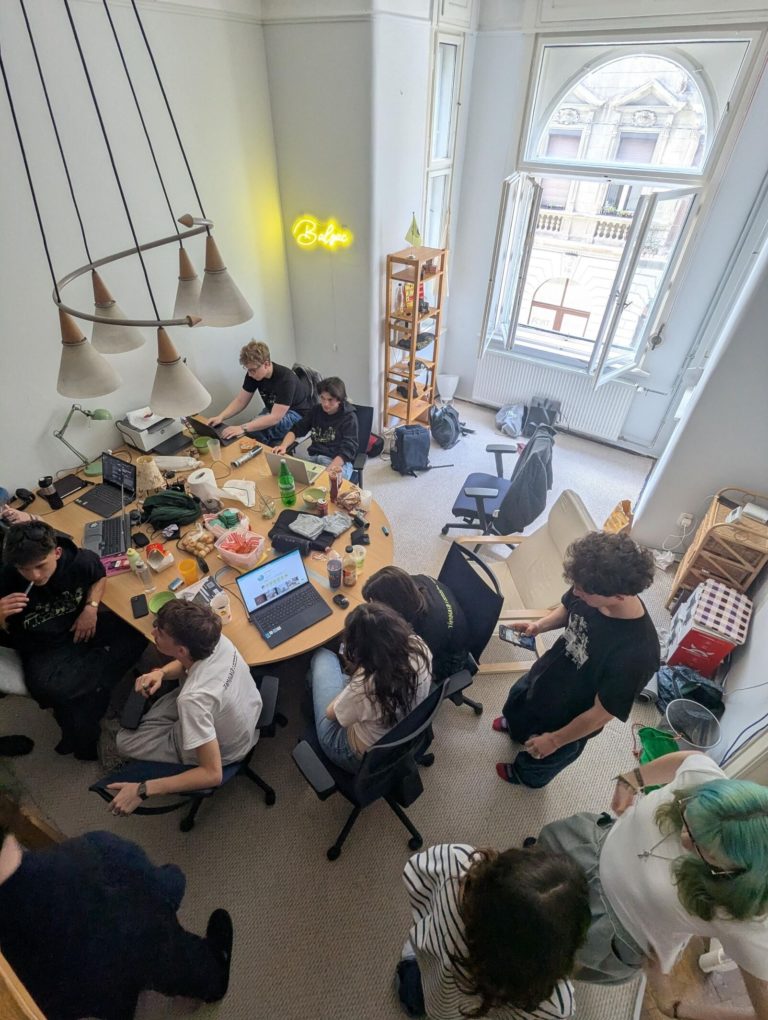
I am speaking with four young people, all around 18, in a high-ceilinged apartment typical of Pest, not far from one of the capital’s best-known parks. We are in Balzac’s relatively new studio, which they rent from their own resources. In the next room a music video is being filmed. Up on the mezzanine, the editor-in-chief is eating a takeaway lunch while waiting for a crew from Austrian public television.
It is no coincidence that Balzac has recently attracted the attention of both Hungarian and international media. Hungary’s hybrid autocratic regime and the figure of prime minister Viktor Orbán put the country under a level of scrutiny disproportionate to its size. At the time of this interview, we were in a particularly charged political moment, approximately one month ahead of the parliamentary elections that turned out to be historical: the opposition leader, Péter Magyar secured a decisive victory. Winning with a landslide, Budapest burst out in celebration, led naturally by young people, as strong man Orbán was thrown away from his power of 16 long years.
Growing Into Peers
Balzac’s first video was published on YouTube in late 2022. In the opening shots, a young girl chants into a megaphone: “free country, free education,” as the video covers a wave of student protests. Since the launch, they have produced more than 200 videos. The editorial team—made up entirely of high school and university students, mostly from Közgazdasági Politechnikum—consists of around 20 active members, along with a further 10 external contributors. By now they have become the most recognisable youth-driven new media platform.
Their output primarily focuses on long-form video content, including on-the-ground reporting and public affairs coverage. They also produce shorter cultural recommendation-reels, photo essays, a talk show-like format featuring invited guests, or podcasts. Community-building through events is also central to their work.
They have already secured support through a grant (the American Independent Media Support Fund last January, which has since been discontinued by the Trump presidency), have organised a 400-person fundraising event with live bands and drawing queues on the street, and have conducted interviews with the country’s most prominent political figures, thus growing into peers of the reporters working in the professional independent media sector.
Across their two strongest platforms, Instagram and YouTube, they have built an audience of around 13,000 followers and subscribers. While this is albeit modest compared to the older professional outlets, it represents a stable and engaged base. Their data suggests that different audiences follow them on different platforms: YouTube tends to attract an older demographic, while Instagram reaches younger viewers.
In early 2026, they formally established their organisational structure: both the editorial team and the publishing entity are led by elected representatives, while aspects of their financial and legal operations are supported by law students within their extended network. In addition to occasional grant funding, Balzac primarily relies on YouTube revenue, merchandise sales, donations, and income from supporter events. All of this is reinvested into the operation and further development (e.g. equipment or rent) of the platform.
© Balzac
Parks, Cafés, and Classrooms Outgrown
Balzac was initially led by five people, which often resulted in a bit of chaos. “It could be difficult: you’d be standing at a protest with a question, and you had to call everyone. They didn’t always agree,” recalls Zsombor Peer, who works across video, photography, and podcasting. The early phase—marked by improvised workflows, ad hoc fieldwork, and editorial coordination conducted through Instagram group chats and memes—has since given way to a more structured organisation.
“In three months, we developed more than we had in the previous three years,” says Szonja Kaucsek, who is responsible for visual design. Internal communication has moved to Discord, while their studio/headquarters can serve as a community space, replacing school classrooms, parks, and cafés. Alongside the founding roles of CEO (Kristóf Kenyeres) and editor-in-chief (Dani Weiner), they introduced new positions, such as: deputy editor-in-chief (Ármin Rostás Jézi), politics editor (Miska Karácsony), culture editor (Vilma Böröcz), and head of design (Szonja Kaucsek).
“More serious, adult stuff,” says Lőrinc Zalavári, a reporter at Balzac, describing the shift. “Since the end of last year, we’ve also introduced an application process for new members in different roles, from reporter to designer. We realised that selection shouldn’t be based solely on whether someone is our buddy or not. We put out calls and deliberately recruited people,” Szonja explains. “There are always new reporters joining. One of them, a ninth-grade student—16 years old—recently completed his first report, and did really well,” Lőrinc notes.
“The Voice of Our Generation”
The team does not see Balzac as a workplace, nor do they aspire to become the next major mainstream media outlet. Many are not even certain that journalism will be their chosen profession, and those finishing school may naturally take a break to concentrate on their final exams. “We want to remain the voice of the younger generation. We don’t want what happened to Fidesz to happen to us,” says Lőrinc with a half smile, referencing the ironic trajectory of Hungary’s recent ruling party. Originally founded as the Alliance of Young Democrats, Fidesz—and Orbán himself—emerged as a liberal, pro-Western youth-driven party during the country’s democratic transition from the USSR, in the late 1980s-early 1990s.
They do not receive a salary, nor do they plan to introduce one. “Balzac is primarily a workshop and a community. I find it really special to be part of it,” Lőrinc explains. “It’s the best extracurricular activity, even in terms of future university applications.” “Balzac is made up of people who are committed and motivated,” Szonja adds. The workshop character of the platform is evident in the way members teach one another and move flexibly between roles. “If I ask anyone to teach me video editing, there’s always someone who will help.” A photographer might edit short videos; a reporter might step in to operate a camera.
Lőrinc emphasises that Balzac’s slogan—“The Voice of Our Generation”—does not mean they only want to speak to young audiences. Rather, their aim is to bring the perspectives of 15-25-year-olds to a broader public. And that voice has become increasingly critical of the now-overthrown system. According to consistent polling data, the elections had a strong generational dimension: among voters under 40, support for the opposition challenger was particularly pronounced. Three of the four Balzac members present in the interview were eligible to vote, and they saw the election as a clear turning point—including in decisions about whether they or their peers would’ve pursued higher education abroad.

© Balzac
Journalist Chasing Politicians, Cast in Marble
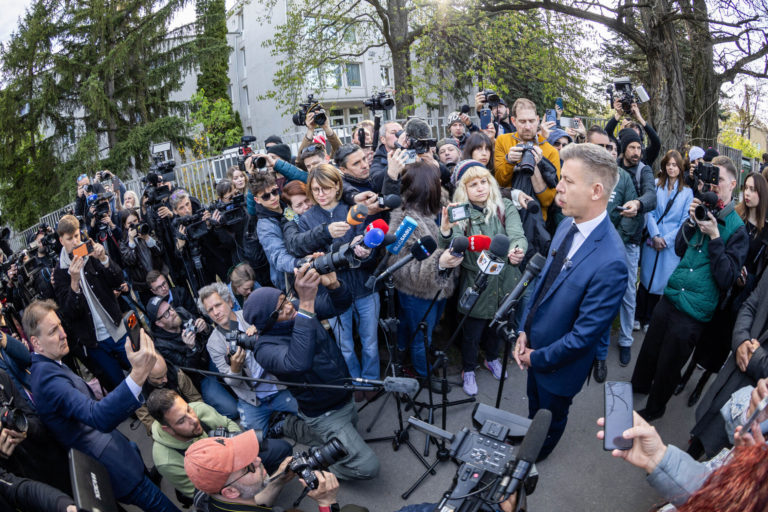
“We’ve lived our whole lives within the regime. For us, this is the standard,” says Lőrinc. “It feels natural that we have to run after politicians,” adds Zsombor. “It’s strange when we’re actually allowed into a press conference and can ask questions. We’ve talked about this—it’s not normal. In other countries, you’re not pushed aside or squeezed out. And a minister doesn’t shove a phone in your face while you’re asking a question, just to record everything because they don’t trust you.”
Members of Balzac—just as other representatives of the independent media—have already faced harassment, e.g. including from a far-right content creator, and their female reporters in particular encounter frequent sexist remarks. Although supportive reactions are also common on the streets. “At the last protest, when we said we were from Balzac, people recognised us. Among those in their mid-20s to early 30s, that’s increasingly typical,” Zsombor notes. Online reactions are similarly mixed, as their age also shapes how they are received. “We’re especially easy to target because we’re young, but there are advantages too,” says event organiser and head of PR, Zoé Kenyeres.
“One of our biggest moments came from this dynamic,” Zsombor recalls. Viktor Orbán is known for rarely responding to journalists’ questions. Although he has appeared more frequently during the recent campaign, he continued to favour selected outlets. On one occasion, Dani Weiner spotted a motorcade near his home and waited persistently for the prime minister to appear. “Orbán saw a young guy with a microphone on the street and didn’t take him seriously. Then he was surprised when Dani actually asked his question.”
Is This Still Journalism?
The name Balzac carries multiple references: it is linked to a street in Budapest’s Újlipótváros district, associated with Dani's neighbourhood and beloved underground hip-hop group—but it also nods to French novelist Honoré de Balzac. The channel even features his well-known line in its bio: “Journalism, look you, is the religion of modern society”. At the same time, the group openly grapples with what journalism means today, a question facing the profession globally.
The team acknowledges that their commitment to longer, more analytical video formats places them somewhat in a bubble. Rather than competing in the fast-paced cycle of short-form content, they consciously chose a slower, more in-depth direction—though they are still searching for the right balance.
When I ask how they themselves consume news or if they plan to launch more traditional, written news content, their answers reflect an ongoing process of collective reflection. “It’s a complex question. It’s tied to the dopamine-driven habits created by smartphones, but also to the fact that people increasingly consume short videos instead of articles. For many, that’s their primary source of information,” says Lőrinc. “I’ve noticed that I mostly scroll through Instagram stories from major outlets and read headlines. The question is whether that really counts as news consumption,” Zsombor adds.
© Balzac
“We have to adapt if we want to create change. We have creative ideas for that,” says Szonja about their future. “Ideally, we maintain both short and long directions,” adds Zoé. She also emphasises how Balzac wishes to strengthen the real social network among young people. “Something that’s really missing—in Hungary, but I think globally as well—are spaces where people with shared interests can meet and connect. It would be great if Balzac could also create spaces like that.”
During the 2026 elections — © Balzac
Zoé Kenyeres — PR, community organising
Zoé has been involved with Balzac since its early days through her younger brother, Kristóf Kenyeres, one of the founders. Initially, she was critical of the quality of the team’s early Instagram posts and joined to help refine them. Today, she manages external inquiries and organises Balzac’s events — including supporter parties and concerts — playing a central role in building and maintaining the community. She is currently a university student, studying special education.
Zsombor Peer — cameraman, photographer, podcaster
Zsombor joined Balzac two years ago. He filmed his first video with co-founder and editor-in-chief Dani Weiner, covering Budapest’s March of the Living. “We studied Italian together. Back then it was more like: ‘Hey Dani, can I join Balzac?’ I was into photography, but they trained me to become a cameraman — there was more need for that.” He recently launched his own podcast, Tröszt.
Szonja Kaucsek — head of design
“The founders are my closest friends, and they didn’t have anyone with a strong visual sensibility, so it felt like a natural fit.” Szonja joined two years ago and is responsible for visual design. Her first major project explored the gentrification of art acquisition. Looking ahead, she is interested in questions of national identity, Hungarian cultural heritage, and collective memory. Alongside school and her work at Balzac, she is currently involved in an EU-funded project related to these themes.
Lőrinc Zalavári — reporter
“I’ve been a Balzac fan since the early days, when they were still running through the corridors of our high school with a microphone.” Lőrinc joined the team around 2024, also through personal connections. He was quickly thrown in at the deep end: on the 15th of March — one of Hungary’s most important national holidays, typically marked by government demonstrations and opposition protests — he covered an event that would prove to be politically significant. It was there that Péter Magyar, the prime minister to be, first launched his movement.
“We didn’t realise how big it would be. The more experienced Balzac people went to the government rally, and as the new guy, I ended up here. In the end, I was the first in the Hungarian press to interview him that day.” His report from the protest, now with nearly 50,000 views, remains one of Balzac’s most watched pieces. Lőrinc plans to pursue a career in law, but is also considering joining a major newsroom — potentially abroad — during his university years.
Published on May 5th, 2026
About the author:
Nora Balkanyi is a journalist based in Budapest, covering creative industry, media, and culture; currently freelancing as an editor at hvg.hu, media literacy trainer and cultural content manager; volunteer in JazzaJ hub for improvisational music since 2015.