Author: Yannis-Orestis Papadimitriou
In a country shaped by overlapping crises, Greece’s independent art and media scenes have not merely endured—they have adapted, improvised, and persisted. Emerging from the wreckage of economic collapse and navigating an increasingly constrained political and financial landscape, these initiatives have continuously reinvented themselves, carving out spaces for expression and scrutiny even as the odds remain stacked against them.
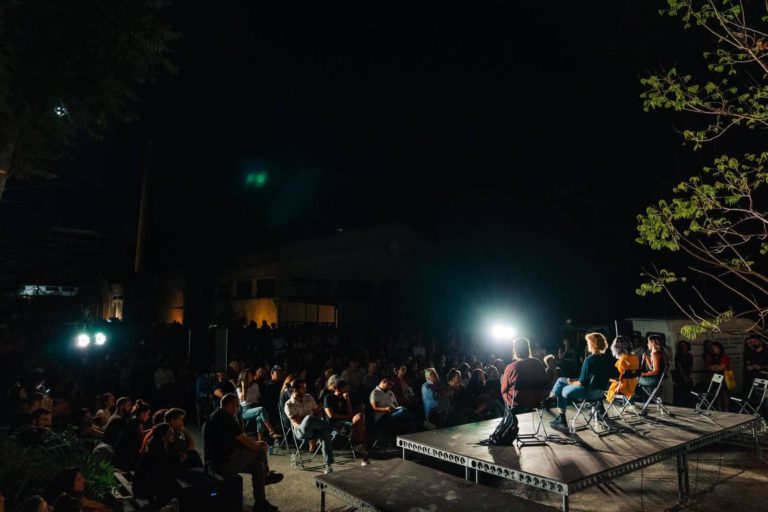
Solomon event, September 2024 — © Orestis Seferoglo
Greece is often referred to as the ultimate example of a country suffering a ‘polycrisis.’ Since right before the turmoil and uncertainty that has been gradually taking over the world in the last decade, the country had suffered the throes of a severe economic crisis that has left the social and political landscape deeply scarred.
On the other hand, since 2009, the country’s creative forces have exhibited a commendable adaptability, although many of the numerous initiatives in arts and the media, whether new, older, or past, have complained of manoeuvring an environment that constantly forces them to swim against the tide.
In Times of Crisis
In 2010, Greece was nearing the verge of bankruptcy and was forced to seek assistance from the International Monetary Fund, the European Central Bank, and the European Commission. The austerity mandate that came with the bailout from this ‘Troika’ was so severe, that the country almost overnight lost a quarter of its GDP—a devastating loss that is very rarely seen outside of the context of a war.
The economic crisis almost instantly fuelled concurrent social and political crises. Unemployment and poverty rates skyrocketed, private and public debt spiralled out of control, and pension and insurance funds were failing. For years, Greece was the theatre of frequent mass and intense protests, as well as short-lived coalition governments. Meanwhile, the far-right was emboldened and roamed the landscape in the form and shape of Golden Dawn, a recently convicted criminal organisation masquerading as a political party.
However tumultuous—or maybe due to the tumult of the time—, these years proved to be formative for new approaches and exchanges in arts and media. The crisis had produced not only a need for expression, but also an abundance of affordable, unused urban space to be rented and used by artist collectives, with spaces like Frown Tails, KNOT Gallery, No Central[1], and Velvet Room in Athens, hosting different activities, while also acting as laboratories for artistic experiments.
Next to them, the same task was undertaken by squats like the old Embros Theatre in the centre of Athens, which survives to this day, despite and against the numerous attempts by the authorities over the years to evict the collective that runs it.
Meanwhile, the media has been suffering through their own problems. Caught between the consequences of the economic crisis, its political repercussions, and the market’s incomplete transition from traditional media to the new digital age, major news organisations declared bankruptcy, harsh pay cuts, or mass layoffs.
The restructuring of the economy and the banking sector also led to the media becoming more and more entangled with political power, creating a very restrictive environment for journalists. More than fifteen years after the beginning of the crisis, Greece still comes last among EU countries in the Reporters Without Borders’ annual press freedom ranking— even lower than countries infamous for their problematic press like Bulgaria and Hungary.
It was during that time that independent outlets began to blossom, trying to satisfy the need for breaking the uniformity of the media landscape: magazines like UNFOLLOW, MONO, and Hot Doc[2], news websites like The Press Project, experiments in collective ownership like the newspaper Efimerida ton Syntakton, self-organised media collectives like Omnia TV, as well as the satirical website Luben, marked the first successful experiments with creating an alternative press outside the confines of big media conglomerates and the issues that mired them.
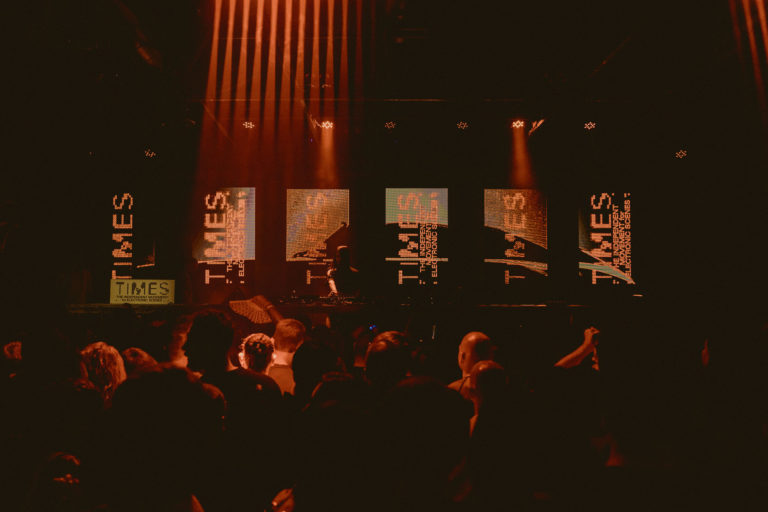
reworks 2025 — © Tony Theodorakis
After the (First) Crisis
Most of the initiatives in arts and media that sprung during the peak of the crisis between 2010 and 2015, are now either closed or have radically pivoted from their initial form. But they left their mark as a claim for independence. It has to be noted, though, that this represented a desire by artists, curators, and journalists, not only for free and unrestricted expression, but also as a way to make ends meet, since both the arts and media sectors heavily suffered the burden of the crisis.
Greece’s economy gradually began to bounce back after 2015, almost coinciding with the mass influx of refugees from Syria, Iraq, and West Asia in general. During the previous years, many young, educated people had abandoned Greece as part of its ‘brain drain,’ while the turmoil of the crisis had attracted journalists, academics, and artists from all over the world. Combined with the NGO workers who came to Greece after 2015’s refugee wave, this led to a productive exchange between Greece’s cultural sphere and creatives from abroad.
Unfortunately, as far as the arts are concerned, this ‘spring’ would not prove to be completely devoid of problems. Especially around the time that the Documenta exhibition was organised in Athens, small, independent, artist-run spaces began to emerge in far bigger numbers than before. After all, rents might have begun to pick up slightly post-crisis, but remained relatively affordable. Most of these spaces were more ‘proper’ than the DIY/‘guerilla’ example the crisis had set, and often aimed at making a living for the people involved (with varying success).
Over time though, Greece, and especially Athens which hosts half the country’s population, would go from an abundant supply of affordable spaces, to having the highest housing cost relative to income—hence, what is more and more openly called a housing crisis. This change was fuelled by mass real estate investment from abroad, a reliance on tourism for economic recovery that radically reduced available housing, as well as the interest of ‘digital nomads’ from abroad to take advantage of the still low housing prices compared to their home countries.
The problem that these spaces have is more one of longevity, rather than willingness to try. Public sponsorship of the arts was low well before the crisis, slashed during its peak, and has never really recovered to the extent that other parts of the economy have. This became all the more evident during the lockdowns of Covid-19, when contrary to all other professions, workers in the arts were not eligible for any financial assistance from the government and had to claim it through the Support Art Workers movement.
Still, a number of initiatives have demonstrated commendable resilience. Spaces like KET – Kentro Eleghou Tileoraseon have managed to rely on the experimental events they host to survive since 2012, while music festivals like Reworks in Thessaloniki (est. 2005) and Plisskën in Athens (est. 2010), have maintained a steady presence and increased their popularity. Many smaller festivals like Nature Loves Courage and Ametric (both in the island of Crete) have been going on, despite funding and other hardships.
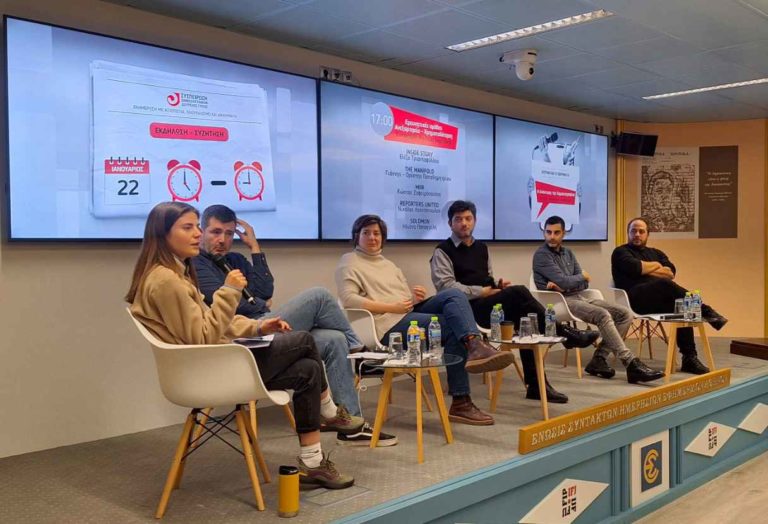
Journalists' Union (ESIEA) panel, January 2024 – © Archives of ESIEA
Adapting Through Time
The lack of support from the Greek state has turned many creatives towards EU funding and the non-profit economy. This shift has also led to the establishment of networks that aim to empower artists: Culture for Change aims to assist young professionals who want to get involved in the arts, while the Jazz Solidarity Network supports Greece’s dynamic yet vastly under-funded jazz scene by helping them navigate the complexities of the grants economy, among other activities.
Grants and non-profit vehicles have also provided the basis for the second wave of Greece’s independent media, which were now focused more towards investigative journalism than day-to-day news coverage. Between 2017 and 2019, the subscription-based InsideStory website was launched, investigative teams The Manifold, MIIR, and Reporters United were created, while Solomon pivoted from an NGO geared towards refugee and migrant integration through journalism, to an investigative outlet. This created an ecosystem of new and independent media, which gradually managed to produce impactful stories that broke ‘the wall of silence’ on many important issues.
Next to them, websites like Typos-i in the city of Ioannina, StoNisi in Lesbos, and AlterThess in Thessaloniki, have provided an independent alternative to local press, setting a new example for grounded, localised news coverage.
On many occasions, these initiatives have to face increased hostility. Reporters United, Omnia, InsideStory, and AlterThess have faced SLAPP lawsuits from public officials and companies for their reports, leading to an outcry from international organisations dedicated to press freedom.
Recently, for example, when asked about the findings of a story, government spokesperson Pavlos Marinakis dismissed Solomon, winners of the European Press Prize and the Daphne Caruana Galizia Prize for Journalism, as ‘people who mislead public opinion’—it is only the latest of many indications of the government’s stance towards (or rather, against) investigative journalism.
Also, a new space of alternative outlets began to make use of both the revenue currently offered by major platforms, as well as the increasing willingness of sponsors to be advertised through such content. This ecosystem includes cases like the Delines channel on YouTube by journalists Pavlos Toubekis and Antonis Konstantaras, who left traditional media in order to commit themselves full-time to their own platform.
Greece could provide a valuable example of communities who manoeuvre difficult—even hostile—environments while remaining dedicated to creating art and content that is in direct conversation with the space and situation they inhabit. Sometimes growing and sometimes receding, what these media and art projects have constantly tried to achieve is to be part of the conversation.
[1] These three spaces have closed since then.
[2] These three magazines have closed since then.
Published on March 19th, 2026
About the author:
Yannis-Orestis Papadimitriou is a staff writer for in.gr, the host of The Archipelago podcast on Stegi Radio and co-creator of investigative journalism outfit The Manifold. In the past, he has collaborated full-time or as freelancer with many international and Greek media and has served as scriptwriter, producer, co-director, and researcher for various documentaries.