
Author: Eden Maclachlan
While Bulgaria’s independent music and theatre scenes are driving innovation and pushing emergent artists, they lie on a very fragile cultural ecosystem. Unpredictable funding, shrinking venues, and limited institutional recognition continue to make it difficult for independent organisations to plan for the future, leaving the sector waiting to see whether greater political stability can bring the long-term support it needs.
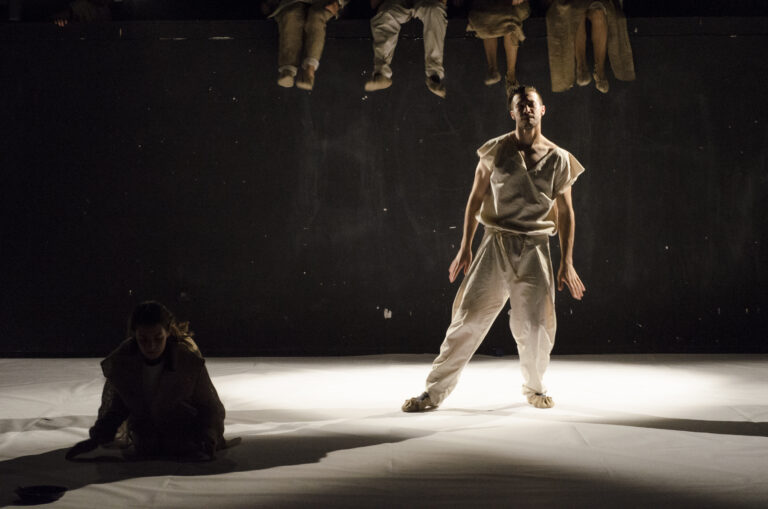
The Possibilities by Howard Barker, directed by Stefan Prohorov
Last May, many Bulgarians woke up to the news that singer DARA had won Eurovision, becoming the first Bulgarian to ever win the continent’s biggest and most popular culture contest.
Yet, Bulgaria’s cultural sector isn’t solely defined by Eurovision success, with independent musicians and collectives being at the forefront of innovation and playing a crucial role in developing the field.
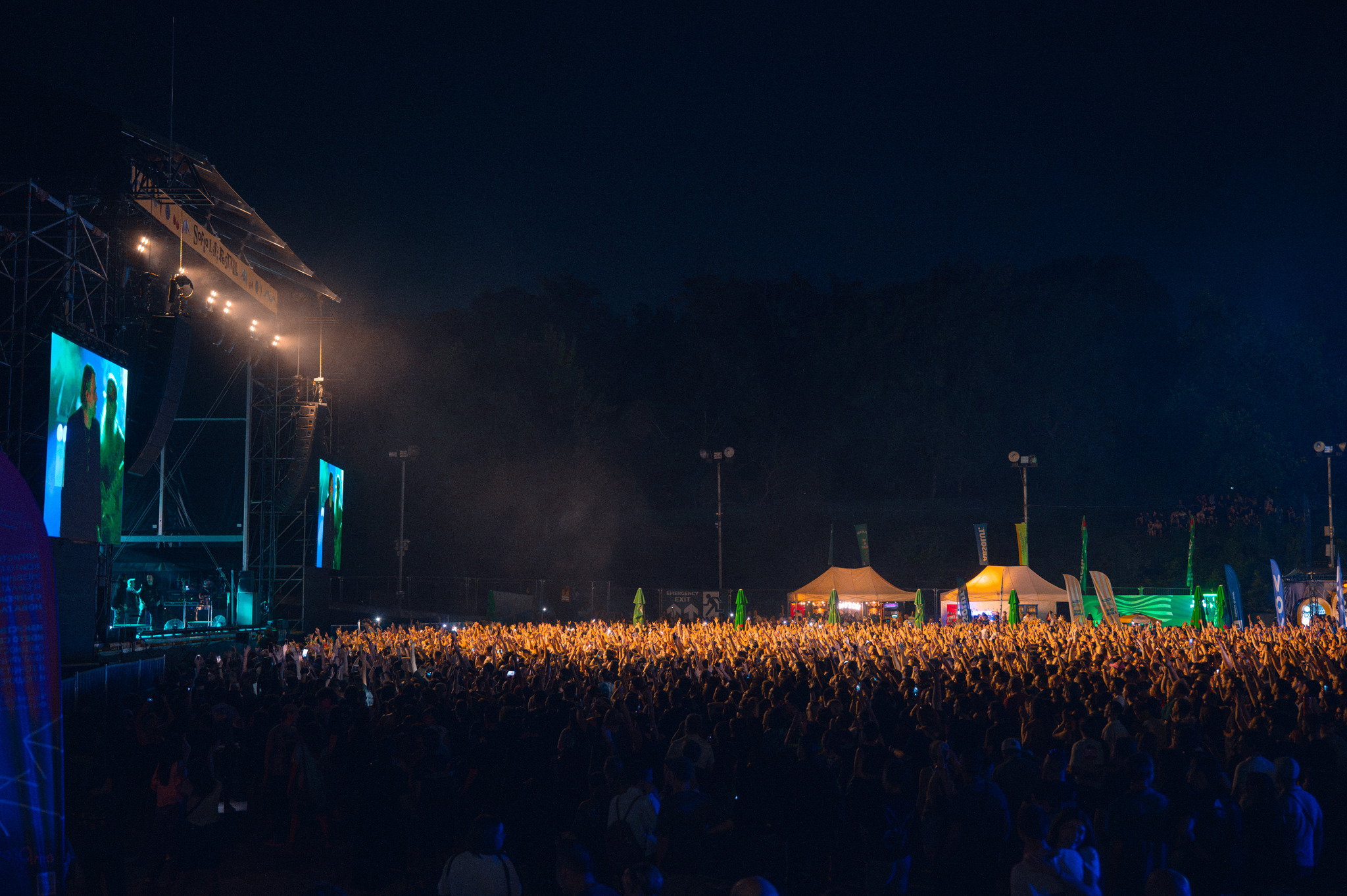
“What we mostly see in music development now mainly comes from independent organisations and promoters, as there are a lot of smaller artist collectives that are doing great. They have really cool new music coming out,” says Ruth Koleva, the founder and head of programme at Sofia Live Festival and SoAlive Music Conference, a meeting point for artists, managers, labels, and publishers from across the Balkans.
Being Independent
Koleva has a background as a singer and is the chairwoman of the Association of Independent Music Publishers and Producers Bulgaria. She is also on the board of both PROFA, the Neighbouring Rights Society, and IMPALA, the European Association of Independent Music Trade Bodies. She emphasised the importance of the independent culture field and the crucial role it plays in connecting people with similar interests while creating a form of social consciousness.
“The independent sector is one of the most important ones in any cultural aspect. It's where grassroots success stories emerge from. It's where innovation starts. It's a very socially important aspect because it unifies and engages with the population in a very organic way,” says Koleva.
According to Stefan Prohorov, the chairman of ACT, the Bulgarian Association for Independent Theatre, independent performing artists—and independent organisations in general— and organisations are the numerous ambassadors of Bulgarian culture around the world.
ACT, was established in 2009 as an NGO to defend, help establish, and promote the independent performing arts community in Bulgaria and abroad. The association is also a founding member of the European Association for Independent Performing Arts, EAIPA, of which Prohorov is the vice-chairman.
Every year, ACT arranges the ACT Independent Theatre Festival, the association’s flagship event, which will have its 16th edition from October 17th to 24th and that acts as a vehicle to promote the performing arts community and its creations.
“The ACT Festival is a showcase platform and a visibility tool for this community and its activities," said Prohorov. “Throughout the years, it was the event that actually helped establish infrastructure and international positioning.”
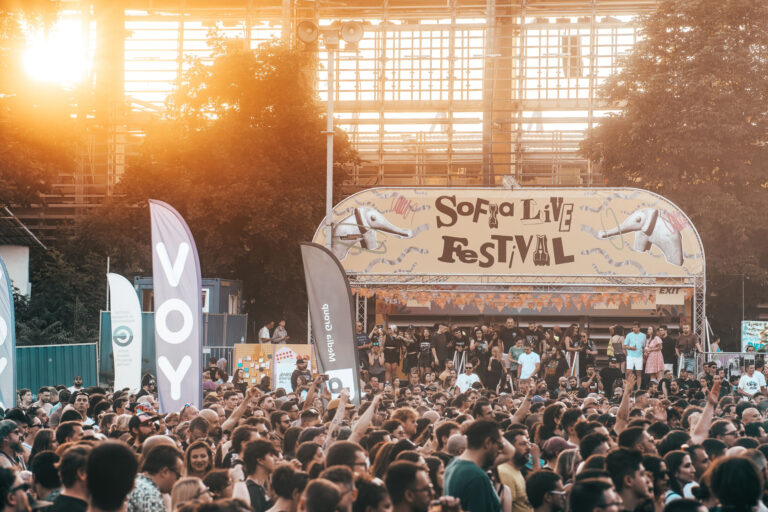
Sofia Live Festival — © Clix Creative
Funding, Recognition, and Lack of Government Predictability
However, just like in many European countries, the independent music and performing arts sectors face some recurrent challenges. Unsurprisingly, the lack of predictable and recurrent funding is a major hindrance.
Koleva explained that SoAlive Music Conference, which relies mostly on public funding, is facing an uphill battle every year. Although institutional funding opportunities in Bulgaria exist, she finds particularly challenging the lack of predictability in funding cycles, which usually are on a year to year basis rather than a longer and more stable timeframe of 3 to 5 years that would allow for better forward planning.
“The problem with the funding in general is that it's not very predictable year to year,” says Koleva. “It's year by year, and usually it gets delayed. The answer of whether you're getting funding or not sometimes is like just days, weeks before the actual event, meaning that you have to function by either risking and just presuming you will get the funding or you have to cancel. And most people do risk it until the very last minute” she explains.
Prohorov explained that there are many complications for the Bulgarian performing arts scene with most stemming from this lack of predictability of the country’s institutions, exemplified by the recent political crisis.
“Bulgarian institutions have been sustainably unpredictable in the last five years due to Bulgaria becoming the Olympic champion of democracy by holding elections every four to six months for all these years in a row, which is quite unnerving,” says Prohorov.
The recent Bulgarian government reshuffle—the country went through 8 elections in 5 years[1]—has had a significant impact on many spheres of society, and culture is no stranger to it.
“Conversations have to start from zero, and when you reach a point where there's something that can really develop, then a new government comes along,” Koleva points out.
Although the limited funding available has remained stable in the last five years for the performing arts scene according to Prohorov, inflation has been eating out nominal amounts of money. Additionally, the unpredictability made it considerably more challenging for artists to produce and manage quality work.
“This unpredictability means that planning your work as an artist has either been extremely difficult but also it has been very difficult to actually produce quality work because of the different conditions and restricted funding,” explains Prohorov.
This prevents many within the independent cultural field to rely on regular sources of funding and plan in the long run. In the meantime, Koleva says that government officials tend to lack understanding on the benefits of culture.
“Culture has been a very filthy word in Bulgaria. It's not seen as something that can be economically sustainable and impactful,” says Koleva. This lack of recognition creates a disregard for the time, effort, and professionalism cultural workers put into their craft, pushing them to complement with a side job to make ends meet. Both agree on the fact that cultural workers and artists need to be better paid and protected.
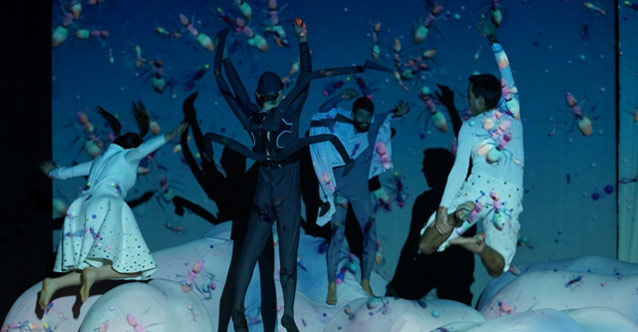
The Nothing, Wild Ant, Adam and Eve, by Malina Przesluga, directed by Stefan Prohorov
Disappearing Venues
Meanwhile, outside Sofia, independent and emerging cultural workers are facing a lack of venues to perform, while Bulgaria lacks spaces for younger people to find a community, avenues to express themselves, and connect culturally. This represents a threat for the future development of culture, be it in the music of theatre sector.
“These are the places [independent grassroots venues] where subcultures emerge, that's where artists find their voice, they start to perform, they find their community, they find their audience, and they are incredibly important for the social environment,” says Koleva.
“There is a scarcity of venues where people can simply rehearse or present their work,” adds Prohorov. “You don't have enough venues, so you cannot perform regularly. You cannot get enough audience exposure. Beyond Sofia, it's really hard to present work.”
Additionally, independent grassroots music venues have very little protection against major disastrous events such as Covid-19, while rents have gone up and bar sales in the opposite direction, meaning that some can not afford to present up and coming talents as it is not financially viable.
“In order to build a system where venues still continue to be hubs [for emergence] and be able to pay their bills, there needs to be a steady form of support for them, tax exemption, and form of protection for venues, otherwise we'll lose all of them shortly,” says Koleva.
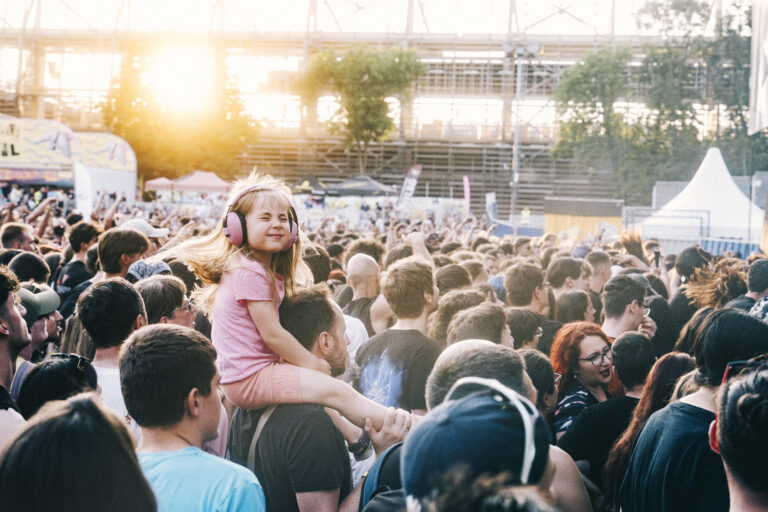
Sofia Live Festival — © Clix Creative
A Stable Government
In April, Bulgaria had its 8th Parliamentary election since 2021 and for the first time since 1997, a single political party, Rumen Radev’s Progressive Bulgaria, has had an absolute majority in the Parliament, which should allow it to bring in major reforms.
A 2024 report on the Bulgarian independent performing arts scene stated that the constant political reshuffle had kept the reform of cultural policy at a standstill, making it very difficult to draft and renew legislation, or implement any long-term vision in the field of culture, with the independent sector being particularly affected.
Stefan Prohorov says that he doesn’t feel unheard by the government, however he highlights that the constant reshuffles have been problematic, and hopes for stability in governmental institutions.
“Local authorities, since they changed much less in the last two decades, have actually been much easier to work with[2],” explains Prohorov.
As Bulgaria enters a new political chapter following years of instability, Prohorov and performing artists are curious to see how the new government can benefit their cultural scene. Culture spending increased in the 2026 budget, yet, concrete actions will need to be seen.
“I try to look for the results and for the actions. In the last few months, the new government has not produced too many results, also due to the fact that we didn't have a state budget, which blocked the whole thing. I also believe that cultural policies and their success is not necessarily the consequence of political agendas. It's much more about administrative capacity,” says Prohorov.
Considering Bulgaria’s recent international cultural successes, such as the Eurovision win of DARA or the International Booker Prize nomination of Rene Karabash, Prohorov believes that things are moving in the right direction and hopes the independent culture scene can capitalise on it.
“It is a wave that we need to be riding. This wave is not going to go down in the next few years,” says Prohorov.
Yet, after years of political instability, it remains to be seen if the Bulgarian independent cultural sector can benefit from a more stable government and if the recent cultural successes can put the light on a field in need of more recognition.
References
[1] Between 2021 and2026, Bulgaria faced 8 parliamentary elections fuelled by extreme political fragmentation, State capture and public backlash over economic policies.
[2] The Municipality of Sofia has been supporting the ACT festival.
Published on October 13th, 2026
About the author:
Eden Maclachlan is a freelance journalist based in Sofia, Bulgaria. He works frequently for The Times, The Guardian and co-operates regularly on cross-border journalism projects, including investigations.
