

Author: Agatha Gorski
As Ukraine fights to protect its identity amid Russia’s invasion, the struggle to preserve its culture is unfolding not only in museums and archives, but in shops, social media feeds and everyday life. A growing network of grassroots organisations is using everything from 3D scans and digital archives to clothing, art, and food to keep Ukrainian culture visible—and build a new form of cultural resistance in the process.
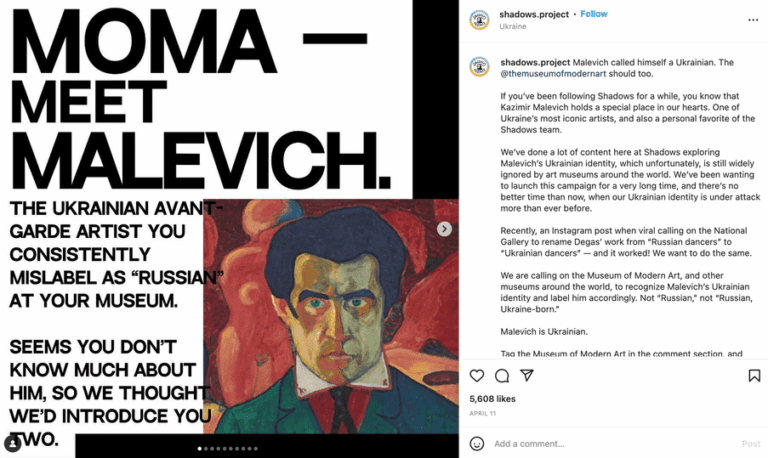
A 2022 Shadows Project Instagram campaign launched to fight for the correct labeling of Ukrainian artist Malevych, still mislabeled as Russian by the MoMA online — © Shadows Project
In 2021, half a year before the full-scale invasion, I co-founded the Shadows Project as an Instagram media to connect Ukrainians with their culture and heritage. I was 21 at the time, and had watched the country go through an incredible cultural reconstitution over the previous years.
However, I felt that more had to be done to cement this process amid the growing Russian threat. I began to use new media to connect Ukrainians with their culture and heritage to help ensure it would be sustainable amid foreign interference.
Fast forward five years, our organisation has grown to 40 people working on protection and multimedia projects internationally. It’s one of many cultural NGOs that play a key role in protecting and digitising physical culture, weaving it into everyday civilian life through clothing, food, music, and more.
From 3D scans of looted museums to sold-out merch collections, these unique grassroots responses have helped keep Ukrainian culture alive amid ongoing destruction.
As more of Europe reckons with the same Russian threat, Ukraine’s experience building cohesion from the ground up is one worth paying attention to.
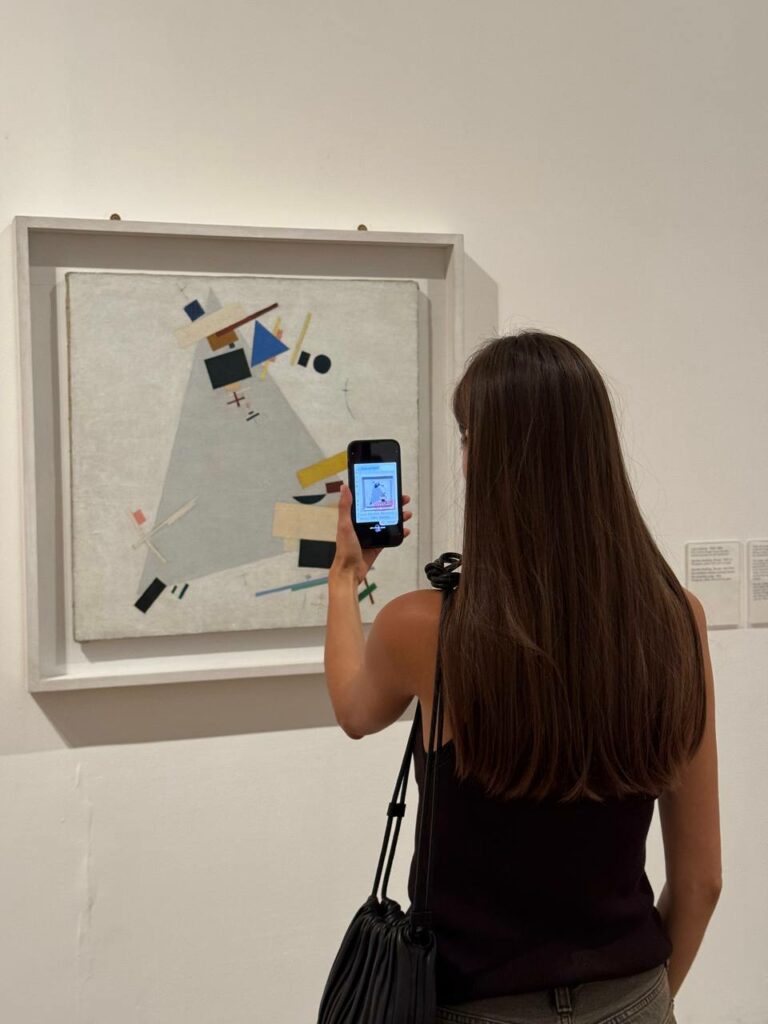
A 2025 large-scale Shadows Project campaign launched in an effort to get Western museums to correct their mislabelings of Ukrainian artists. It featured multimedia tools like an Instagram filter, a clothing collection, and an interactive website — © The Shadows Project
New Digital and Physical Memory
Since Russia’s first attack in 2014, the Ukrainian society has slowly but steadily experienced a cultural awakening. A series of laws passed between 2014 and 2022 curbed Russian cultural influence and mandated quotas for Ukrainian content, pushing Ukrainian culture into public life, education, media, and everyday services.
However, that shift accelerated sharply after 2022, when the full-scale invasion brought a campaign of destruction against Ukrainian sites, alongside Russia's denial that Ukraine exists at all as a separate nation, people, language, or history.
With Ukrainian culture under literal attack, hundreds of organisations turned to new ways to keep culture alive and encourage its consumption in the broader public.
One key area has been protecting it from physical loss. Ukraine's Ministry of Culture has stated that Russian attacks on the country have damaged or destroyed 2,625 cultural infrastructure facilities and 1,990 cultural heritage sites as of the end of July 2026.
This loss is a serious blow to Ukraine's cultural legacy—the museums looted and destroyed by Russia held works of real value and prestige, and their survival is bound up with Ukraine's fight against the erasure of its identity that Russia is actively pursuing.
That destruction has pushed a wave of organisations to create 3D scans, photogrammetric models, and virtual reconstructions of destroyed or at-risk buildings, monuments, and museum objects that can live on as digital copies. One of them, Pixelated Realities—an Odesa-based NGO founded by IT specialists—created the Museum of Ukrainian Victory, a digital collection of damaged and destroyed buildings and heritage artifacts open to anyone. In 2026, its models became the first Ukrainian 3D heritage objects published on Europeana, the EU's cultural heritage platform.
Since February 2022, Ukraine's Ministry of Culture has also reported that over 1.7 million cultural heritage items have been stolen from occupied territory, with entire collections wiped clean from museums in cities like Mariupol and Kherson.
Using OSINT methods, another NGO, the Museum of Stolen Art, built an online 3D tour of a hall housing digital copies of the artworks looted from Ukrainian museums by Russian forces. When or if these pieces will ever be returned is uncertain. Hence, the project seeks to rethink how to memorialise culture and history by presenting them as livable collections that people can visit in real time.
Another important area of work has been the challenge of keeping Ukrainian culture visible, popular, and alive.
Russia heavily invests in erasing, appropriating, and contesting Ukraine’s culture in the information space so preserving it means keeping culture circulating where people actually will encounter it in their daily lives.
Ukraine WOW, co-founded by prominent marketing and communications professionals Yaroslava Gres and Julia Solovey, seeks to commercialise Ukrainian culture at scale while advocating for it in Western spaces.
Their projects pair cutting-edge technology with partnerships across Ukrainian brands, companies, and other entities—exhibitions, merch collections, theatre performances.
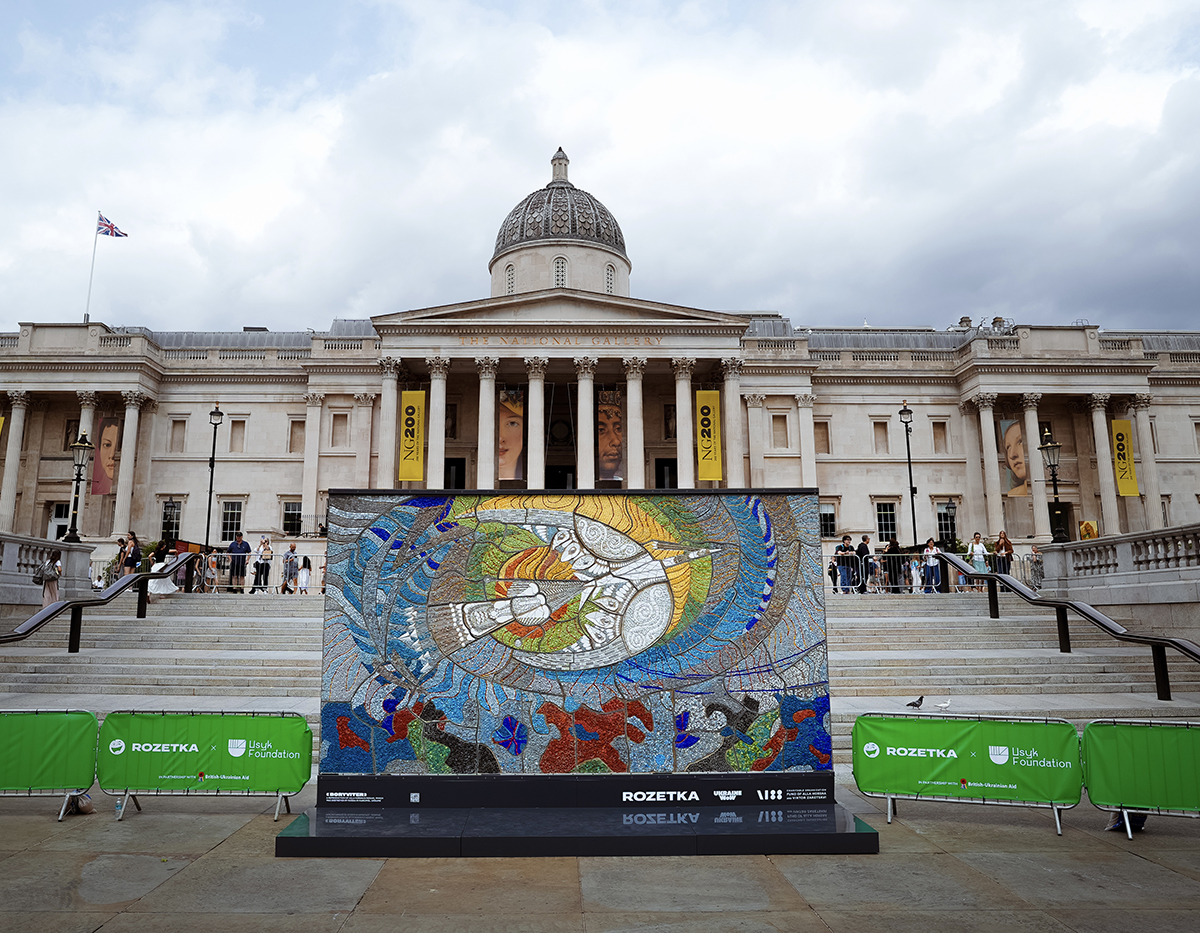
In one project, they worked with the granddaughter of Alla Horska—a well-known 1960s Ukrainian artist—to restore her cult mosaics, which Russia had seriously damaged in Mariupol. The recreated mosaic was cut into 1,250 unique fragments and sold to the public, selling out in a day and raising UAH 4 million to restore and fund a tour of the work through Ukraine and abroad.
Ukraine WOW has emerged as the dominant player in the space, but below that scale sits a layer of smaller, niche actors doing similar work on narrower slices of Ukrainian heritage.
Many began as research or documentary projects before the full-scale invasion and have since expanded into producing and selling their own products and partnering with commercial brands to do so.
One of the earliest examples is Ukrainian Folks, a Ukrainian ethnographic documentation project that partnered with mass-market Ukrainian brand Jul to release a collection of graphic T-shirts inspired by traditional Ukrainian sayings, selling out in days. Since then, they've released a second collection inspired by a famous Ukrainian folk song.
Other, smaller NGOs have ventured into this space on their own. Old Khata Project, a collective exploring rural architecture with an Instagram following of over 40,000, recently published a documentary book on traditional Ukrainian house paintings, which is now sold in Kyiv’s major bookstores. Platfor.ma, a media company, collaborated with the Mykolaiv Regional Museum, one of Ukraine's largest local lore museums, housing over 400,000 exhibits, and severely damaged by shelling in September 2022, on a limited-edition line of museum-inspired souvenirs, with half the profits going toward the museum's restoration.
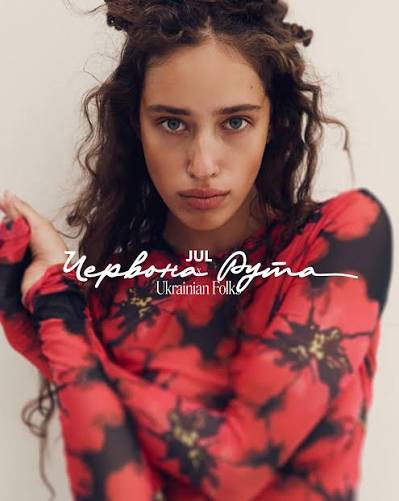
The launch campaign of Ukrainian brand Jul's second collection launched in partnership with ethnographic project Ukrainian Folks featuring a red Rue, a mythical flower from Ukrainian folklore that changes from yellow to red as a symbol of true love. Through pop culture, it has become a vital element of modern Ukraine's identity — © Jul
The Gap Underneath the Growth
Despite the dynamic, gaps still exist in actually building cultural resilience in the long run.
Most of these initiatives struggle to find adequate funding. Conflicts in other parts of the world have diluted the attention of donors. Dire humanitarian conditions and critical needs on the frontlines are taking priority. Funding for culture has taken an especially hard hit over the past year with USAID's shutdown. In 2025, the US’s aid to Ukraine fell 74%, and USAID's Office of Transition Initiatives—the small, agile grants mechanism that funded local initiatives like these—was eliminated entirely.
A February 2025 rapid assessment of 73 Ukrainian civil society organisations found that 25% planned staff reductions, 19% had introduced unpaid leave, and 14% were shutting down specific programmes because of the USAID freeze. 75% were actively searching for alternative funding.
Many of the successful initiatives are commercial collaborations, but many companies already redirect a share of their sales tax to the military, which makes the case for also funding culture a harder sell. Add in disrupted supply chains and rising costs, and more brands are choosing to keep production in-house rather than collaborate at all.
More fundamentally, what sells is a narrow band of Ukrainian heritage: a motif, a saying, a cult figure, a folk song.
Such projects do not cover a regional archive that needs climate control, a dialect spoken by a few thousand people, or the difficult, unornamental parts of the country's past.
Many of these initiatives end up as scrappy efforts, run on volunteer labour, or with chronically underfunded teams. They have little capacity to scale and rely on the goodwill of those driving the efforts.
And yet the ecosystem keeps building resistance regardless.
The field has grown enough that Ukraine's Culture Ministry launched the Culture Resilience Alliance in 2025 specifically to coordinate the growing number of grassroots and NGO initiatives and support the work of cultural and creative communities, operationally and financially.
In May, Ukraine’s Minister of Culture and Strategic Communications Tetyana Berezhna and Country Director for Ukraine at the Tony Blair Institute David Stephenson wrote that Ukraine's creative industries now function as strategic infrastructure, citing research showing the country's creative industries have grown faster than manufacturing or agriculture over the past decade.
The impact of any one t-shirt collection or 3D scan is hard to measure on its own. But taken together, they give Ukrainians daily, tangible proof that their culture is still here all around them, even as Russia actively continues its attempts to destroy it.
Published on October 6th, 2026
About the author:
Agatha Gorski is the co-founder and general director of the Shadows Project, a cultural NGO promoting and preserving Ukrainian cultural heritage. She is also a NextGen Fellow at Foreign Policy 4 America and a Fellow at the Sigma Squared Society. She previously worked as a digital communications specialist at the German Marshall Fund of the US and as a media analyst at NewsGuard Technologies. She holds a joint Master's degree in Journalism and International Affairs from Sciences Po Paris.
