

Author: ALMARE
This series of interviews is conceived and curated by ALMARE, an organisation based in Turin dedicated to contemporary practices that use sound as an expressive medium. ALMARE works at the intersection of music and art through the conception and production of events, new commissions, and educational programmes that contribute to a broader critical reflection on the present.
The aim of this series is to provide a glimpse of the diversity of models and practices Reset! members and like-minded independent cultural organisations adopt to sustain ambitious cultural programming in complex and precarious contexts, with a particular focus on the relationship between curatorial practices, sustainability, and organisational models. These interviews have previously appeared in Italian in the journal of cheFare as part of the project Next Generation You 2023 (NGY) promoted by Fondazione Compagnia di San Paolo.
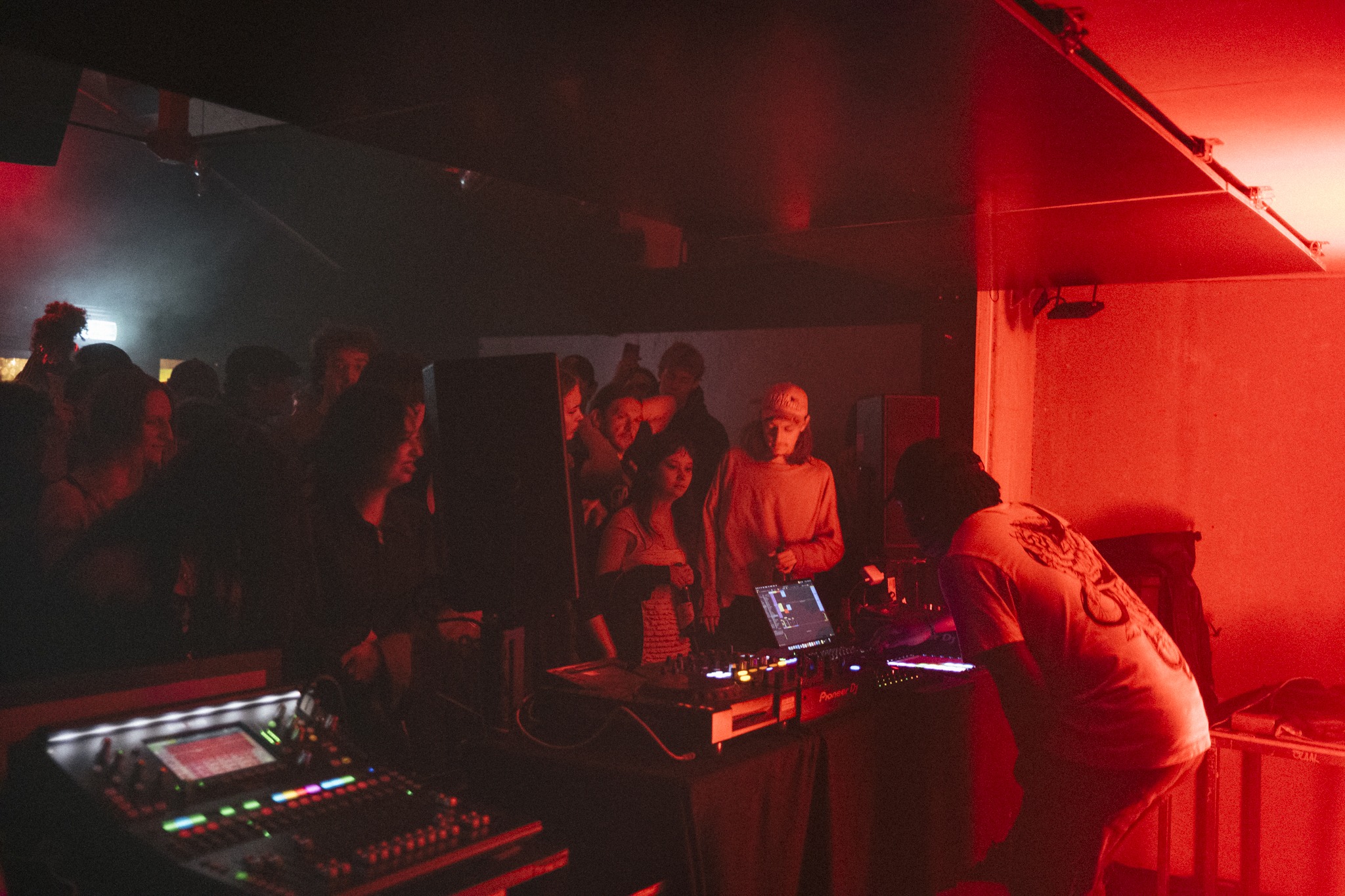
Battle-Ax — © Philippe Gerlach
What follows is a conversation with Shilla Strelka, founder, heart, and mind of Struma+Iodine. Strelka is also artistic director of the Unsafe+Sounds festival. Struma+Iodine was born in Vienna at the end of 2012 as a series of concerts organised with a rigorously DIY approach. From its beginnings, Struma+Iodine has dedicated itself to presenting the diversity of contemporary electronic music, club culture, and avant-garde sounds. Between live concerts, DJ sets, and podcasts, over the last fifteen years the project has hosted about 400 international and local artists.
Today, Shilla continues to build bridges between artistic disciplines and music scenes, embodying the belief that curation lies in creating new modes of experience. Struma+Iodine represents a model of how an independent platform can grow while maintaining its ethical and artistic integrity, moving from DIY to professionalisation without losing its soul.
ALMARE: How was Struma+Iodine born?
Shilla Strelka: Struma+Iodine was born at the end of 2012. I was on tour and I met some artists who asked me if there were opportunities to perform in Vienna. At the time there weren't many options: few independent promoters and clubs that organised evenings, but irregularly. So I thought: "Ok, maybe I'll do it myself." I followed a completely do-it-yourself approach. I invited musicians to play and had them sleep at my house, cooking for them and taking care of them... It was about no longer being a passive consumer of music, but becoming a more active part of the scene. I worked with various clubs that were open to this idea, and I also organised events in alternative art spaces.
ALMARE: What represented the turning point towards the more professional form you operate with now?
SS: A very important event was meeting Matthias Kranebitter, a composer and the original founder of the Unsafe+Sounds festival, which I've been managing for 12 years now. When I met him, I learned about public funding. Before that I wasn't very aware, I didn't want to work with corporate money or even with State funding, because I feared they would limit my autonomy. I wanted to be as free as possible without compromising. But when I started collaborating with the festival, I understood something crucial: I started reflecting on my work and perceiving it somehow as self-exploitation. Working DIY often means you don't get any retribution out of it, while always running risks. It was beautiful, but also exhausting. I wrote my first funding application in 2015. It was a decisive moment.
ALMARE: How is Struma+Iodine structured today? How many people are we talking about?
SS: I handle management, then there's a person who handles finances, and another who acts as president of the organisation. But in practice, I'm the only one who's involved full time. Then I have people who help me on some projects. A couple of years ago I also established an advisory committee that helps me make decisions, bringing multiple perspectives, which is crucial. During Covid, I took another fundamental step when I launched a website that also functions as an archive for events. I think it did a lot for the project's visibility: there's an index of artists I've worked with that, how shall I say, is very well organised.
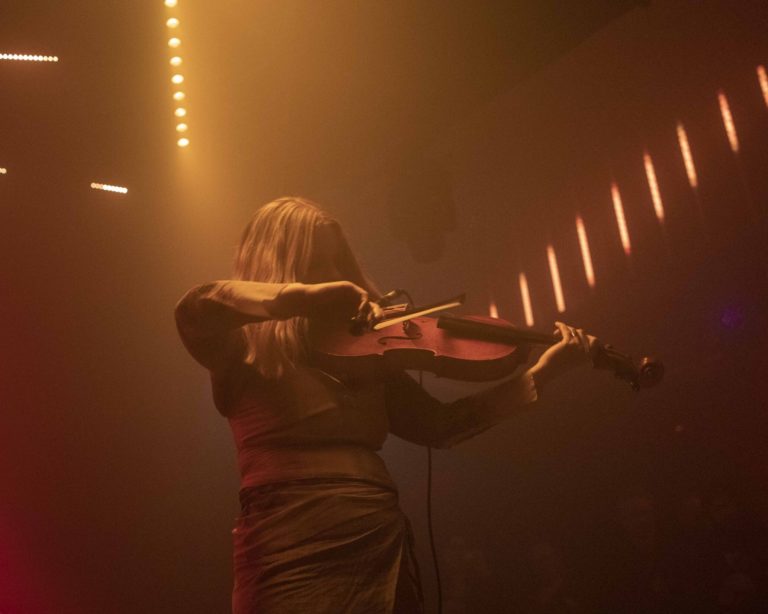
Qow — © Kurt Prinz
ALMARE: Regarding funding, how does it work in Vienna?
SS: It's hard to get money from the State. The main problem in Vienna and Austria is that the city and country are famous mainly for their classical music tradition. Classical music gets the great majority of the money: opera, symphony orchestras, etc. It has only been ten years that we have a funding body for the independent scene, before there was no real possibility to apply. Being a relatively new thing, a much more substantial budget would be needed to really build sustainable structures. We also have district level grants in Vienna, which also give away, like, I don't know, €500, €2,000 or something. And then we have AKM and SK in Austria and Germany, which collect composers' rights and redistribute them. However, since there is not enough public money available, some turn to private money. I come from the DIY world and a more politicised context, so I feel wary of collaborating with banks or private sponsors. You have to be very careful, as we see now with festivals like Sonar or Boiler Room.[1] Working with corporate money is problematic, if we're talking about credibility and ethical issues.
ALMARE: Regarding public funds, in our conversation with Slavo Krekovic from MoTA/Sonica we were told that in Slovakia, because of its socialist past, they can't use grants to pay their salaries. Is that the case in Austria as well?
SS: In Vienna, it's the opposite. A few years ago they launched a campaign about "fair pay," a beautiful idea on paper, but in practice there is not enough budget. In the end you pay the artists well—something I take for granted and always do—but then production, or when it comes to my own fee or the team's, is not fairly paid at all. So the City and the State are promoting this fair pay in their programmes, but they don't offer us the budgets to actually implement these structures. It's a paradox—a tragic situation actually—where you are stuck with the obligation to fairly pay your colleagues and the artists and everything, but the conditions you’re put in make it impossible to fulfil. So you usually start with the artists and then the rest, the team, myself, everything comes after that in terms of priority. So I must work multiple jobs. It gets exhausting, a serious problem. I mean, I love it, I love what I'm doing, that’s why I'm taking this on my shoulders.
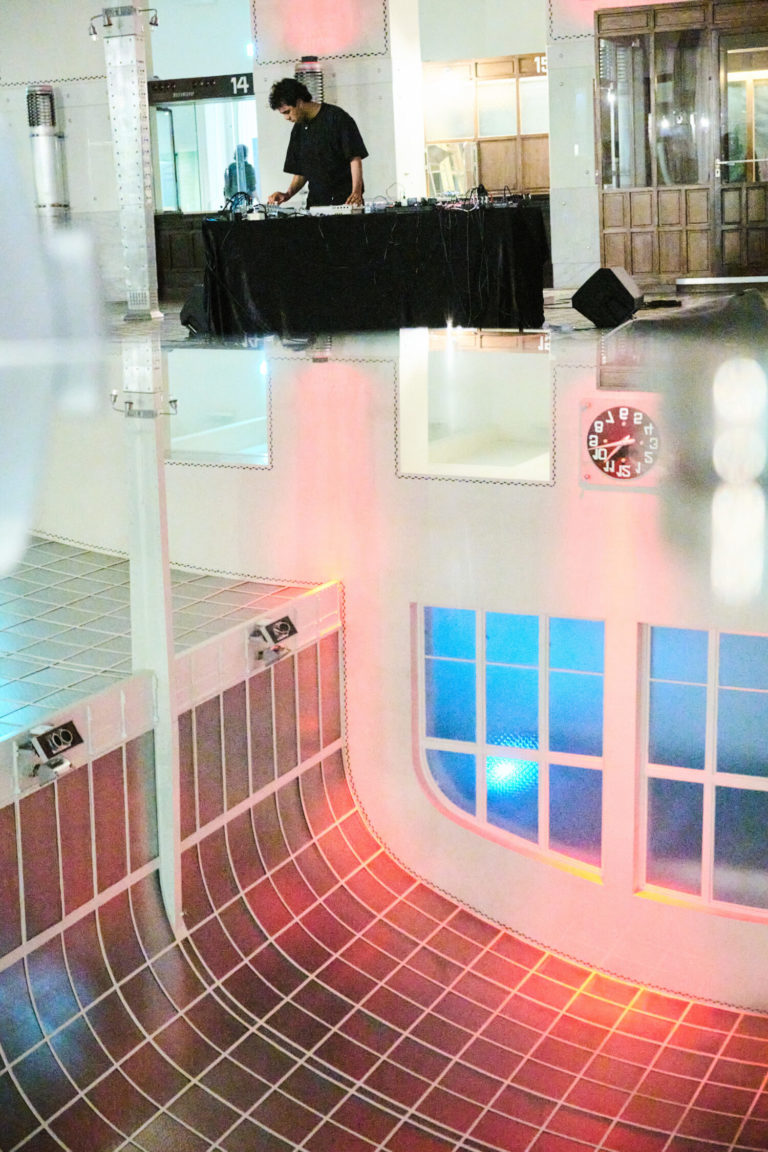
Bara & Isa — © Philippe Gerlach
ALMARE: Let's move to what we love the most: music. What's the curatorial philosophy of Struma+Iodine?
SS: The special thing about Struma is that it doesn't know any kind of boundary regarding aesthetics. For me, curation is about intensity, not so much taste. It's about finding an aesthetic that offers something new and that modifies your perspective in a way that's surprising or even subversive. There's a perceptual convention: perception is formed with education and the social context you're in. I think music offers a way to present new ways of perceiving reality. In this regard, all aesthetics, regardless of what form they take, can be really interesting and artistically significant. That's why in my nights there are scenes that often clash with each other: I programme noise concerts with techno DJs, ambient, performance art, experimental projects. Sometimes all in the same night. I believe this unique formula makes Struma special, but it also makes it harder to communicate to a general audience. Festivals like CTM share the same vision and helped a lot to popularise this approach.
ALMARE: How does your curatorial approach change when you’re asked to curate programmes or get commissions from bigger, more structured organisations, like major festivals?
SS: I adapt to what's feasible. I've been invited several times with Struma to perform at major festivals in Vienna, like the Wiener Festwochen, which is the most prestigious cultural festival in Austria, or Popfest, which is a huge free festival. If I have these structures available, I can move more freely in curation and organise concerts that would be harder to do on my own. Our festival [Unsafe+Sounds] itself is a platform where I can realise projects that are more difficult to actualise with smaller budgets and spaces.
ALMARE: Historically in Austria there's always been a very lively experimental electronic music scene. What's your relationship with that scene? I'm obviously referring to [pioneering glitch and ‘laptop music’ label] Editions Mego, in particular.
SS: In the 1990s and early 2000s, Vienna indeed had a very lively scene, then it declined a bit, and perhaps it has only been coming back recently. I worked for Peter Rehberg and Mego for several years. Peter[2] was a very international figure, not particularly tied to the local scene—his "Mego family" was global. phonoTAKTIK was also a very influential entity in Vienna: a festival attracting all the big names in international electronica…
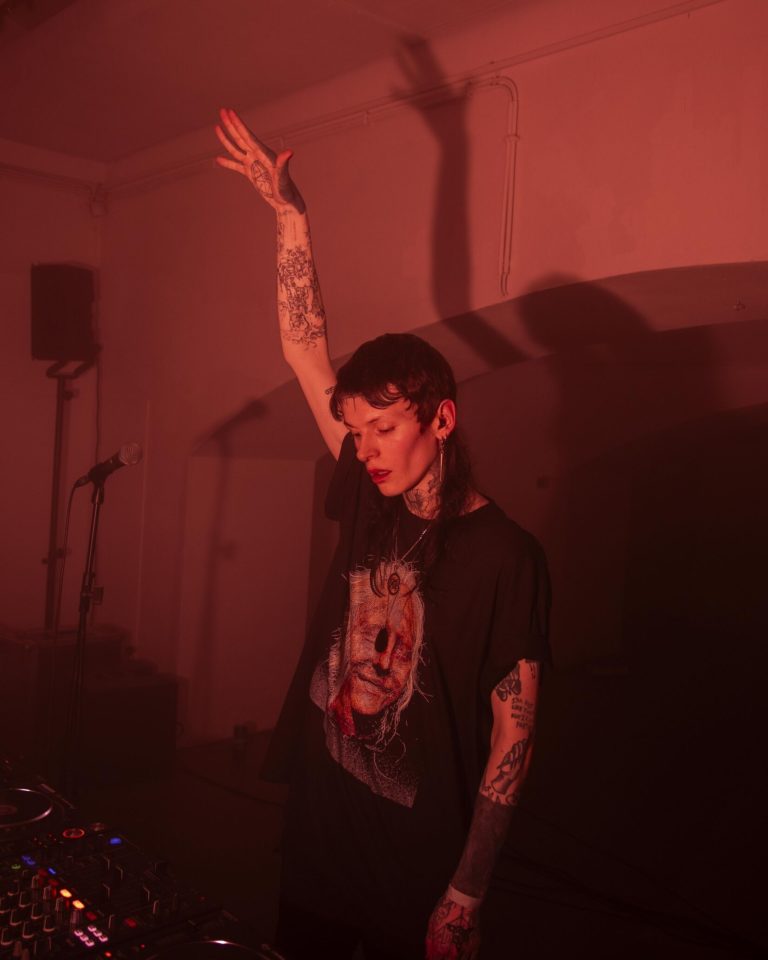
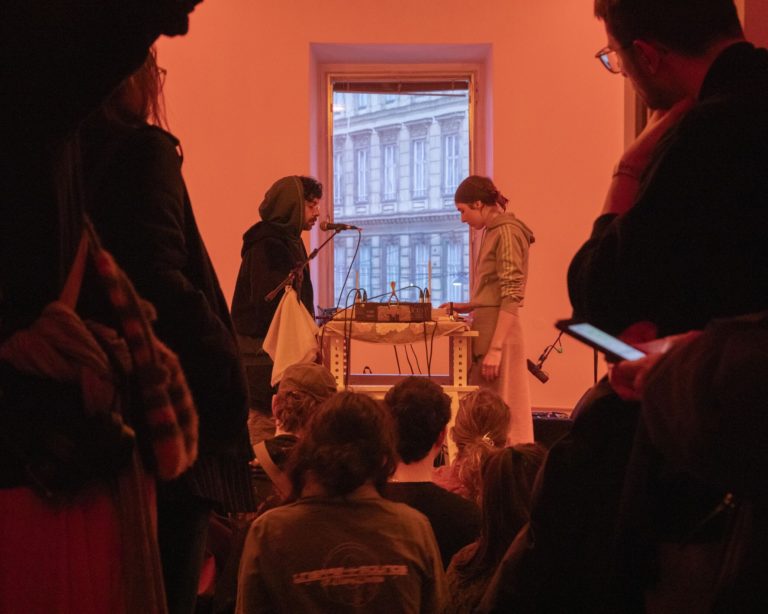
Kavari — © Philippe Gerlach
ALMARE: Earlier you spoke of aesthetics and politics as entangled. Can you elaborate?
SS: Harald Szeemann, the famous curator, talked about “when attitudes become form.” It's a quote I'm particularly fond of, I think there's a lot of truth in that because art, at its best, is authentic. Music, as authentic, is always an expression of the attitude of the artist behind it. And it's also political in the way it's perceived: every art form operates with perception and can break with certain hegemonic structures. Aesthetics as politics is a fundamental aspect of my curatorial work.
References
[1] Both were bought by Superstruct, a corporation owned by American private equity fund KKR which also invests in projects linked to occupation and genocide of the Palestinian people.
[2] Peter Rehberg, Founder of Mego, who sadly passed away in 2021.
Published on September 15th, 2026
About the author:
Founded in Turin in 2017, ALMARE is an organisation dedicated to contemporary practices that use sound as a means of artistic expression. It operates at the intersection of music and art through the conception and production of events, new commissions, and educational programmes.
Grounded in collaboration and interdisciplinarity, ALMARE fosters artistic experimentation that contributes to broader critical reflections on the present.
ALMARE’s activities engage diverse audiences, with the aim of making artistic experience an accessible space for knowledge and participation.
