

Author: ALMARE
This series of interviews is conceived and curated by ALMARE, an organisation based in Turin dedicated to contemporary practices that use sound as an expressive medium. ALMARE works at the intersection of music and art through the conception and production of events, new commissions, and educational programmes that contribute to a broader critical reflection on the present.
The aim of this series is to provide a glimpse of the diversity of models and practices Reset! members and like-minded independent cultural organisations adopt to sustain ambitious cultural programming in complex and precarious contexts, with a particular focus on the relationship between curatorial practices, sustainability, and organisational models. These interviews have previously appeared in Italian in the journal of cheFare as part of the project Next Generation You 2023 (NGY) promoted by Fondazione Compagnia di San Paolo.
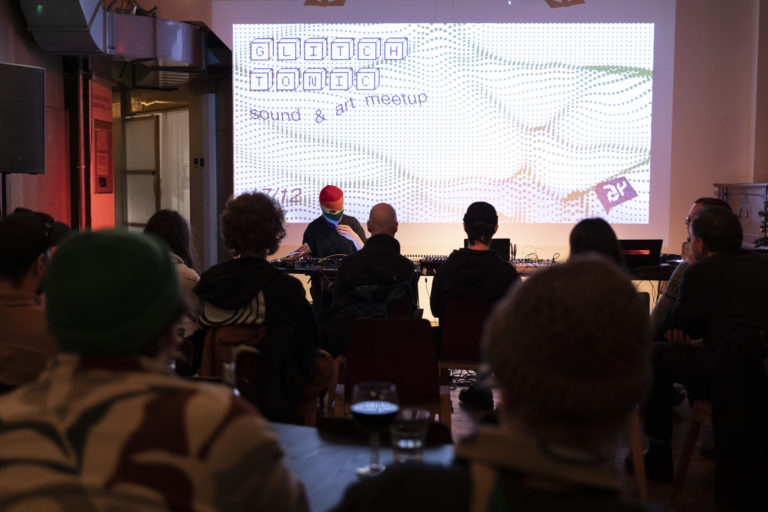
Glitch Tonic Meetups — © Amélie Pret
The first edition of NEXT Festival in Bratislava dates back to 2000. Today, NEXT is one of the most interesting festivals on the Central European music scene—this of course if such a scene does exist, as some of the people we’ve chatted with those days regularly asked themselves. But NEXT’s horizon is broader, and along with showcasing Bratislava-based artists, the festival offers a resolutely international programme: last year alone saw the participation of Valentina Magaletti, Mariam Rezaei, Isaiah Hull, and DJ Spinn, in addition to a very well-curated symposium, as well as a collaboration with the renowned Parisian music research centre Ina GRM for a national premiere of their infamous Acousmonium sound system.
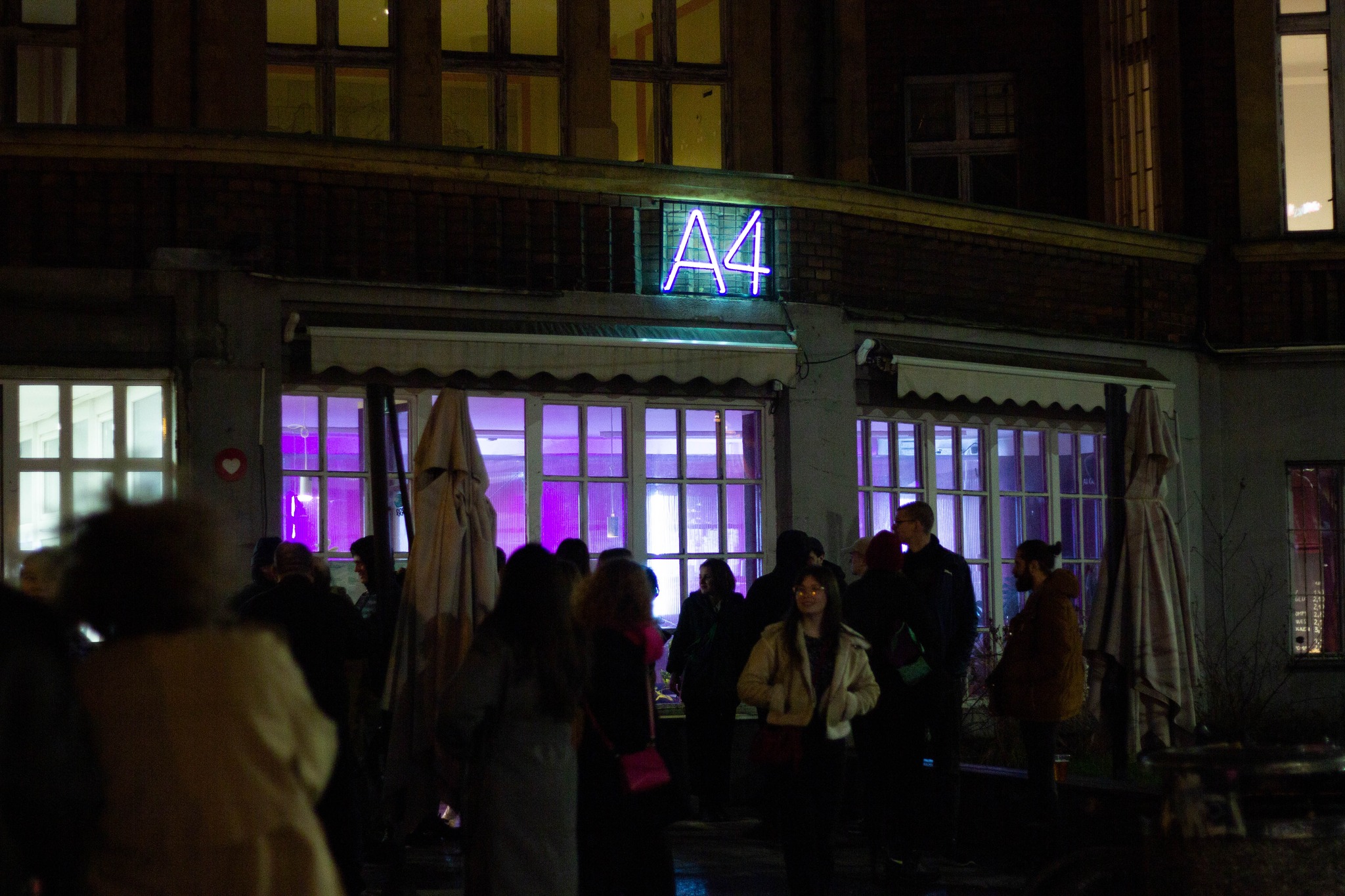
The festival just ended with a wonderful concert for organ and choir by a local musician, Štefan Szabó, one of the best discoveries of this trip. The following morning we met NEXT's artistic director Slàvo Krekovič at A4, where most of the events took place. We know that A4, as well as A/trakt Art–the festival's "Main Organiser" according to its colophon–are both Krekovič’s emanations, and that A/trakt, in turn, is a member of Antena… which itself is part of Reset!. If this sounds like a lot to unpack, well, it is. We asked Slavo to help us connect the dots.
ALMARE: Can you explain the overall structure of your projects? How do A/trakt, A4, and NEXT relate to each other?
Slavo Krekovič: A4 is the network that unites four associations, including the one I founded, A/trakt Art. A4 is also the place that hosts their activities. It was born in the early noughties, around 2002 or 2003. We had already organised the festival as well as some concerts in the most different places, because we didn't yet have a venue of our own. It was at this time that we met other people, mostly artists who managed organisations behind contemporary dance, opera, and theatre festivals, as well as other things like new media art showcases, and together we decided to appeal to various institutions at different levels (State, municipal, and district) before we applied for a space that could host us all.
ALMARE: How did that work?
SK: The space we focused on belonged to the National Centre for Public Education, an institution that still exists today. We managed to get an agreement that allowed us to manage part of the space for free and organise events inside... The problem was that the National Centre also organised events in the same space, and they had a whole different idea of culture, mostly traditional and for elderly people. It was the opposite of contemporary art. So some tensions started to emerge as their resistance to our programming became increasingly evident.
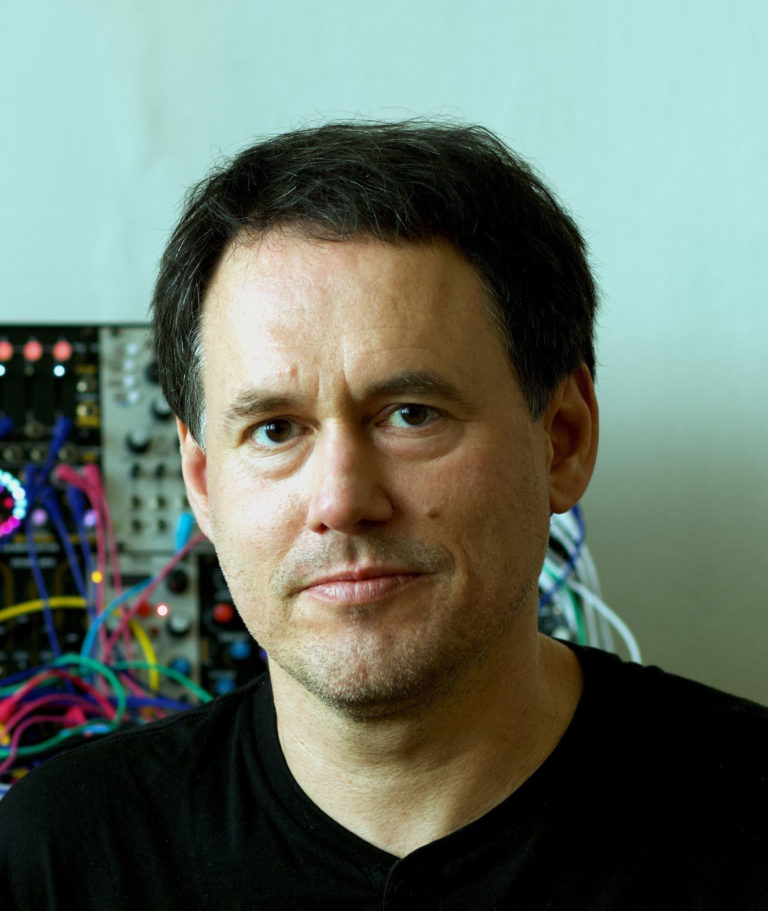
© Csilla Nagy
ALMARE: This is not so different from what Sonica’s co-founder Martin Baraga was telling us about when we interviewed him: that regardless of their initial support the City of Ljubljana didn't show particular interest in the fate of their organisation. So what happened after that?
SK: Correct, the City didn't lift a finger. The State however, as well as the Ministry at the time, were available and were actually trying to transform the entire building into something that would eventually become a sort of Kunsthalle for contemporary art. They had this idea, but it didn't materialise for 15 years... until it happened! But that's a whole other story. We managed to create what we called Space for Contemporary Culture. It was 2004. At the time we were organising about ten events a month, while the rest of the programme was organised internally by the National Centre’s, and about whose quality I already told you. But thankfully it didn’t last long, and a few months after we finally got the contract that allowed us to use the space exclusively for our activities! We had our headquarters there until 2012.
ALMARE: The issue of access to space remains one if not the central question for every organisation, throughout very different contexts. What happened after 2012?
SK: Between the tensions inside the Ministry, and the different ideas around the building's fate, they tried to kick us out more than once. Eventually, they opened an application to take over the space completely, but it was a rigged one. The thing is: applications should have explicit rules for a transparent competition... In other words, we weren't selected. But a good thing came out of all this: a protest was organised. It was heartwarming.
ALMARE: It's not always easy, in this dialogue between organisations and their audiences, to understand how much and how many people are on your side, ready to have your back. What was the protest like?
SK: People were really angry, because for eight years our space had been of undoubted utility and importance, and a great success. It's hard to tell you precisely who was behind the organisation of the protest. There were cultural operators, students, but also people who had nothing to do with the sector and loved our programming. Funnily enough, the recipient of the grant was such a bad project that it was eventually canceled, and the space returned to the State. With some effort we managed to find another space, which in the end is the one where we're having this conversation, A4.
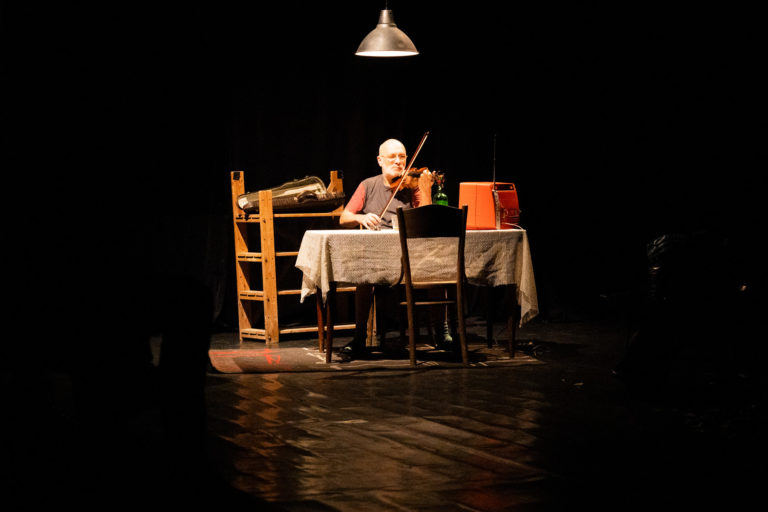
Theatre SkRAT Mono — © Hugo Bordas
ALMARE: Have you seen any change in your audience? How did your relationship with your public evolve?
SK: At the beginning, about thirty people came to our concerts, not many more. Then we realised that new generations were growing up: digital natives, so to say, accustomed to a certain type of music. By now a couple of generations have come and gone, even three, I would say, and meanwhile the scene has grown. And this not always in terms of public, but of the local artistic scene as well. A good litmus test is the archive we created. I have a past as a music journalist, so I often put together lists of albums, or music produced in Slovakia, and published them online. I created a database of all musical projects considered experimental to some extent, even just to show that there are about 120 of such music projects in Slovakia. I'm talking about hundreds of recordings a year, and all this in such a small country as Slovakia. We were very proud to see how dynamic the scene was! This meant it could no longer be ignored—and this, for me, is a political question.
ALMARE: I would like to know more about your structure, about the people who animate and work behind NEXT. How many people does it take to set up the festival?
SK: At the beginning, almost thirty years ago, we were a small group of musicology students, and we had no idea which audience could exist for the music we were interested in. Obviously, there were no social networks or things like that. It was also complicated to get an idea of how broad the scene was, how vast the network, questions that the Internet has apparently simplified. The archive is proof of that. But to answer your question, it takes about ten people to cover all the necessary areas: production, artistic direction, technical, and administrative, social media, public relations, etc. As an organisation, the festival is our main activity, but during the year we each have different jobs, and work on different projects—sometimes even other festivals. Unfortunately there's not enough money to hire staff throughout the year. It gets complicated…
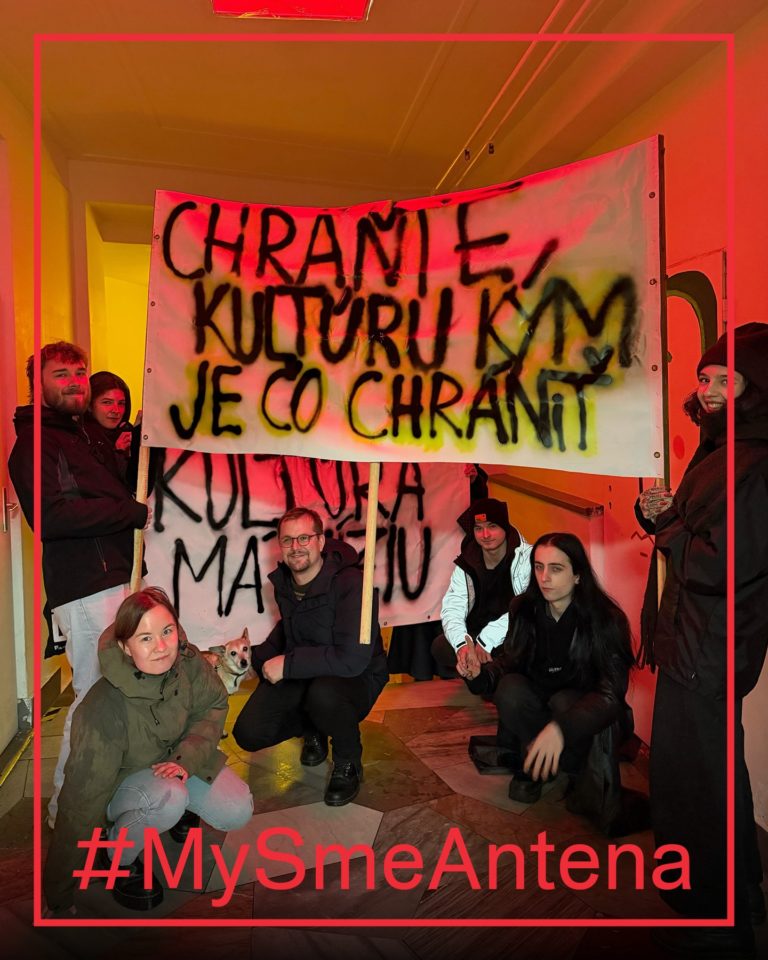
A4 We Protect Culture Campain 2025
ALMARE: Considering how hard it is to build a solid team within your own local scene, what are the benefits and limits of international networks? What are some significant collaborations you’ve developed throughout the years?
SK: We started collaborating with other festivals, for example UH Fest in Budapest as well as with some friends in Vienna, which is very close by and a city which has historically shared audiences with Bratislava. We also had ties with organisers in the Czech Republic, in Brno and Prague, and also in Poland. We collaborated with the Audio Art Festival in Kraków and tried to get some local grants to cover travel expenses for Slovak artists. The important thing is, you don't do it just for yourself, you know? But everything is changing now, as European funding is increasingly difficult to obtain. There's huge competition, applications have doubled…
ALMARE: Bratislava and all of Slovakia are going through complicated years. Reset! has even organised a social media takeover to cover the protests of the cultural sector in March. Can you tell us about the current political situation?
SK: The Kunsthalle I mentioned before has been reborn thanks to strong pressure from the artistic community, enormous pressure... It was quite progressive, a real contemporary art institution capable of hosting many great exhibitions. But then with the new government, which came to power in autumn 2023, it all ended. The Minister of Culture is really trying to suppress all contemporary arts. They fired the director of the Kunstverein (which is a whole different project unrelated to the Kunsthalle) with false accusations. Now the exhibition spaces are empty. Everything is on hold and nobody knows what will happen. And the same thing happened to the National Gallery and the National Museum, where fake applications leave room to nepotism out in the open. Committees of experts have been substituted with incompetent board of directors who deliberate with authoritarianism. This happens when a far-right government comes to power–I would even say fascist. They don't even do their thing, their cultural programme, because they have no idea what they are doing. They destroyed what took so long to build in the past, but have no plan for the future either. In this scenario, we must resist.
Published on September 3rd, 2026
About the author:
Founded in Turin in 2017, ALMARE is an organisation dedicated to contemporary practices that use sound as a means of artistic expression. It operates at the intersection of music and art through the conception and production of events, new commissions, and educational programmes.
Grounded in collaboration and interdisciplinarity, ALMARE fosters artistic experimentation that contributes to broader critical reflections on the present.
ALMARE’s activities engage diverse audiences, with the aim of making artistic experience an accessible space for knowledge and participation.
