

Statement
MEP Emma Rafowicz · Live DMA · Reset! network · Syndicat des Musiques Actuelles
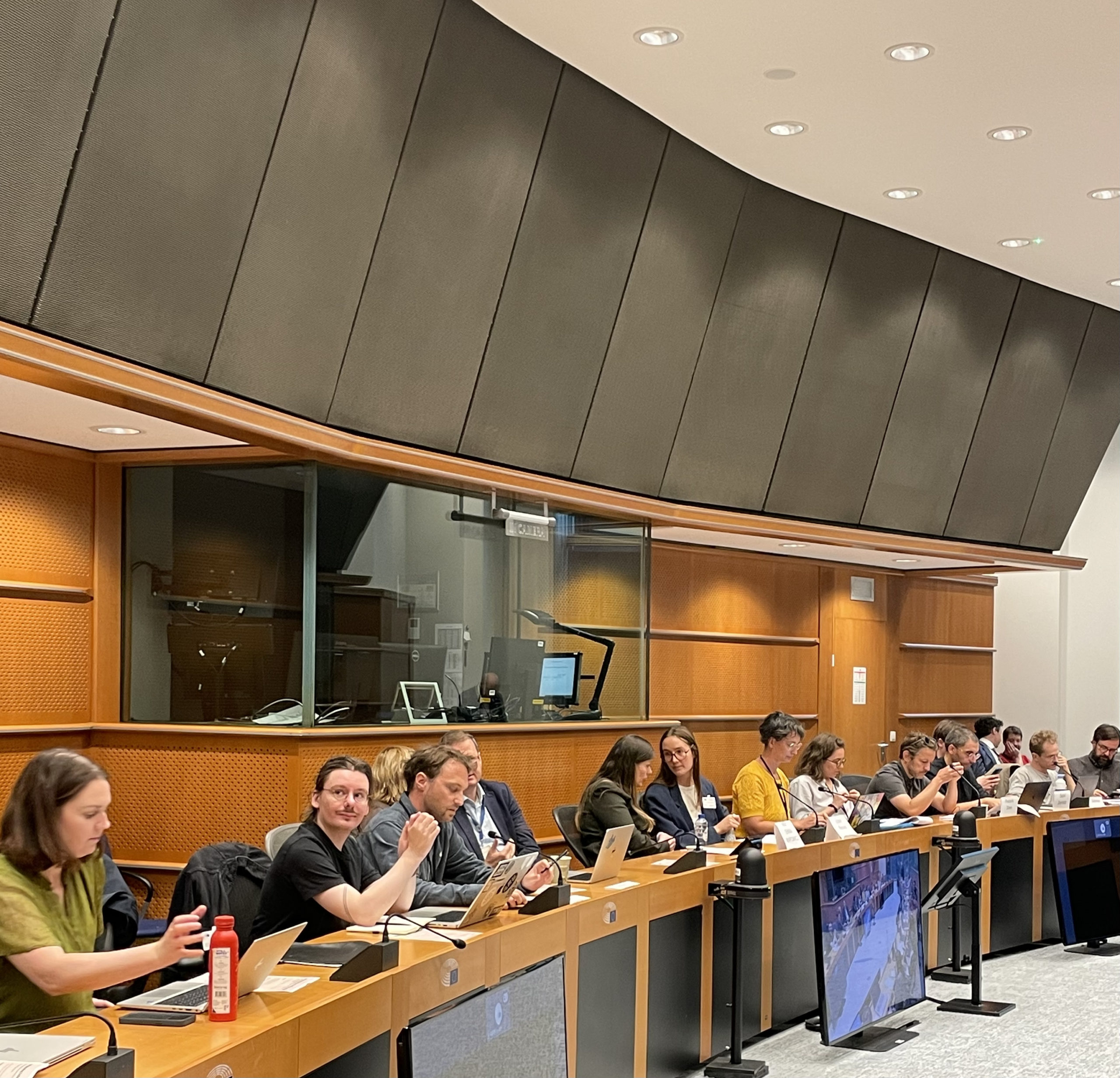
Representatives from music, media, publishing, and cinema met at the European Parliament to examine how ownership concentration affects cultural pluralism and to identify possible European responses.
“We must defend the freedom of imagination and Europe’s cultural sovereignty.” - Emma Rafowicz, MEP, CULT Committee, rapporteur for AgoraEU
Europe has long recognised the importance of culture, yet this commitment has not been matched by sufficient attention to how ownership concentration affects cultural diversity. The defence of the “cultural exception” in trade negotiations in the 1990s affirmed that cultural goods and services cannot be treated as ordinary commodities. That principle must also inform the rules governing cultural markets. In particular, closer scrutiny is needed of the cultural consequences of vertical integration: the control of several stages of the value chain by a single group, from production and promotion to distribution and access to audiences.
This gap has become increasingly difficult to ignore. Across music, news media, cinema, and book publishing, a limited number of groups now control essential production, promotion, distribution, ticketing, and access. In live music alone, four corporate groups are connected to more than 200 of Europe’s largest festivals, while a small number of companies dominate the ownership and operation of major venues and international touring, extending also to ticketing—with concert promotion and major ticketing platforms brought under the same corporate ownership.
“Beyond technical analysis, the trends reflect a political turning point.” - Emma Rafowicz, MEP, CULT Committee, co-rapporteur for AgoraEU
This concentration is not merely an economic issue. When a handful of groups control cultural production and distribution, they gain influence over the ideas, narratives, and representations that reach the public. The result can be greater standardisation, fewer independent voices, and a cultural landscape shaped purely by financial interests.
“A society that no longer allows the clash of ideas and sensibilities undermines the very foundation of the democratic pluralism.” - Emma Rafowicz, MEP, CULT Committee, co-rapporteur for AgoraEU
Culture has therefore become a democratic battleground. Defending cultural diversity means defending freedom of expression, critical thinking, and our collective capacity to imagine alternatives.
Europe must respond in three ways:
First, it must improve transparency and monitoring. Citizens, artists, and companies should be able to know who owns cultural organisations, who controls distribution channels, and who finances promotional campaigns.
“The European Media Freedom Act has led to progress in media transparency. We must now extend this to all cultural sectors.” - Emma Rafowicz, MEP, CULT Committee, co-rapporteur for AgoraEU
A dedicated observatory, modelled on the European Audiovisual Observatory, could document ownership and concentration on a permanent basis. Transparency will not dismantle vertically integrated structures, but it will make the dependencies shaping cultural production and access visible.
Second, public authorities must restore adequate financial support for small and medium independent cultural organisations. Cultural and media sectors continue to face the consequences of the pandemic and public funding cuts. Europe needs an ambitious cultural budget of at “least 10 billion euros” capable of supporting those who create, produce, and distribute culture outside dominant corporate structures, as presented by MEP Rafowicz.
Third, Europe must develop stronger competition tools and dedicated antitrust rules for cultural sectors. This should include closer scrutiny of vertical integration, possible separation between production, publishing, and promotion activities, and limits on the number of value-chain segments that a single operator can control with adapted indicators.
“We are creating new alliances for the freedom of imagination.” - Emma Rafowicz, MEP, CULT Committee, co-rapporteur for AgoraEU
Across Europe, independent organisations are already developing alternatives, including independent ticketing and distribution systems. The means to resist exist. The political question is whether European and national institutions will listen to and support those working on the ground to defend cultural diversity.
