
Author: Manon Moulin
As arrests of journalists and artists continue to make headlines in Turkey, the latest wave of repression ahead of the NATO summit is only the most visible expression of a much deeper reality. For years, shrinking press and artistic freedoms have reshaped the country's independent cultural and media landscape, forcing journalists, artists, and cultural organisations to navigate an environment marked by censorship, intimidation, and uncertainty.
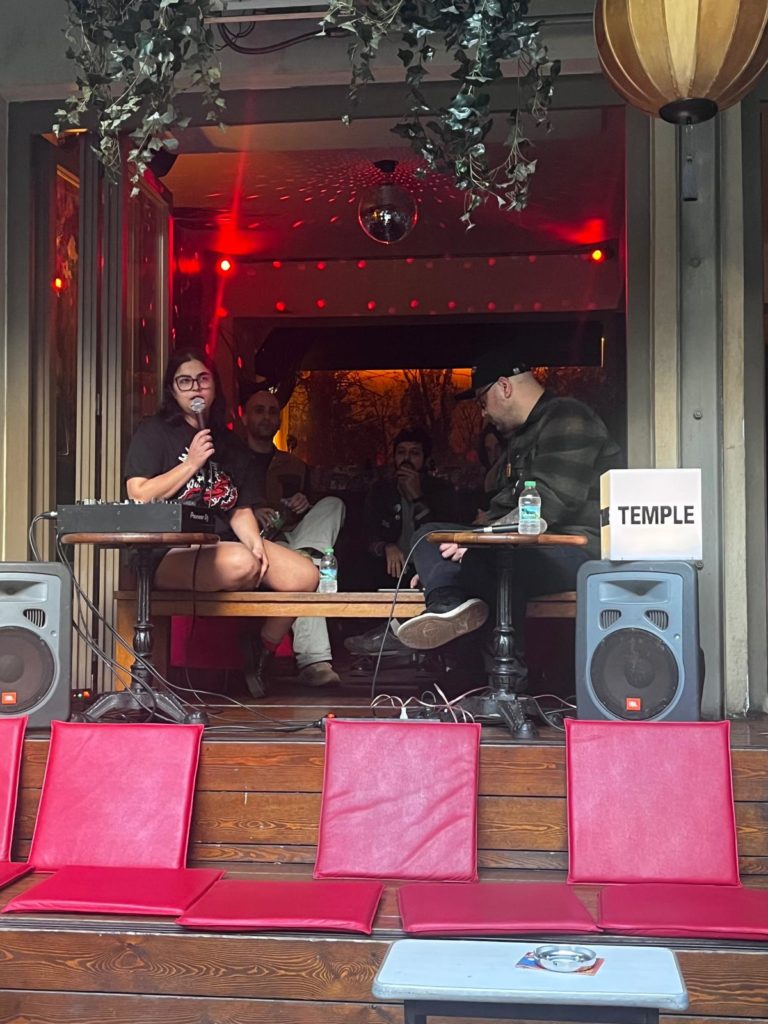
Doğa Sultan’s Antipode Talks on Temple Radio with Beirut-based hardcore punk band Ta2reeban and independent cassette label A World Divided at arkaoda — © Doğukan Azabağaoğlu
If you look at the past weeks’ headlines about Turkey, you’ll see a lot about arrests. Journalists, comedians, academics, writers, everyone is under threat in the country. If the NATO summit—held on July 7th and 8th in Ankara—is given as the contextual reason for some of these arrests, this is only a “good” excuse. The country’s press and artistic freedoms have been flouted for years making any critic of the power almost impossible.
Two Decades’ Context
While international press started to publish releases about two journalists’ arrests—Kayhan Ayhan and Hazar Dost—right before NATO’s summit expressing outrage for the lack of respect for press freedom, the phenomenon goes far beyond the event. Indeed, Recep Tayyip Erdoğan—President of Turkey since 2014, and Prime Minister of the country between 2003 and 2014—has been building a malicious system making the country all about him, and this for over two decades. He has transformed Turkish institutions from a parliamentary system to a presidential system with him at the centre of it. Thus, in this system, criticising the President becomes a legal offence, sometimes even an act of terrorism—those are real charges brought against journalists and artists. The 2013 Gezi Park protests and the 2016 Turkish coup d'état attempt only reinforced the dynamic, giving Erdoğan a concrete paranoid reason to massively arrest every person seen as an opponent. And in Turkey, being an opponent starts at protesting or commenting negatively on the President’s, its family’s, and close circle’s actions or ideas.
This is what happened to above-mentioned journalists but also to comedian Deniz Göktaş. The latter was arrested on July 2nd, after having published a stand-up video on YouTube, entitled “Ölü Deniz”, making fun of current Turkish politics and mentioning the President’s son. The reason stated for his arrest range from insult to the president, to insult to the religion. The video has reached more than three million views in two days, and now reaches 13 million views. It has been blocked in Turkey.
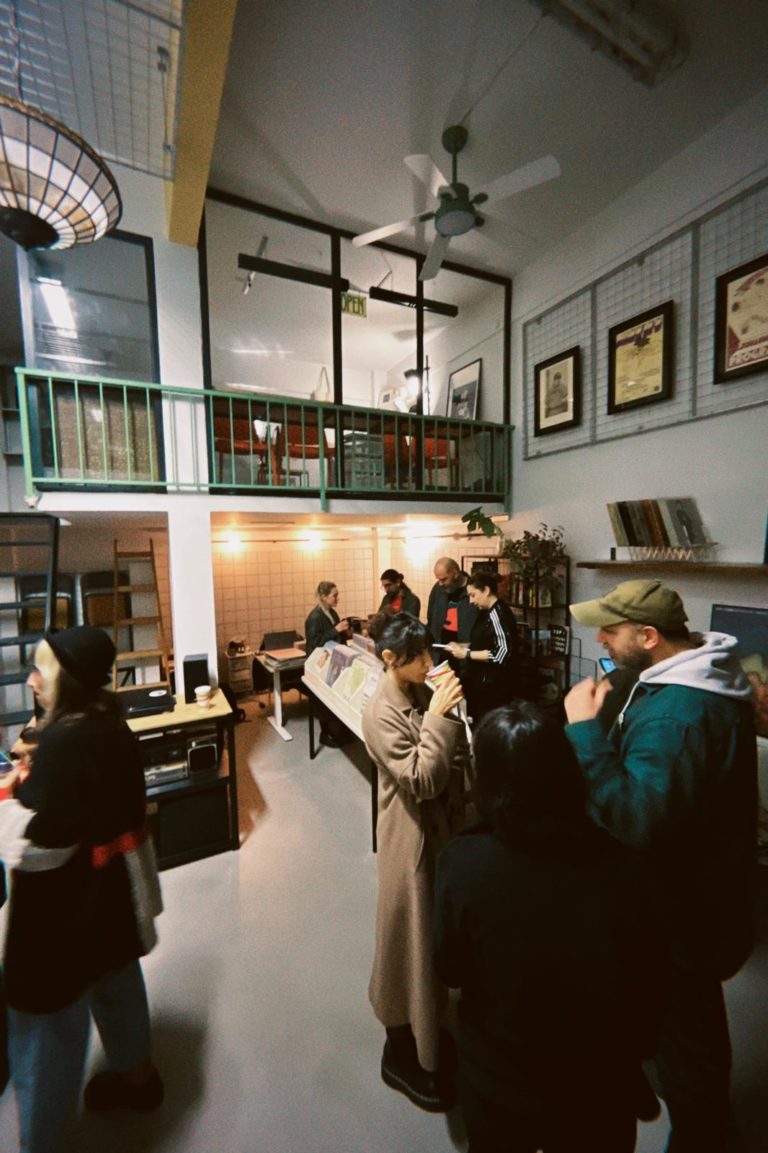
Temple Radio's Sounds of 2025 at leylekrecords — © Doğukan Azabağaoğlu
Weighing One’s Words
This context is the one to keep in mind when thinking about press and artistic freedoms in Turkey. International events are only ephemeral and again serve as an extra cover for more repression. Doğukan Azabağaoğlu, founder of Temple Radio, an independent community radio station based in İstanbul explains “many people inside Turkey saw [the recent journalists’ arrests] less as an exceptional event and more as another example of a familiar security reflex.” This is exactly what Erdoğan’s political system is about. Doğukan continues “To be honest, I think the right to protest in Turkey has, in practice, been largely taken away. Public resistance has gradually weakened, and many people now see these restrictions as part of everyday life.” Indeed, this political system creates an atmosphere of imposed silence and overall fear.
“Instead of expressing their opinions freely, people often weigh how their words might be interpreted or what consequences they could bring.” — Doğukan Azabağaoğlu
This situation puts Turkish people in a very unsafe position. “We are not only living under an authoritarian state, but also have to grapple with the deepening problem of precariousness and the diminishing prospect of having a decent, safe, and sustainable future,” says Koray Soylu, writer, editor, as well as founder and editor-in-chief of The SHEER, a Substack-based bilingual (English-Turkish) music magazine and grassroots culture initiative. This precariousness, along with the constant surveillance and pressure aim to shape a uniform and single-voiced society, gradually reducing the space available for alternative and independent voices.
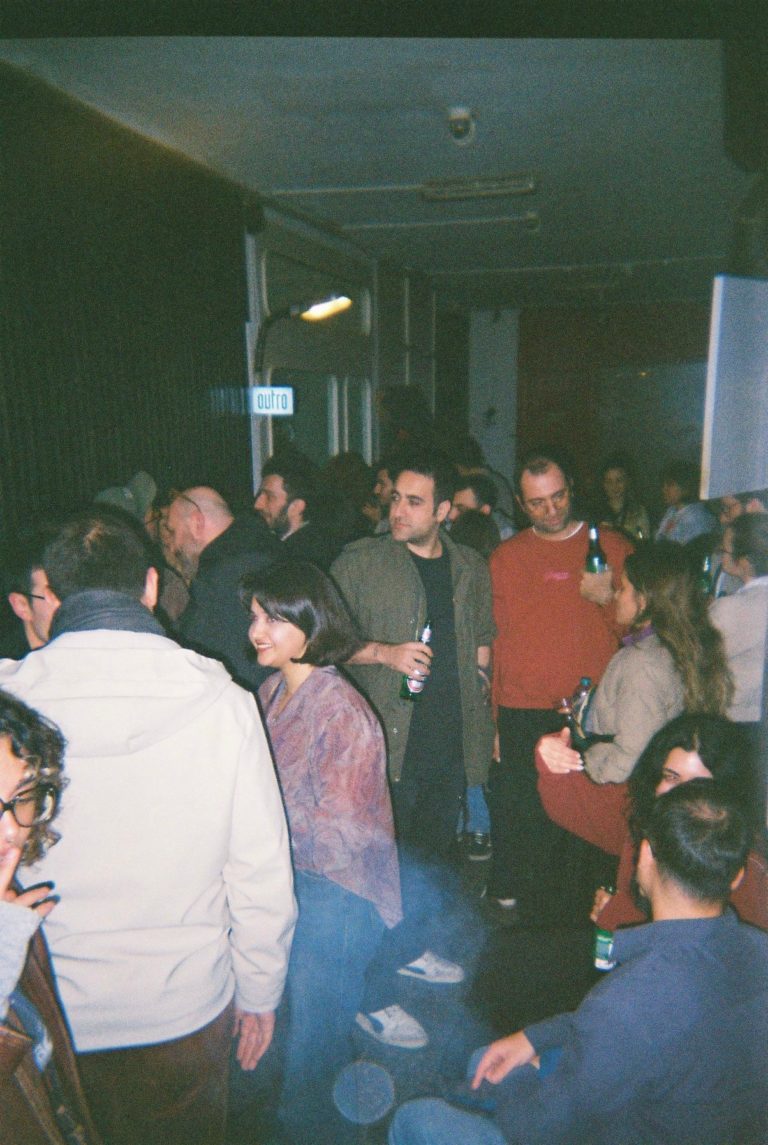
The SHEER Magazine's first year anniversary party — © Karya Ayyıldız
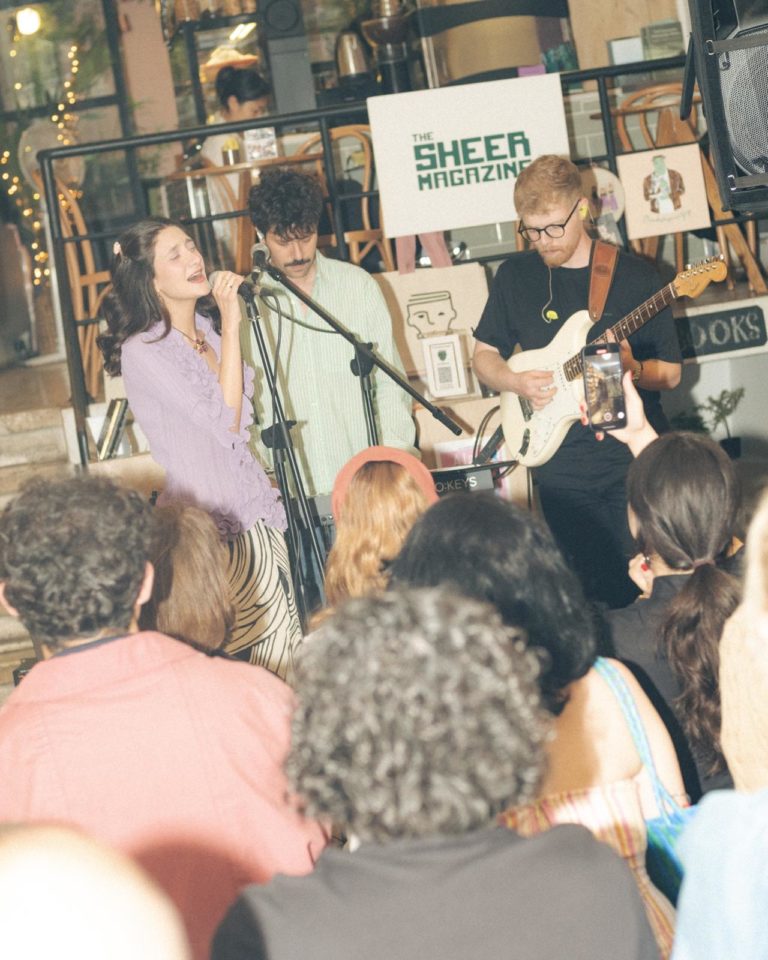
A The SHEER Concert — © Begüm Ars
Independent, Pressured, Resistant?
Being an independent cultural or media player in Turkey is a tough road.
“No individual, or organisation for that matter, is immune to a hegemonic power’s pressure campaigns and draconian measures of control. This inevitably applies to independent cultural and media organisations. In fact, such organisations are likely more affected by the current climate than others, as authoritarian regimes deem any media critical of their agenda to be a threat, and therefore it should be regulated, controlled, or in many cases, dissolved,” explains Koray Soylu. He exemplifies “This was exactly what Açık Radyo, an independent and progressive radio station had to confront as its broadcasting licence was revoked following a remark one of their programmers made about a sensitive historical subject.”
Independent organisations are thus subject to significant legal, economic, and administrative pressures. Accessing public or private funding is this made very difficult in this situation—public funding for obvious reasons, while private structures are becoming increasingly reluctant to fund independents who may be critical or may tackle topics not accepted by the state. “The more independent you are, the harder it becomes to find support,” says Doğukan Azabağaoğlu. The only solution lies in “individual donations or volunteer work, making long-term sustainability a constant challenge,” continues Doğukan. Adding to funding, Koray Soylu insists on the challenge of international mobility for Turkish people, with many opportunities made impossible to reach.
These hurdles also affect independent players’ mental health, as mentioned by Koray Soylu, insisting on the fact that the Turkish political system influence every facet of their reality.
Despite the complex situation Turkish independent cultural and media organisations find themselves in, both Doğukan and Koray want to conclude by highlighting the vivid resistance and solidarity within the sector.
“The more pressure there is, the harder people work to find new ways forward. Today, I see resistance less in large public movements and more in small independent media outlets, community radios, cultural collectives, artists, and people who continue creating spaces for dialogue.” — Doğukan Azabağaoğlu
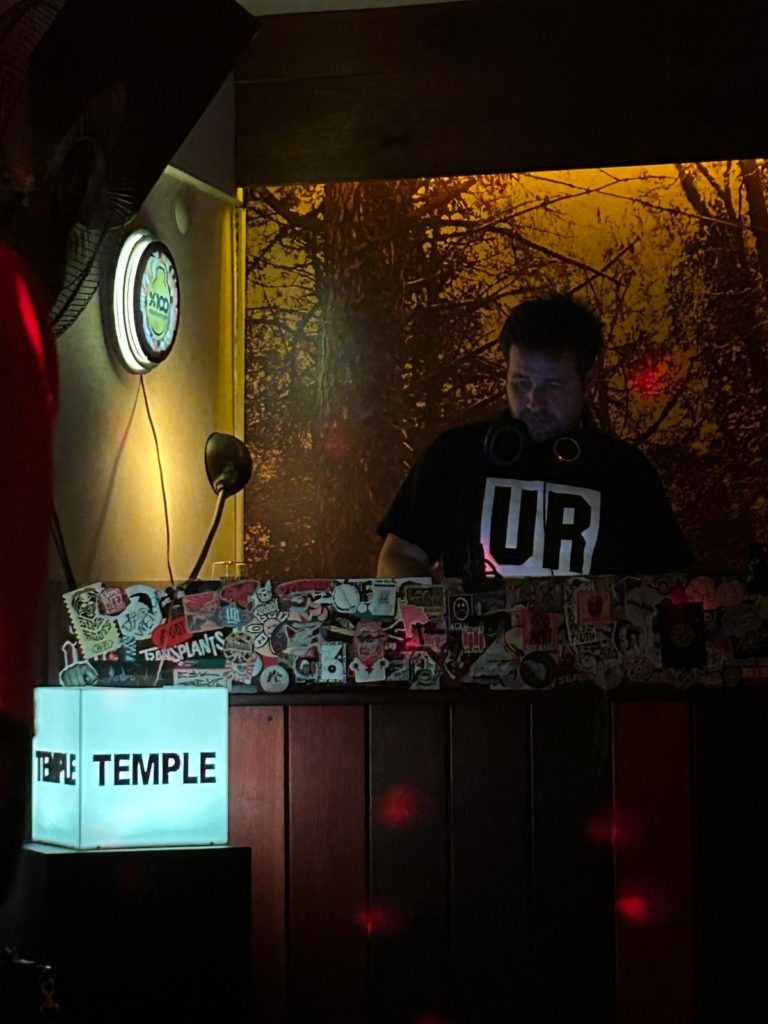
Doğukan Azabağaoğlu — © Temple Radio
Creating and sharing remains at the core of what players like The SHEER Magazine and Temple Radio do and are, like so many others in Turkey. Their strength and resistance impress and give hopefulness as there are spaces in the country where another system can be thought, and another atmosphere can thrive.
“We’d like to make this a better, more inclusive, and diverse place for not only the people working in media and cultural spaces, but for everyone. I believe that’s a lot of people’s go-to inspiration and motivation.” — Koray Soylu
References
Mapping Media Freedom. Monitoring Report 2025, Media Freedom Rapid Response, 2026
The State of Artistic Freedom 2026, Freemuse, 2026
"Turkey secretly plots to bypass INTERPOL rules to target exiled journalist in Sweden," Stockholm Centre for Freedom, July 17th, 2025
Mathieu Martinière and Robert Schmidt, "Interpol: Turkish journalists and political activists flagged as 'terrorists' by the organisation," Disclose, January 28th, 2026
"Komedyen Deniz Göktaş hakkında soruşturma başlatıldı" (An investigation has been launched into comedian Deniz Göktaş), BBC News Türkçe, June 29th, 2026
"Turkey: EFJ and IFJ are calling for the immediate release of journalist Yıldız Tar," European Federation of Journalists, July 3rd, 2026
Nicolas Bourcier, "En Turquie, l’humoriste vedette Deniz Göktas emprisonné pour « outrage » aux valeurs religieuses et au président Erdogan" (In Turkey, star comedian Deniz Göktas has been jailed for ‘insulting’ religious values and President Erdogan), Le Monde, July 3rd, 2026
"Turkey detains dozens, including journalists, in new wave of raids ahead of NATO summit," bianet, July 5th, 2026
John Paul Rathbone, "Turkey detains journalists and comic in crackdown before Nato summit," Financial Times, July 5th, 2026
"Sommet de l’Otan : Ankara en état de siège, plusieurs journalistes parmi les centaines de personnes arrêtées" (NATO Summit: Ankara under a state of emergency; several journalists among the hundreds of people arrested), L'Humanité, July 5th, 2026
"Journalists arrested in Turkey as Nato summit looms," Inquirer, July 6th, 2026
Nicolas Bourcier, "En Turquie, le souvenir amer du putsch militaire manqué du 15 juillet 2016" (In Turkey, the bitter memory of the failed military coup of 15 July 2016), Le Monde, July 15th, 2026
Published on July 23rd, 2026
About the author:
Manon Moulin is the editorial coordinator of all European projects for the non-profit organisation Arty Farty. She specifically works on the European network of independent cultural and media organisations Reset!.
