

This article is part of Reset! Yearly Focus 2026: Digital Independence
Author: Sabrina Faramarzi
As governments and institutions search for ways to reduce their dependence on Big Tech, the conversation has focused on digital sovereignty. But sovereignty alone isn't enough. What is needed is a public-interest tech stack—digital infrastructure designed not just to be independent of corporate power, but to connect people, institutions, and communities on shared terms.
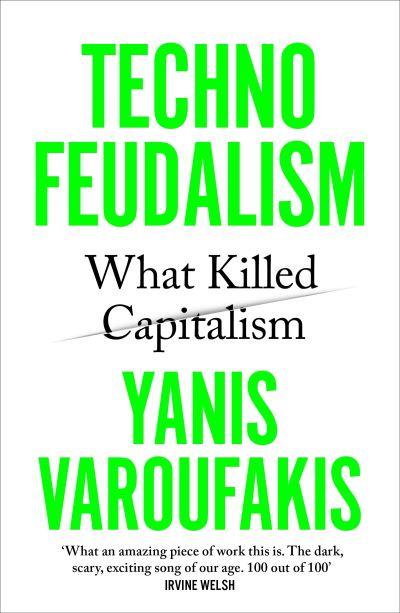
Publisher page for Technofeudalism by Yanis Varoufakis
It’s no coincidence that democracy is struggling as big tech is on the rise. In this era of technofeudalism—a concept developed by economist Yanis Varoufakis who argues that we are slipping into a system where tech companies function like modern feudal lords—our digital public sphere is managed by algorithms we have no control over.
This gap of power exists because society lacks a coherent vision for digital public infrastructure, and imagining one is a necessary first step. At a moment when concerns about platform power, AI concentration, and digital dependency are growing, the question is no longer whether technology shapes public life, but whether the public should have a greater role in shaping technology.
We have treated the digital infrastructure of everyday life as something best built and governed by private companies. Search, maps, messaging, identity, payments, social networks, cloud hosting, AI assistants—many of the tools that shape civic, economic, and cultural life are owned by firms whose primary obligation is to shareholders, not the public.
While independent platforms exist, they miss a core component—our interdependence. What if we approached digital infrastructure the way we approach roads, libraries, public broadcasting, theatre? What could a "public-interest tech stack" look like—and how would we make it happen?
Roads and Libraries, Rebuilt in Code
Before I continue, the idea of a public-interest tech stack already exists under another name—digital public infrastructure (DPI)—a term that has gone from niche to mainstream policy vocabulary in the last few years. I remember the first time someone tried to explain "digital public infrastructure" to me at a conference panel, and how the term slid past me like so much technocratic wallpaper. It sounded important, but also, incredibly boring (though boring is often exactly where power likes to hide).
DPI refers to the foundational, interoperable systems that quietly decide whether you can prove who you are, move your money, or access a hospital record. These are billed as the plumbing of modern life, the kind of shared backbone that, like roads or power grids, is supposed to let governments, businesses, and citizens interact without friction.
Roads serve as a nice metaphor. Public goods that don't ask who you voted for before they let you drive on them. And there's a real case to be made that, done well, DPI can scale services and widen access to the kind of institutions that have historically excluded people.
But roads can also become checkpoints and a backbone, once built, belongs to whoever controls the spine. In this case the spine of our digital public sphere is largely dominated and influenced by a handful of tech giants and infrastructure providers that dictate how the internet functions, operates, and grows. Companies like Google and Meta dominate search, advertising, and social media, while Amazon Web Services, Microsoft Azure, and Google Cloud control the foundational cloud infrastructure that powers thousands of websites. These monopolies keep us dependent and we have now begun seeing the illusion of the internet and the illusion of a borderless world. What are the alternatives?
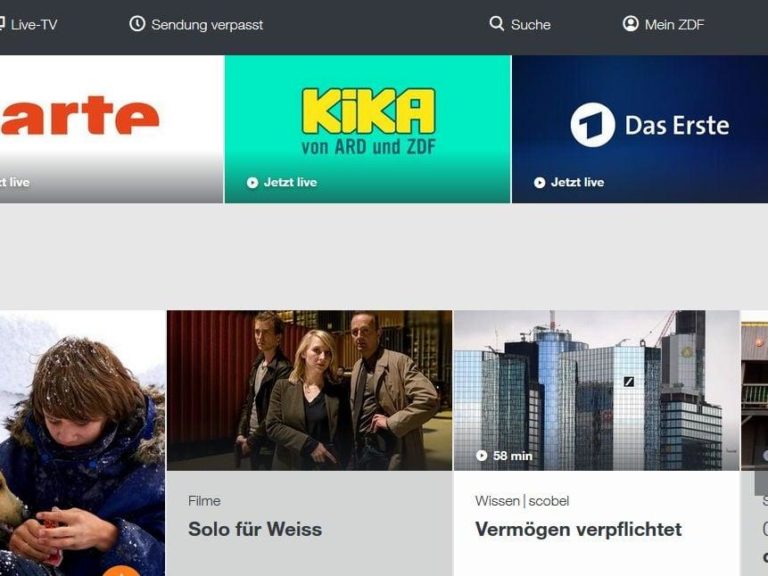
Official ARD or ZDF press release image regarding the joint streaming platform
The Independence Trap
It’s important to first identify the problem: there is a key flaw we overlook when attempting to make a move towards digital independence (especially as journalists, artists, and creatives). We lose a lot of our audience and community when we switch platforms. This isn’t just because people are slow to migrate—it’s because when a large platform stumbles (as Twitter did after its 2022 acquisition), its users don't consolidate around one clean replacement. They scatter. Because these networks mostly don't talk to each other, the people you used to follow start disappearing into digital cul-de-sacs you can't see into.
Independence is not the same thing as interdependence. A library that doesn't talk to any other library is still a library. A public square that doesn’t welcome everyone isn't a public square at all but a walled garden with a landlord. The thing that made roads, postal systems, and public broadcasting genuinely public wasn't that they were owned outside the market. It was that they connected everyone to everyone else, on shared terms, regardless of which private company built the pipes.
There are a couple of different approaches to what a "public interest tech stack" should look like, which can be found across the creative industries already. For example, in France, Pass Culture is a state-funded, single-country example. Created by decree in 2019 as a "mission of general interest" jointly run by the Ministry of Culture and the Caisse des Dépôts, it gives every 18-year-old in France a few hundred euros to spend on cultural experiences and goods (theatre, museums, books, concerts, art courses) via a single geolocated app, with over 900 cultural operators, public and private, distributing their programming through it. In Germany, ARD/ZDF, Germany's two public broadcasters, merged their on-demand libraries in March 2023 and recently announced that key technical infrastructure will be made open-source, explicitly positioning themselves as a value-based, transparent alternative to commercial Big Tech streaming platforms.
There are also cooperative models like Resonate, the world's first cooperative music streaming service, founded in Ireland and democratically governed by its members: artists, listeners, and workers. Rather than a flat subscription, it uses a "stream-to-own" model where listeners pay per play and eventually own the track outright after nine paid streams, aiming to pay artists more fairly than subscription services.
While all examples are different, what they share is that none of them automatically solves the interdependence problem. A state-run system can exclude as easily as a corporate one, if the incentive to include everyone isn't built into its governance and consistently reinforced. A cooperative can be beautifully democratic and still just be an island, thriving on its own terms, invisible to everyone outside it. A regional tech bloc, built to escape dependency on one empire, can just as easily recreate a smaller, more local one. The test of a universal, unmediated connection is the one a public-interest tech stack actually has to pass, and it's a harder one than "not owned by a shareholder." It means building social protocols that talk to each other by default, so that leaving a bad platform doesn't mean losing your community along with it. It means building AI infrastructure that other institutions can inspect, adapt, and build on, instead of another black box with a different flag on it. It means building systems that include the undocumented, the unbanked, the person without a smartphone, as a design requirement rather than an afterthought.
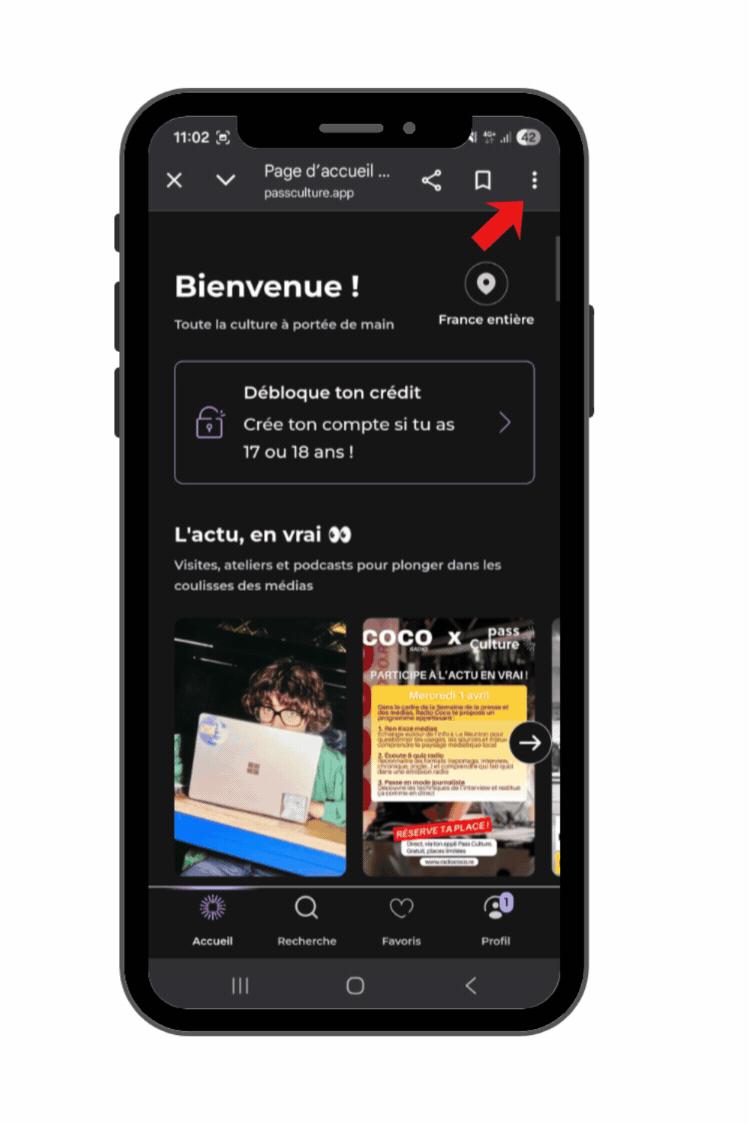
Pass Culture's website
A Bloc-led Solution
On June 3rd, 2026, the EU presented its Tech Sovereignty Package, comprising the Cloud and AI Development Act, Chips Act 2.0, a new EU Open Source Strategy, and a Strategic Roadmap for Digitalisation and AI in Energy, framed by Commission President von der Leyen around not depending on non-EU suppliers for the technology that runs our hospitals, energy grids, and public services. This is because the EU currently spends roughly €264 billion a year, most of it on US-based proprietary software and services while the US firms control more than 70% of Europe's cloud market and we are almost entirely dependent on the US and Asia for anything more advanced.
This will not be a clean break. The path to digital sovereignty is messy. Aligning with some dependencies while cutting others, not escaping dependency itself. What matters is which of those trade-offs get made on purpose. Designing interdependence as a core value (rather than treating it as a failure to be minimised) is what makes the difference over the long run. A bloc-led effort, done this way, can build in something a single company never will: political accountability to the people it serves. That, more than ownership or origin, is the actual measure of the public interest. Because independence, done right, was never meant to mean standing alone. It was meant to mean choosing, deliberately, who you stay connected to, and on what terms. Reset! is one small, working proof that the public-interest tech stack this piece is imagining doesn't have to be built from scratch and that the connective tissue already exists, in networks exactly like this one, and the task now is to recognise it, fund it, and build on it.
Are you a media organisation looking to get off Big Tech? Reach out on Full Stack Journalism.
Full Stack Journalism supports the independent media sector by proposing practical solutions through community-driven efforts. This includes: a database of recommended tools, events, consultancy, and peer support.
Published on July 28th, 2026
About the author:
Sabrina Faramarzi is currently the Managing Director of Reset! member Are We Europe, an independent multimedia platform for innovation & design thinking at the intersection of journalism and creative media. As a journalist, editor, speaker, and trends analyst on international issues around data, AI, gender, and digital human rights, Sabrina has worked and written for The Guardian, Vogue Business, Vice, Wired, and others. She has also consulted on audience development strategies and produced large-scale global editorial projects for media, culture, and non-profit organisations across tech, society, and culture. She was also the founder of the data-driven creative agency Dust in Translation and one of the co-founders of the art activist collective Feminist Internet.
