

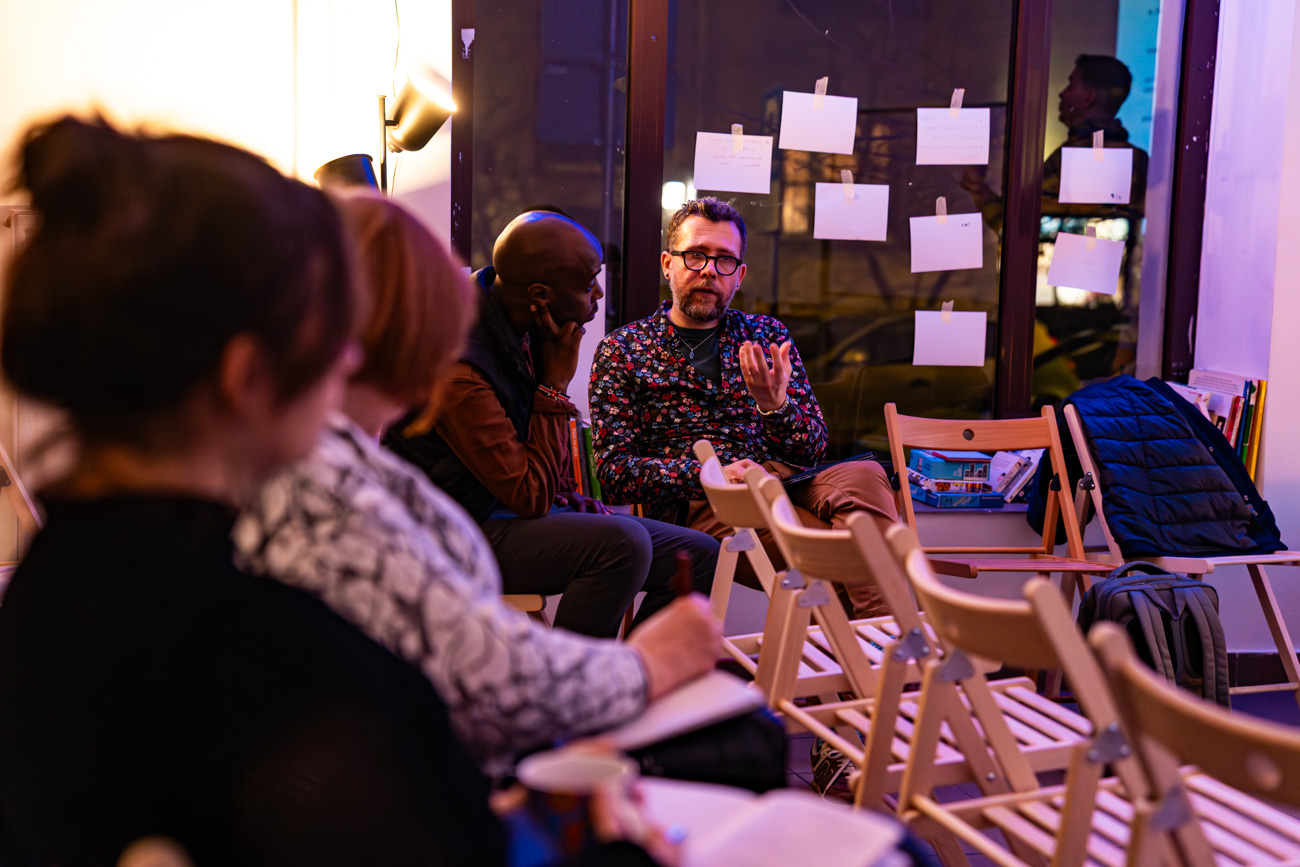
MigrArt: Artistic Coalitions workshop, organised by Strefa WolnoSłowa in Kaliska 8/10 — © Julia Szablowska
Author: Irini Vouzelakou
Drawing on research across six countries in Southeast and Eastern Europe, this article explores the often overlooked ecosystem of initiatives that provide displaced and at-risk artists with the safety, solidarity, and opportunities they need to continue their creative practice.
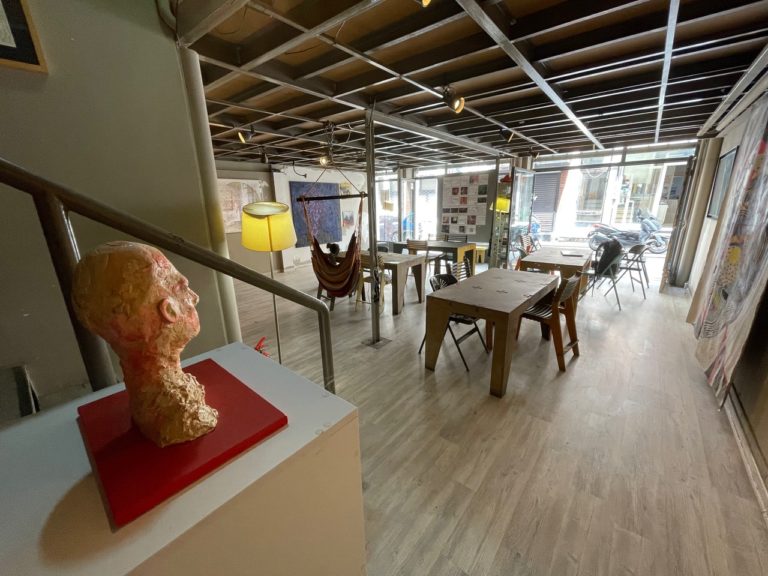
Overview of arthere exhibition space — © arthereistanbul
How Does Displaced and At-risk Artists’ Support Look Like in Countries Closer to Europe’s Borders?
This is the key question of a study, I and my fellow-researcher, Svetlana Mintcheva, conducted between September 2025 and March 2026. We looked at six countries in the region, namely Armenia,Bulgaria, Greece, Poland, Romania, and Turkey. The study, which was commissioned by Goethe-Institut in Athens, resulted in two public facing outputs:
- A summary report offering an analysis of the broad landscape, key findings, and recommendations.
- A digital map featuring the 65 organisations and initiatives we have identified during the course of the study.
The map will remain open for updates and new entries, aspiring not just to capture a moment in time, but to function as a dynamic tool for both artists in need (orientation and relevant contacts) and organisations engaging with them (visibility, networking, collaboration).
Unexplored Territory
In recent years, the themes of forced mobility of artists, artistic freedom, and cultural rights have been attracting more attention. And rightly so. As more and more artists are impacted by the proliferation of wars, the rise of authoritarianism, and the erosion of civil liberties and human rights, we see the number of artists and cultural workers in a situation of risk growing. Artists and creatives, like journalists, are among the first targets of authoritarian regimes and invading states. They are often faced with persecution, censorship, blacklisting, intimidation, imprisonment, and direct threats to their lives. The latest Freemuse report paints an alarming picture of the state of artistic freedom globally. Although we lack data collection mechanisms to systematically monitor the number of artistic freedom violations or of artists and cultural workers seeking asylum and protective relocation in other countries, both are presumed to have significantly risen.[1]
Studies and reports indicate that the field of ‘artists at risk support’ is also growing in response, however, it appears that the vast majority of support actors and organisers are located in Western and Northern Europe, North America, and/or operating internationally.[2]
The landscape of support for at-risk and displaced artists in Southeast and Eastern Europe remains largely unexplored. Does this imply a lack of relevant initiatives there? This is a region neighbouring with countries experiencing war, conflict, repression, or instability, receiving and hosting large migrant and refugee populations, with potentially many artists and cultural workers among them. To whom artists seeking permanent or temporary refuge in those countries are turning to? Which are the structures providing a safe and welcoming environment for free expression and continuation of their artistic practice? This mapping study attempts to shed more light on what is actually on offer in those countries, to identify the key local actors working on the frontline with refugee artists in countries closer to the borders of Europe, and to discover their challenges and needs.
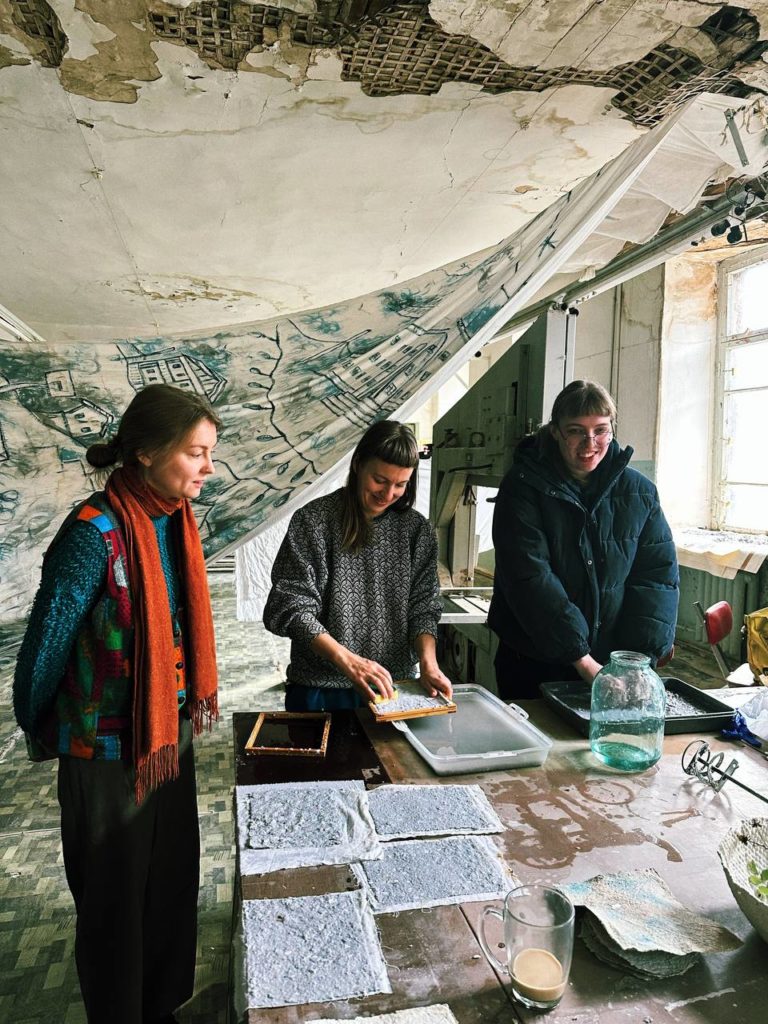
Paper-making workshop led by Abastan participant Aleksandra Korolyova, 2023 — © Abastan
Inclusive Approach
The research encountered several challenges. The first challenge was definitions and criteria setting for the mapping. Given that ‘displaced and artists at risk support’ is a relatively new term and still may mean many things to many people, we opted for a broad framework, including any initiative, structure, scheme, or organisation with a consistent engagement with displaced artists and cultural professionals, even if their work is not framed as support or protection. We made no distinctions based on civic or legal status and used terms like displaced, forcibly displaced, exiled, asylum seekers, refugee, and migrant artists interchangeably during the research. We also used the term ‘artists at-risk’, which refers more to politically persecuted or threatened artists, very often (but not necessarily) forced into displacement. We hope this inclusive approach gave research participants the space to (re)-define what ‘displaced and artists at-risk support’ means to them in their own terms and helped us mitigate power imbalances associated with externally imposed frameworks of host/support organisation versus guest/recipient of support.
A Diverse and Dynamic Landscape
Overall, we have not identified a pattern which applies to all six countries. The landscape is diverse, dynamic, and constantly evolving. Levels of interest and density of work with displaced and at-risk artists differ and are influenced, among other factors, by migration and demographic dynamics, geographical and/or cultural proximity with countries in crisis, geopolitical positioning, and political responses to emergencies. For example, the presence of large refugee populations in Turkey, Greece, Poland, and Armenia has, not surprisingly, created distinct ecosystems of cultural and civil society actors engaging with displaced artists. Geographic and cultural proximity to countries in war or countries under oppressive regimes play a significant role in shaping both urgency and public sensitivity around this work. The overall economic context, different levels of cultural funding and infrastructure, as well as the maturity of the discourse on diversity, equity, inclusion, and cultural rights, are also decisive factors for the capacity of the local cultural sector to engage with such a targeted type of work.
One could argue that what all studied countries have in common is the absence of public policy frameworks or publicly funded programmes specifically targeting displaced artists and cultural workers from refugee and migrant communities. With certain exceptions, public support from cultural budgets, where it exists, is ad hoc, fragmented, emergency-responsive, and doesn’t answer to a strategic goal or a policy agenda. The fact that displaced artists or more generally, artists of different origins or nationalities, are not explicitly recognised as a distinct target group within national cultural policies also limits the legitimacy and capacity of bigger, public funded institutions to engage more strategically with this type of work (even when there is interest and will to do so).
Outside the cultural policy sphere, public funding indirectly benefitting displaced artists is often channelled through migration and social integration budget lines. However, this kind of support does not take into account the specific conditions of artistic work or the complex situation and needs of artists in displacement. Given the rise of anti-migration policies, more notably in Greece and Turkey, and the general hostile political climate around migration at EU level, there is a big concern that even this uncustomised type of support will rapidly shrink.
In the absence of structural, long-term, or targeted publicly funded schemes, the gap is filled by independent, small, non-state actors, working within the arts or at the intersection of arts, human rights, and migration field. Support for displaced and at-risk artists is fragmented, with blurring boundaries between artistic and social work. It can be also ‘hidden’ within a multiplicity of programmes and initiatives across sectors, which often work in silos. Their work is sustained to a large extent by EU and international funding streams, supported in some cases, by municipal and local-level funding.
On the Ground Safety Net
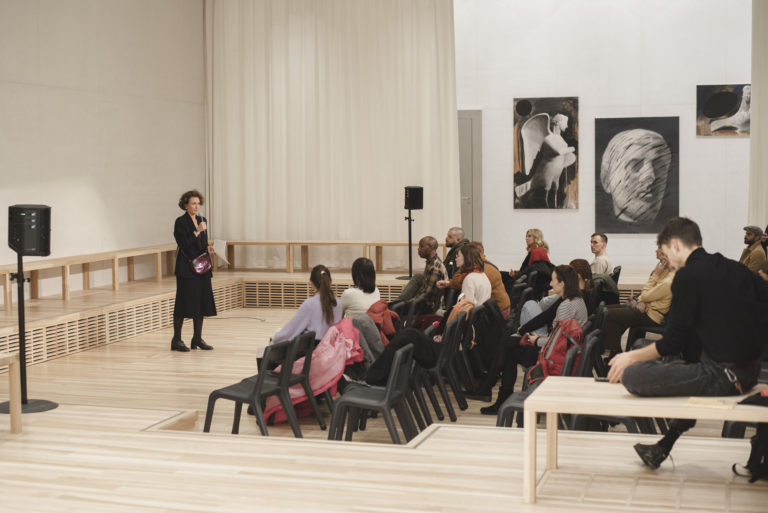
We have found only a limited number of organisations exclusively or specifically dedicated to working with displaced artists.
We can mention here MigrArt in Poland, one of the few initiatives in the region solely focusing on migrant artists. The MigrArt platform functions primarily as an online database of artists with migration experience connecting them with institutions and helping them access funding opportunities. It also delivers education, networking, and capacity-building programmes, supporting artists with the tools and resources to continue their work and develop professionally.
While MigrArt works at the intersection of arts and social inclusion, Arthereistanbul offers an example of an artist-led space and residency founded by and for displaced artists. It was set up in Istanbul as a direct response to the challenges faced by artists fleeing the Syrian war. Since then, their work has expanded to support artists and cultural workers coming from the broader SWANA region and beyond facing threats due to conflict, censorship, or discrimination.
Similarly, Abastan in Armenia started as an emergency support initiative for artists who left Russia after the country’s full-scale invasion of Ukraine, by converting an abandoned industrial building into a shared living and working space for artists in need. With time, Abastan evolved into a multicultural, decentralised community of artists and volunteers, who had to find new ways of continuing working together, hosting events across informal venues and supporting each other.
Another example is the newly set up Magnolia Art Residency on the island of Lesvos, in Greece. It is a space of ‘radical care’ for artists, intellectuals, queer and feminist activists from the Arab world, particularly those in forced displacement or living in countries in crisis, but not specifically focused on artists relocated in Greece. It is conceived not only as a space for free expression, but primarily as a healing retreat restoring confidence and well-being of outspoken artists that have experienced repression, isolation, and trauma.
Beyond the limited number of focused initiatives, there is a wealth of cultural and socio-cultural organisations for whom engagement with at-risk and displaced artists is not framed as a standalone objective or distinct programme area. More often it is embedded within a wider mission and scope of work, which is inclusive of, but not focused on displaced artists. Their mission, approach, and motivation can vary significantly. For many, an intrinsic part of working with displaced artists is about exploring new artistic practices, encouraging artistic collaboration and giving space to critical voices and artists dealing with politically and socially urgent issues, but it is not perceived as a goal in itself. For others, this type of work is associated with intercultural understanding, empowerment, community bonding, integration, and social cohesion.
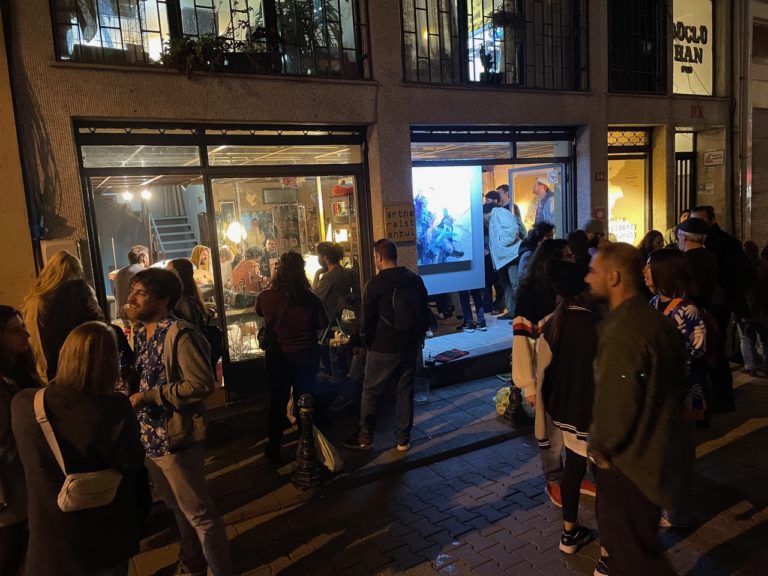
Overview from arthere exhibition space / exhibition opening — © arthereistanbul
Alongside the cultural initiatives embracing displaced artists, broad networks of civic, human rights, migration, activist, feminist, community, and diaspora organisations contribute indirectly to the conditions in which displaced artists live and operate. They provide support in subtle, but essential ways, offering a safety net on which displaced artists often rely for guidance, orientation, visibility, and community building. Informal structures, such as cafes, collectives, libraries, community centres, bars, and other ‘third spaces’ often function as entry points for displaced artists facilitating connections, cultural transition, and a sense of belonging.
Taken together, these are components of a wider ecosystem of civil society, cultural and socio-cultural networks that responds to artists’ displacement in a fragmented, improvised, but essential way. They show agility, adaptability, and close ties with the community, but remain fragile, under-resourced, and under constant uncertainty about the next day. A small, but not negligible number of organisations surveyed have recently been forced to cut down their programmes or close their physical space, due to rising costs, unpredictable funding, and shifting political contexts. Working within a highly precarious political and economic environment, these independent, grassroots initiatives demonstrate impressive resilience owed to their perseverance, informal solidarity, and dedication, that goes beyond the remit of professional roles and organisations’ mandate. Their role is important and deserves more visibility, recognition, and support.
References
[1] See, for example:
Rana Yazaji, Intersecting Temporalities: At-Risk and Displaced Artists in Transition. The Situation of At-risk and Displaced Artists and Culture Professionals – Volume 1 Scoping Review, On the Move, 2025;
Sara Whyatt and Ole Reitov, The Fragile Triangle of Artistic Freedom. A Study of the Documentation and Monitoring of Artistic Freedom in the Global Landscape, ifa (Institut für Auslandsbeziehungen e. V.), 2024.
[2] Re|Shaping Policies for Creativity: we share, we act, we build, UNESCO, 2026
Published on July 15th, 2026
About the author:
Irini Vouzelakou is an independent cultural manager, consultant, and producer, working between Brussels and Athens. She is the founder of Arteria, a cultural non for profit, dedicated to the research, creation and support of programmes at the intersection of arts and social change.
Her prior work includes posts at the British Council, the Network of European Foundations, the European Capital of Culture-Patras 2006, and the Athens 2004 Olympic Games. She has led numerous international collaboration programmes, with a particular focus on artists’ mobility, skills development, learning and innovation and capacity building for cultural organisations.
Together with fellow researcher, Svetlana Mintcheva, she is the co-author of the mapping study ‘Organisations supporting displaced and at-risk artists in Eastern Europe’, commissioned by Goethe-Institut Athen (2026).
