

This article is part of Reset! Yearly Focus 2026: Digital Independence
Author: Odhran O’Brien
The internet promised independent artists unprecedented freedom: global distribution, direct access to audiences, and the ability to build careers without traditional gatekeepers. Yet for many musicians and independent organisations, the reality is more complicated. While digital platforms have expanded access, they have not necessarily delivered control. In smaller markets such as Ireland, sustainable independence depends less on being online and more on having the knowledge, infrastructure, and support systems that allow artists to turn visibility into lasting agency.
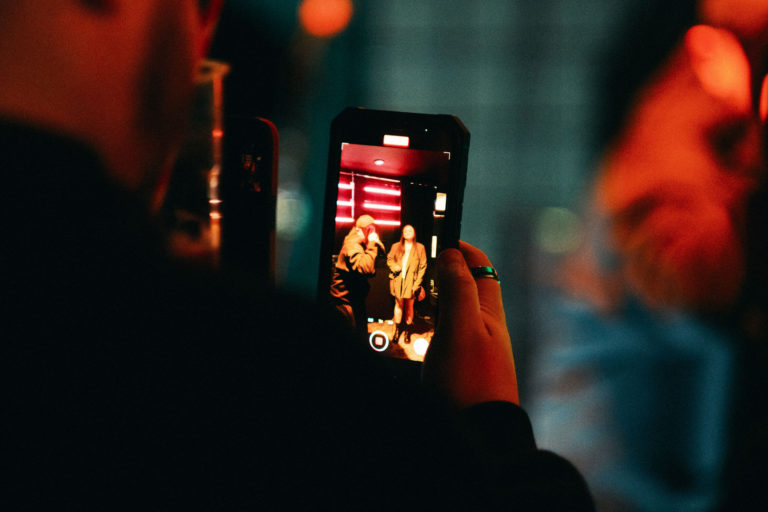
An audience member films Flynn Johnson’s headline show, The Soundtrack, at Curveball, Dublin, December 2024 — © Josh Mulholland / Golden Éire Records
For independent artists, the digital environment looks deceptively democratic. You can upload music globally, sell directly, promote from your phone, and speak to listeners without permission from a label, broadcaster, or editor. The gates appear wide open.
In practice, many of the conditions that decide whether a music career can last are still outside the artist’s control. Discovery happens through systems that artists do not govern. Audience data is split across platforms that don’t always speak to each other. Payment depends on technical standards that many creators were never taught. Professional knowledge is often shared anecdotally and unevenly.
Local infrastructure can remain thin, even as the pressure to produce, post, and stay visible continues to increase.
That’s the problem with treating digital access as digital independence. Access is important, and it has changed music, often for the better. But access is not the same as agency, and visibility is not infrastructure. Appearing online is a far cry from having the conditions needed to build something sustainable there.
Access Is Not Agency
Digital independence is, in practice, the capacity to turn digital access into lasting agency. It does not ask small artists, labels, or cultural organisations to live outside global infrastructure.
Independent music will continue to use global platforms and digital distributors, but the useful test is whether artists and organisations have enough knowledge, support, audience control, and leverage to use those systems without being wholly organised by them.
This is significant in smaller markets. An artist in Ireland can upload to the same platforms as an artist in London, Berlin, Paris, or LA, but not with the same domestic audience, business infrastructure, or local capital behind them. Export often arrives earlier as a necessity, rather than a later-stage opportunity.
Digital platforms may standardise access, but they don’t standardise capacity.
Ireland is a useful case study because it is already deeply connected to the digital music economy. It is English-speaking, culturally visible, and highly networked. Irish artists move through global platforms with relative ease, yet recent sector research still points to underinvestment, weak business infrastructure, and precarious working conditions beneath strong cultural output. Demand for music is real; the question is what the sector can build on top of it.
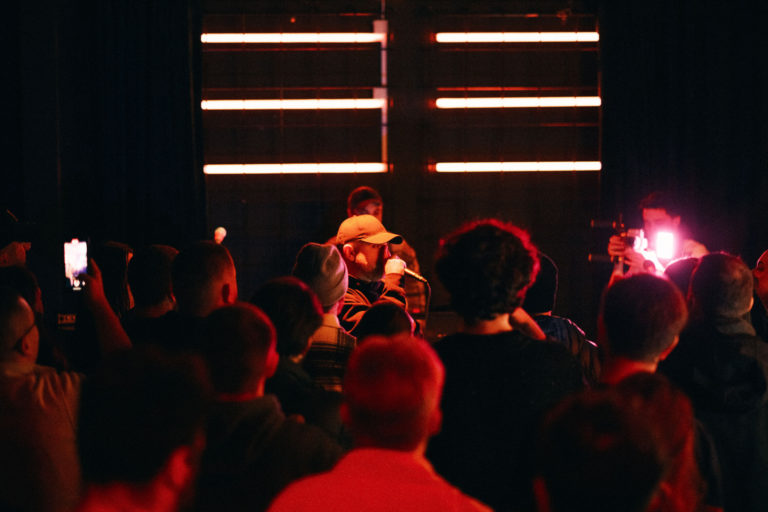
Flynn Johnson performs at The Soundtrack, his headline show at Curveball, Dublin, December 2024 — © Josh Mulholland / Golden Éire Records
Digital reach can make export feel immediate, but reach does not equal readiness. A track can travel before the artist has a release strategy. A post can find an audience before there is a structure to retain it. A viral moment can send attention towards an artist who has no plan for what happens next.
The usual anti-platform argument is too blunt here. Global platforms have lowered barriers to release, discovery, and communication. In some European markets, streaming has even helped domestic repertoire become more visible rather than less. For artists outside traditional industry centres, these tools can create openings. But again, openings are not the same as control.
The risk begins when discovery, sales, communication, and professional identity all sit inside systems where artists have little meaningful say over the rules. Recommendation systems change, licensing disputes remove music from social platforms, Acquisitions can destabilise services that artists have come to treat as cultural infrastructure. Bandcamp’s sale to Epic Games, then to Songtradr, followed by major layoffs, reminded the sector that even trusted platforms can become vulnerable when the community using them does not govern them.
That doesn’t mean every artist needs to become a platform co-operative theorist. Most artists are already carrying too much between making the work, releasing it, promoting it, and funding it while protecting their own health and creative standards. Adding governance responsibilities to that list is not a feasible solution.
The more useful response is to strengthen the middle layer around them.
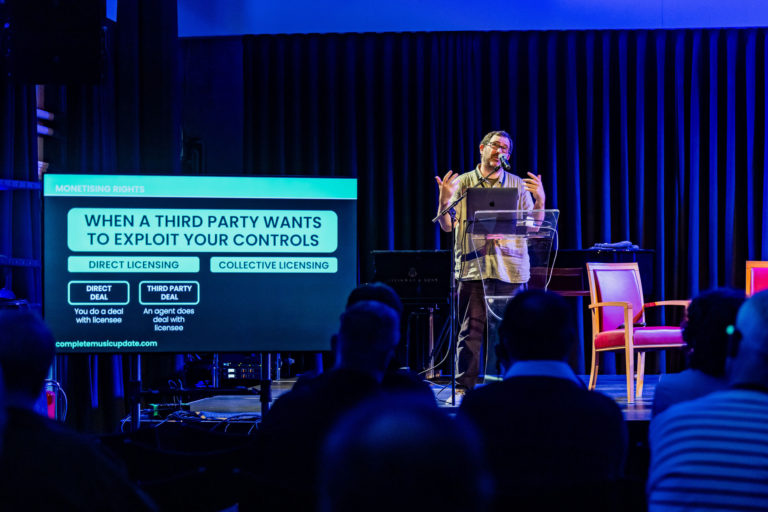
Chris Cooke of Complete Music Update discusses music rights at AIM Connects 2025, National Concert Hall, Dublin — © Glen Bollard / AIM Ireland
The Missing Middle
We often talk as if there are two stages in music: private creation and public release. First, the artist makes the work, then the work enters the world. It gets distributed, promoted, streamed, funded, and reviewed. The space between those stages is weakly supported.
That “missing middle” is where real independence either becomes practical or remains rhetorical.
It is where artists can ask questions without reputational risk, test unfinished ideas before they become campaigns, and learn crucial skills around metadata, publishing, direct-to-fan strategy, contracts, and export. At the moment, much of that knowledge exists in fragments.
Ireland’s music sector has no shortage of committed support through organisations, funders, educators, and informal networks. The experience of that support can still feel scattered, though. If you know the right person, have the right amount of confidence, or speak the industry language, the system feels easier to navigate. If not, digital independence starts to look like another version of self-navigation.
That’s why shared literacy is so important. Not as jargon, or as a way of turning every artist into a miniature company, but as a way of reducing avoidable dependencies.
Metadata is a good example because it sounds boring until it costs someone money, credit, or visibility. Poor metadata can affect whether work is credited, paid, licensed, or discovered. In an AI-shaped environment, it becomes part of the trust layer around music. Who made this? Who should be credited? Can it be licensed? These aren’t just administrative questions. They are cultural infrastructure questions.
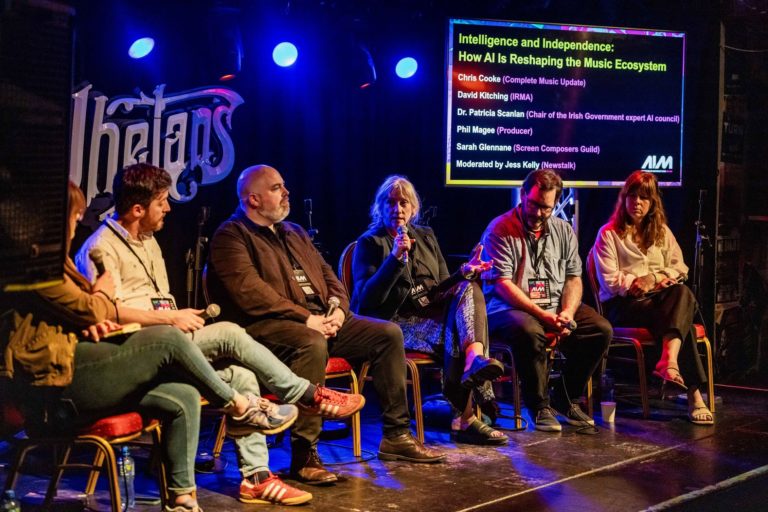
Panel discussion on AI and independent music at AIM Connects 2026, Whelan’s, Dublin — © Glen Bollard / AIM Ireland
AI makes this clearer, but it didn’t create the problem. Generative tools increase volume and pressure around attribution, while the underlying problem is older. More music is moving through systems with too little context and limited human capacity to filter, contextualise, and value it. As volume increases, trust becomes more important. So do provenance, curation, and local knowledge.
Digital independence is built on those less glamorous foundations. It starts with plain-English knowledge of rights, metadata, release planning, direct-to-fan models, funding, export, and ethical AI use. This shouldn’t remain scattered across private conversations and sporadic webinars.
Small markets need trusted middle spaces. Not every useful conversation should be public, promotional, or institutional. Artists, collectives, and cultural organisations need places to test ideas, compare experience, and ask questions before everything becomes a launch, a pitch, or a performance of certainty.
They also need stronger local intermediaries. Digital tools don’t remove the need for people and organisations on the ground that can translate access into strategy. They make good intermediaries more necessary, provided that support is transparent, distributed, and accountable.
Portable audience and data relationships are part of the same picture. An artist whose entire audience relationship depends on one feed is not independent in any meaningful sense. Mailing lists, owned websites, direct sales, and sensible data practices are not glamorous, but they give artists somewhere to go when a platform changes the rules.
Where digital services become critical infrastructure for cultural communities, ownership and decision-making also matter. Artist-owned marketplaces, open-source tools, and co-operative platforms are worth watching because they ask who should control the systems that cultural workers depend on.
The lesson is not that every sector needs one perfect replacement platform. Ethical intent does not guarantee good software, adoption, or durability. Values alone don’t build infrastructure, but neither does convenience when the price is permanent dependence on systems that can be sold, degraded, or redesigned without accountability.
Capacity vs. Purity
For small music markets, the future isn’t purity from global platforms. It is negotiated interdependence. Use the platforms, but don’t confuse them with the whole ecosystem. Ireland’s independent music sector doesn’t need to disappear from global digital infrastructure to become more independent. It needs stronger local capacity around it, with shared knowledge, trusted data practice, better audience routes, peer learning spaces, and institutions that help value circulate rather than leak away.
The same is true across Europe. Independent culture has access to the internet. What small markets need is enough shared capacity to avoid being governed entirely by external platforms, external capital, and external validation. Digital independence won’t be measured by how quickly cultural organisations adopt the latest tools, but by whether those tools leave artists and communities with more agency than before.
In a small market, independence is not a posture. It’s the shared capacity to act before the next platform changes the rules.
Published on June 23rd, 2026
About the author:
Odhran O’Brien is a producer, artist manager, and founder of Golden Éire Records, an independent label focused on artist development, sustainable release models, and Ireland’s wider music ecosystem. He also works with AIM Ireland, where his research and advocacy centre on independent-sector infrastructure and fairer conditions for music-makers.
