
This article is part of Reset! Yearly Focus 2026: Digital Independence
Author: Lina Bautista
Live coding makes the usually hidden processes of digital technology visible. By writing and changing code in real time, artists turn programming into a shared, performative practice—one that challenges closed systems, invites audiences into the creative process, and builds communities around open tools and collective experimentation. In doing so, live coding offers a practical model of digital independence: not as a single technology or ideology, but as a way of keeping knowledge and creativity in common.
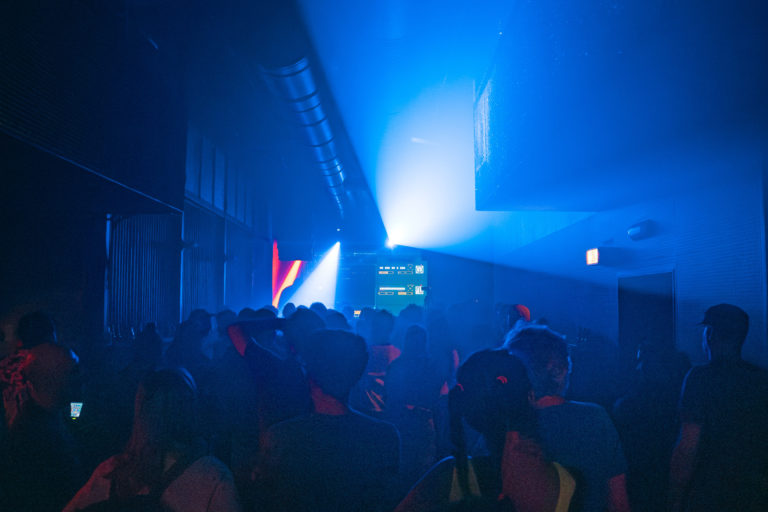
Algorave in Barcelona, ICLC 2025 — © Miquel Martínez
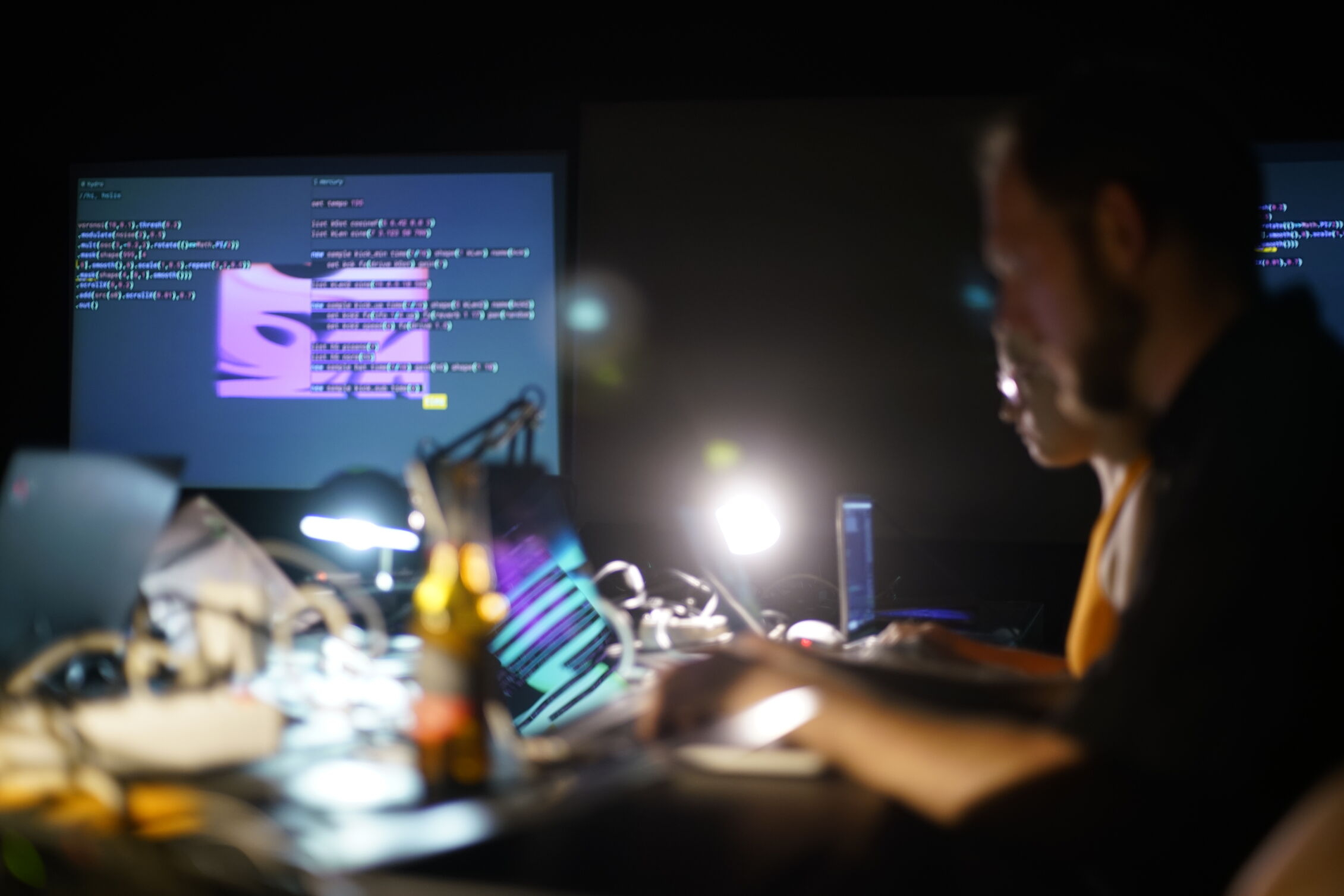
Live coding is a performative practice where artists write code live. They use code as an interface to create music, visuals, and sometimes as a basis for poetry or dance. Live coding performances usually display the code on a big screen, so that the process is also shared with the audience. It involves writing and modifying code on stage, changing the program while it is running, so, in a way, it is like changing the rules of a game while the game is already happening. The same way you can see a musician playing an instrument without knowing how to play that instrument, you can see how the code is being executed without knowing programming. These principles are gathered in the TOPLAP draft manifesto from 2004, where you can read sentences like: "show us your screens, obscurantism is dangerous, or give us access to the performer's mind, to the whole human instrument." These ideas emerged in response to the closed processes of computer music performances, where you could see someone performing in front of a laptop without knowing if they were making the music live or checking their emails.
Rules of the Common
It's worth noting that the manifesto has stayed a draft since 2004, and deliberately so, because it is supposed to be changing over time. The refusal to ever finalise it is, in a way, the whole philosophy in miniature: a shared reference point that everyone can read, but that nobody owns. Funny enough, the manifesto hasn't been touched since then, despite many attempts; for some live coders, it is seen as a long-standing joke, and certainly some ideas don't apply any more, or never did. The manifesto is ambiguous, but its catchy phrases still shape the community.
TOPLAP is an international organisation about live coding; the acronym has many interpretations, including Temporary Organisation for the Proliferation of Live Algorithm Programming, Transdimensional Organisation for the Purity of Live Audiovisual Programming, or Terrestrial Organisation for the Permanence of Live Audiovisual Programming, among others, showing how variable and ambiguous the name itself can be. This is what makes live coding a useful case study for digital independence; live coding is not a single tool or a single rule, but it works as a model of decentralised cultural organisation, where a few shared principles hold across very different local scenes, instead of one authority enforcing a standard.
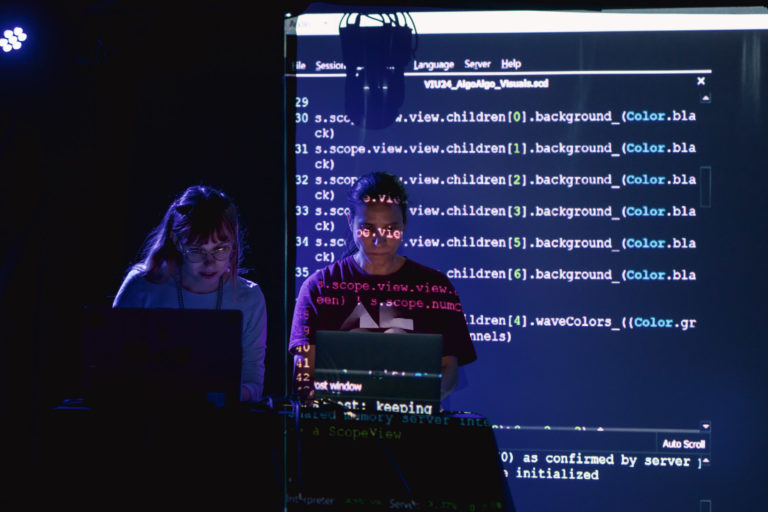
Panagiota Anastasopoulou AKA Penny and Maia Francisco, Live coding Session during /*VIU*/ Festival, 2023 — © Miquel Martínez
Between Digital and Physical
Live coding is not a musical genre; live coding sessions and concerts can range from ambient or drone sounds to dance parties. The latter are usually called Algoraves, where you can expect an underground venue with smoke and repetitive music. Usually, an Algorave has several performances one after the other. Algoraves also have guidelines that help organisers create their own, including phrases like "collapsing hierarchies", "diversity in line-ups and audiences", and "be wary of institutions.”
In the Algoraves organised by TOPLAP Barcelona, we usually promote the event using the Algorave name itself; with the name, people already know they're going to have fun, they are not coming for a headliner or even a specific performer. In the poster, we list all the names in the same font size, and we put a lot of effort into making a nice poster that makes you feel you have to be there. The order is sometimes chosen randomly, while at other times it depends more on the mood of the music to maintain a certain flow. We let the audience know the time slots and the order at the venue itself, so they don't prioritise what they already know.
Another type of common event in the TOPLAP Barcelona community is the from-scratch session, an improv session where every live coder has 9 minutes to perform, starting from an empty screen. The format itself started in Mexico, where live coders took the idea of writing everything from scratch seriously and turned it into sessions of under 10 minutes; this format was later known as the Mexican style. Years later, TOPLAP Barcelona adopted it as a method to start and maintain its own community. In Barcelona, the from-scratch sessions are always the last Thursday of every month, and include a rule for the audience: they must clap at the end of the 9 minutes, no matter the result. The sessions always happen; it doesn't matter if there are three people or a hundred, and it's about sharing and exploring together, so we encourage trying new tools and experiments without any pressure. This is a concrete example of how a shared technique moves between nodes and becomes locally rooted. The format is now also used in other nodes, such as TOPLAP Slovenia and The Netherlands Coding Live, which added the rule to also clap after the first sound or the first image.
These communities, as mentioned before, are called TOPLAP nodes and are usually connected, learning from each other. Live coders have the opportunity to meet each other and perform in different cities in Europe thanks to the connections between the nodes. Most events are self-funded, with no sponsors, no institutional backing behind the scenes, and they vary a lot depending on the city. In Lyon, there's a 12-hour Algorave, with over 200 attendees in an underground venue—a completely DIY event. In the Netherlands, you can take part in public events like Museum Night, drawing a very different, broader crowd, or you can find yourself performing in a dance rehearsal space in Berlin with people sitting on the floor.
Some of those connections have been built deliberately. TOPLAP Barcelona itself was born at Hangar, an art production centre that supports collectives through residencies. The curiosity about how other communities work led to the on-the-fly project, a European exchange between nodes that helped the community consolidate and open new lines of communication; several new TOPLAP nodes appeared during and after it. That exchange continues around every ICLC (the International Conference on Live Coding): nodes organise satellite events in their own cities around the dates, so a touring live coder can ideally build their own itinerary by following the network.
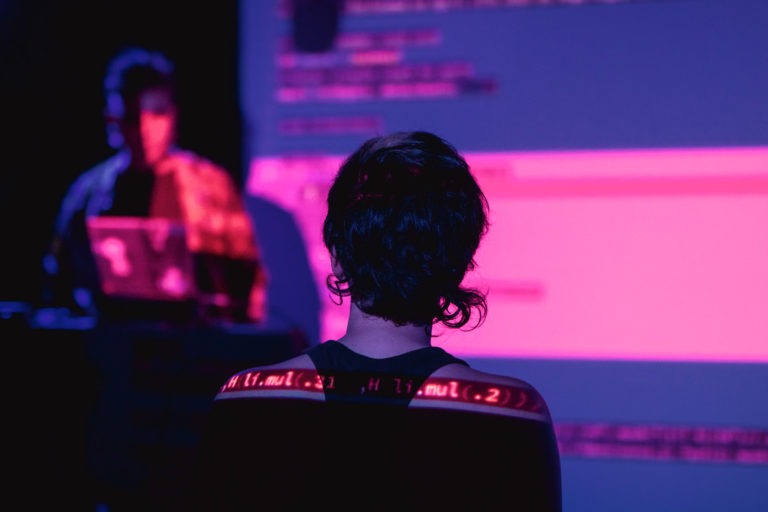
Live coding Session during /*VIU*/ Festival, 2023 — © Miquel Martínez
Open(-source) communities
Live coders work with open-source software; the live coding languages are open, and some live coders combine them with proprietary software or physical synthesisers. Live coders often end up building their own languages and tools because proprietary options usually don't offer what a live coding performance actually needs. Open-source tools surround live coding, not only for creation but also for communication.
The community has ongoing challenges with digital communication tools. A few years ago, live coders left Twitter and slowly moved to Mastodon; TOPLAP now runs its own Mastodon server. Groups have formed on Telegram, Signal, Discord, and elsewhere, often splitting the community depending on which tool people happen to use. In TOPLAP Barcelona, we started a Telegram group for interested people. After a few years, the group grew, and people who just wanted to know about events also joined; it became a useful communication tool and blurred the line between performer and audience, sometimes making everyone part of the same collaborative event.
Right now, we, like everyone else, are dealing with a flood of bots. TOPLAP Barcelona recently moved to Signal, where new members must be accepted before they can join. This exodus happened before, and it will probably happen again; the community keeps shifting from one platform to another, trying to stay a step ahead of enshittification. Inevitably, people get lost along the way.
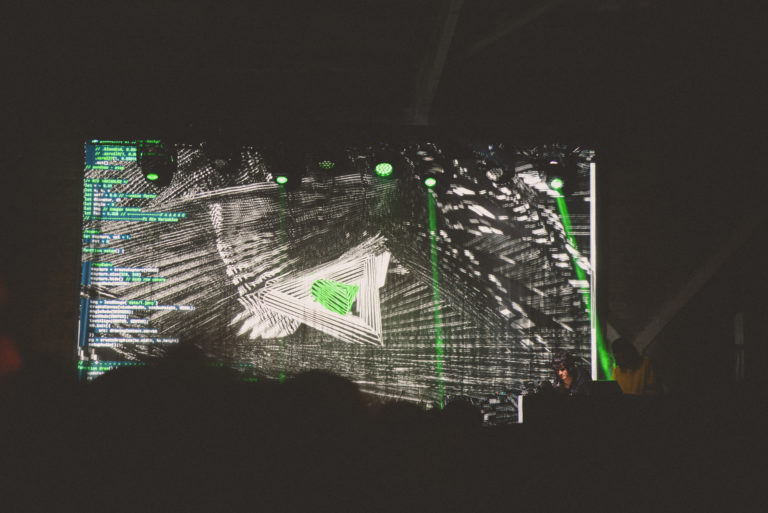
Turbulente and Linalab, live coding performance at BAW! festival, 2024 — © Brava arts
Lately, the tech industry's dominant culture has taken an interest in live coding software, precisely because it works through code, a format that's easier for AI systems to generate than sound itself. Agents and bots can now produce music through live coding languages like Strudel. But they miss the point. Live coding is a communal act: asking each other questions, collaborating, and interacting with others. Live coding isn't about an output; it's about a mind interacting with algorithms in real time. When you remove the human from that loop, the whole process gets omitted, normalised, and flattened, and nothing new can arise from it. Maybe that's why the manifesto's oldest demand—give us access to the performer's mind—matters more now than ever.
For more information about live coding: Live Coding: A User's Manual
Published on September 29th, 2026
About the author:
Lina Bautista is a musician, artist, and educator working with music technology, and open-source tools. She is a founding member of TOPLAP Barcelona and the Axolot collective, and has worked on European exchange projects, including on-the-fly, about connecting live coding communities, where she was the artistic director. Her practice centres on live coding and other DIY instruments as a way to make creative and technological processes transparent, and she works to break down barriers to accessing technology, particularly through workshops, collective processes, and performances. She is currently pursuing doctoral research at the UOC on making audio generation tools more legible through live coding.
