

Author: Nicky Böhm
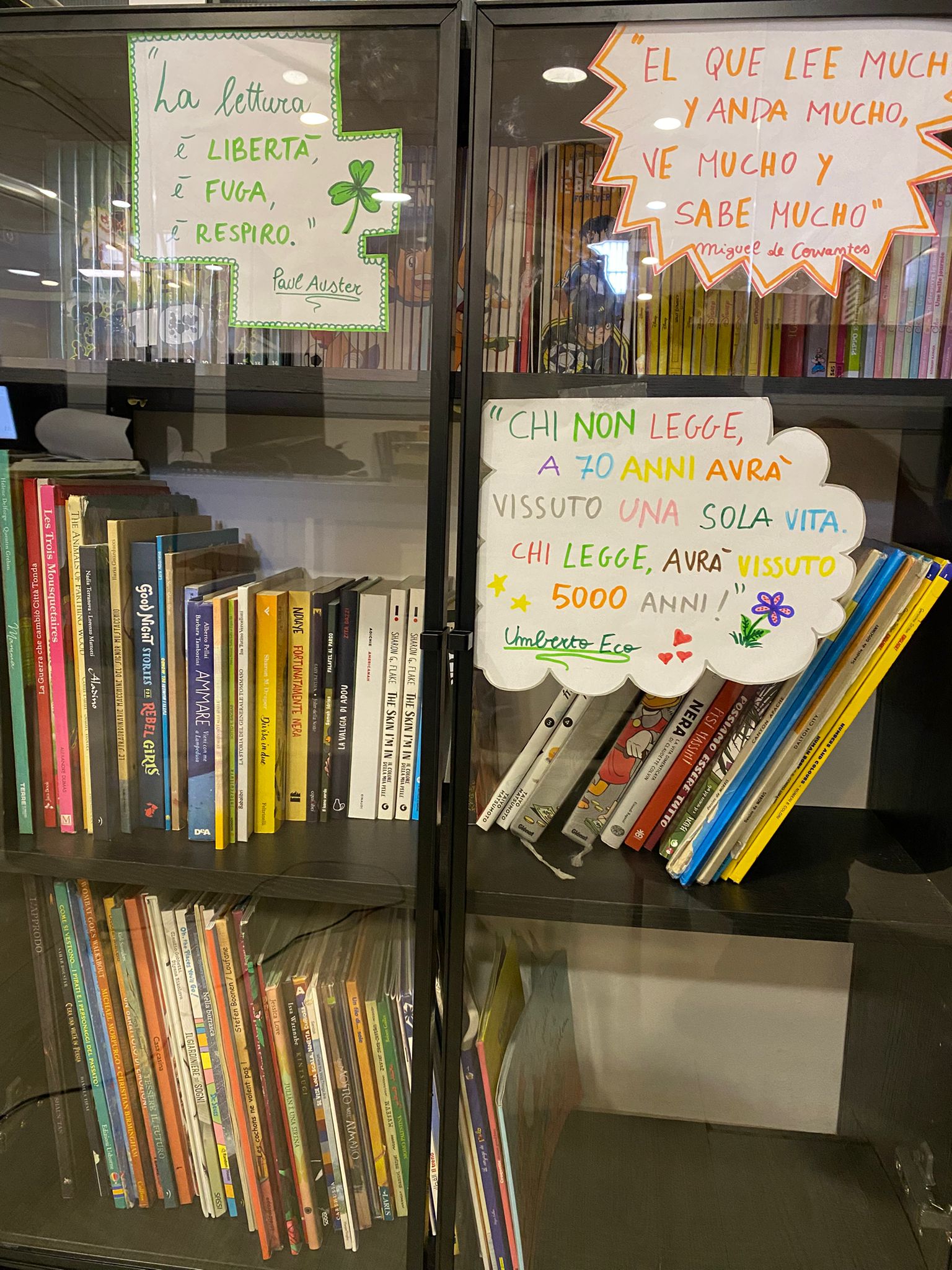
Libraries can be much more than places to borrow books: they can be spaces of belonging, imagination, and connection. For young migrants and refugees, multilingual books and creative storytelling offer opportunities to see their own lives reflected, discover unfamiliar perspectives, and shape the stories they want to tell. From community libraries to mobile reading hubs, this article explores how inclusive libraries can become cultural spaces.
© Courtesy of C.I.A.O. — Centro Interculturale di Aiuto e Orientamento
There is something magical about stepping into a library as a child. As Zadie Smith once said, “‘local libraries are gateways, not only to other libraries, but to other lives…the only thing left that doesn't want either your soul or your wallet.”
Professor Rudine Sims Bishop, whose groundbreaking work transformed the field of multicultural children’s literature, famously described books as “mirrors, windows, and sliding glass doors”: mirrors in which children can see their own lives reflected, windows through which they encounter other experiences, and doors through which they can imaginatively enter those worlds. Although migrant, refugee, and third culture kids are less likely to find everyday representations of themselves and their social context mirrored in books, reading can still be a powerful way to spark their imagination and to offer both refuge and catharsis from some of the reductive, colonial narratives that still often shape European discourse.
Creating Fun and Inclusive Third Spaces
Libraries, in all their myriad incarnations, can become what we might call third spaces: places outside home, school, or work where people can encounter one another, make discoveries, and develop a sense of belonging. Having said that, not all children have access to libraries or the chance to find books at home, let alone books in languages they speak with their families. Children from racialised, low-income, migrant, and refugee backgrounds often face additional barriers to feeling truly welcomed in public cultural spaces, and children living outside urban centres have even less opportunity to develop a relationship with reading. There are nevertheless some great strides forward being made. Multilingual publishers such as AYA create beautifully illustrated children’s books in languages that are often underrepresented in mainstream publishing such as Dari and Pashto and combine them with phonetic transcription, German translations, and audio stories. They centre and celebrate multilingualism, multiculturalism, and the telling of everyday stories that don’t have to be allegorical or centred around narratives concerned with othering.
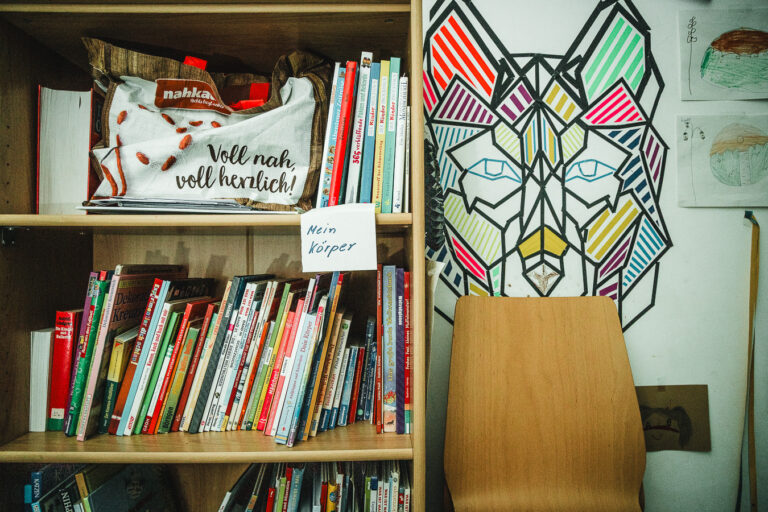
For the past few years, I have been working with the Berlin- and Morocco-based NGO lilipad e.V., which is dedicated to addressing educational inequality by creating multilingual libraries in accommodation shelters. It’s not just about literacy in the classic sense, but also about creating safe, fun, and inclusive environments that encourage children, parents, and caregivers to explore creative storytelling in ways that invite them to imagine a future beyond their current circumstances.
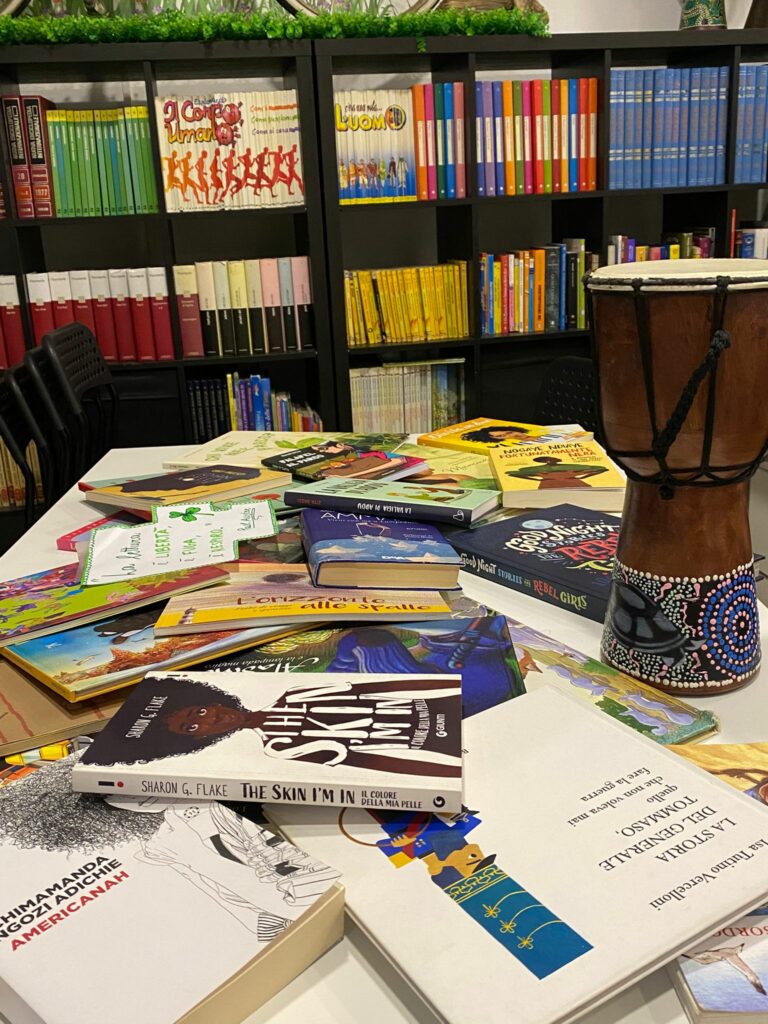
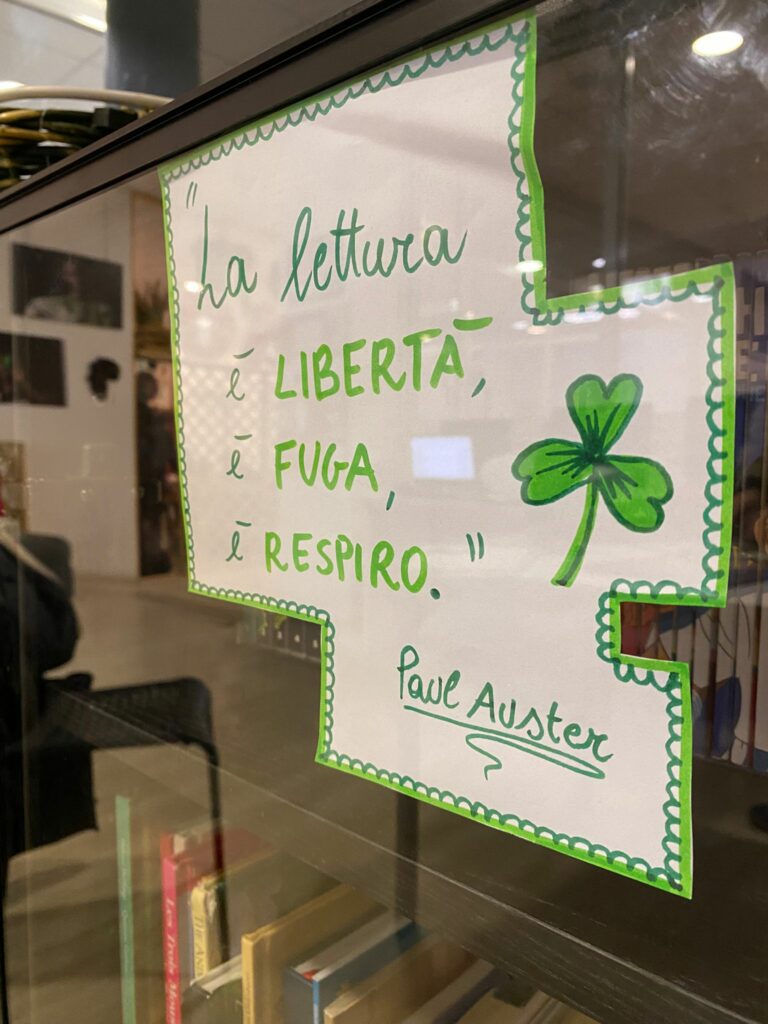
Thanks to the Erasmus+ Jugend grant, this year, we were able to realise the transnational Narratives of Hope project in partnership with organisations working at the intersection of migration, education, and community engagement. At the heart of the Narratives of Hope project are two interconnected strands: establishing inclusive youth libraries and creative hubs within migrant communities, and using digital storytelling, artistic workshops, and community events to create opportunities for young people to tell their own stories. In Syracuse, Italy, we worked with C.I.A.O., an intercultural community centre that offers migrants and locals a safer space to socialise while supporting them with a wide range of daily activities that span legal advice, Italian lessons, computer courses, and creative workshops. We also teamed up with RésidSocial in Paris, France, which is a social enterprise that combines emergency accommodation via a network of renovated residences with community-oriented living environments for migrant families so that they can find pathways towards integration.
© Courtesy of C.I.A.O. — Centro Interculturale di Aiuto e Orientamento
An Essential Variety of Forms
Beyond this particular project there are some inspiring examples of other library spaces that foster inclusive dialogue in Paris, Sicily, and beyond. The Médiathèque James Baldwin in Paris is a large public library that has books, comics, music, games, musical instruments, reading corners, and extensive provision for children and young people across four floors. Next door there’s the Maison des Réfugiés which provides more specialised support for refugees and migrants, and together the two institutions represent an ambitious attempt to place a mainstream public cultural institution alongside a space specifically focused on people affected by displacement. Baldwin repeatedly returned to questions of identity, belonging, race, and the experience of being othered in his work. A library bearing his name, and situated alongside the Maison des Réfugiés, creates a particularly evocative connection between everything he advocated for in his writings, and the chance for migrant children to be seen, heard, and to actively participate in a world that so often denies them their basic humanity.
The “Silent Books, from the world to Lampedusa and back” project launched by IBBY, on the remote Italian island of Lampedusa in the Mediterranean, shows how books can celebrate the unique diversity of migrant children in ways that are joyful and also inclusive for the local kids. Because the books rely on images rather than written language, they can be read and enjoyed without a shared spoken language. The project has subsequently developed into an international collection and travelling exhibition, demonstrating how wordless books can become tools for creativity and intercultural exchange for people starting a new life and for those supporting them to do so.
Similarly in Palermo, the Ideas Box model beautifully illustrates how cultural and educational resources can be taken beyond the walls of a conventional institution, and reach communities that might otherwise have limited access to them. Developed by Libraries Without Borders, the Ideas Box combines books, digital resources, educational materials, and creative activities in a portable multimedia library. The underlying principle is the same as that of a mobile library: a proactive approach to democratising cultural infrastructure that gives children agency over the stories available to them and the stories they tell about themselves.
Like Italy, Greece is one of the first entry points on a migrant's journey to Europe. We Need Books in Athens, Greece is a multilingual library and cultural centre, with more than 14,000 books in over 60 languages, a dedicated children's library, and a programme of language lessons, artistic workshops, and cultural activities dedicated to welcoming migrants, refugees, and local residents alike. An additional offering is the ECHO Mobile Library that has a vast array of multilingual books, and uses its adapted van to create a moving library for migrant communities in Athens and in nearby refugee camps where access to conventional public libraries is either limited or non-existent.
There is no one-size-fits-all-model and that’s especially true when it comes to the provision of libraries for migrant and refugee children who have so many intersectional needs. A library can be a permanent public building, a reading corner in a shelter, a multilingual community hub, a collection of wordless picture books, a portable multimedia space, or a van travelling between communities. The important thing is how the children feel when they access these spaces and in turn how much they spark their curiosity and imagination. Libraries can also use personal narratives and shared creative storytelling to bridge the distance between long-term residents and newly arrived migrants and refugees. This is a form of social cohesion that is not a one-way process of “integration”, in which newcomers are expected simply to adapt. Instead, it can create spaces where cultural heritage is shared, where curiosity replaces assumptions, and where encounters can challenge anti-immigrant prejudice and racism.
Lilipad's Narratives of Hope Berlin Workshop, in February 2026 — © Djun Dulloo
Spaces for Imagination
For children living in accommodation centres or other forms of temporary housing, these spaces can be life-changing. They can offer respite from institutional environments and create opportunities for language learning, artistic expression, and cross-cultural dialogue in ways that are informal, enjoyable, and self-paced. They can also provide something that is easy to overlook in conversations about education and integration: joy. Reading is a deeply creative act. It allows us to become emotionally entangled in lives that are not our own and, in doing so, to expand our circle of empathy. At a time when children are increasingly surrounded by the ultra fast and surface-level emotional responses of social media, books can offer another rhythm: one that asks us to linger, imagine, and reflect. As Marcel Proust wrote, “There are perhaps no days of our childhood that we lived so fully as those we spent with a favourite book.”
I think this is what makes libraries so magical. They do not tell children who they are supposed to become. They simply place worlds within reach, and give them the space to decide which ones they want to enter, which ones they want to question, and eventually, which stories they want to write for themselves.
Published on November 3rd, 2026
About the author:
Nicky Böhm is the Director of Hejmo and Vice-Chair of lilipad, two Berlin-based nonprofits that create community for people on the move through social art projects. Her work sits at the intersection of education, collective care, and organising, with a focus on creative storytelling, co-authorship, and advocacy.
