

Author: ALMARE
This series of interviews is conceived and curated by ALMARE, an organisation based in Turin dedicated to contemporary practices that use sound as an expressive medium. ALMARE works at the intersection of music and art through the conception and production of events, new commissions, and educational programmes that contribute to a broader critical reflection on the present.
The aim of this series is to provide a glimpse of the diversity of models and practices Reset! members and like-minded independent cultural organisations adopt to sustain ambitious cultural programming in complex and precarious contexts, with a particular focus on the relationship between curatorial practices, sustainability, and organisational models. These interviews have previously appeared in Italian in the journal of cheFare as part of the project Next Generation You 2023 (NGY) promoted by Fondazione Compagnia di San Paolo.
Mutant Radio in Tbilisi, Georgia — © Giorgi Zatiashvili
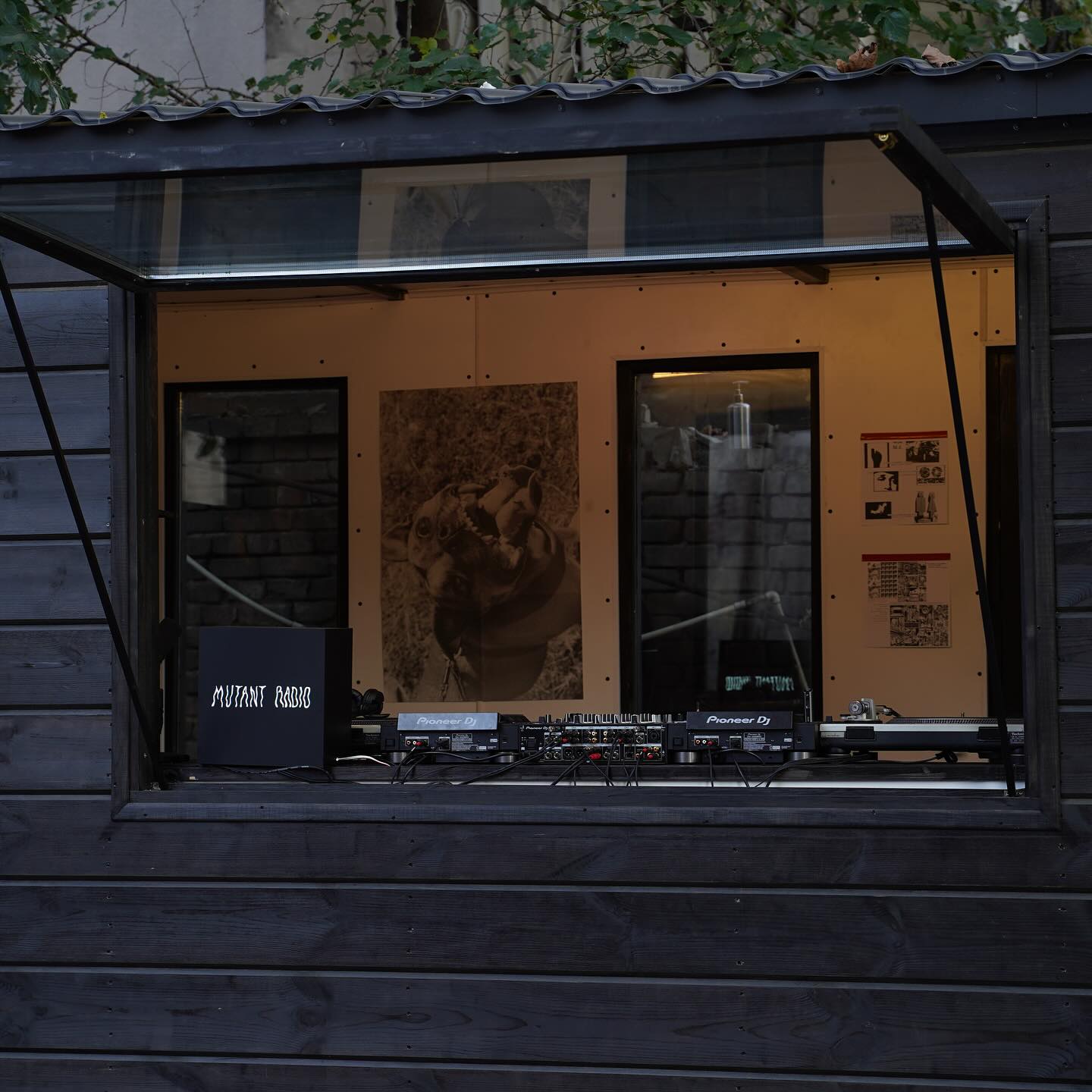
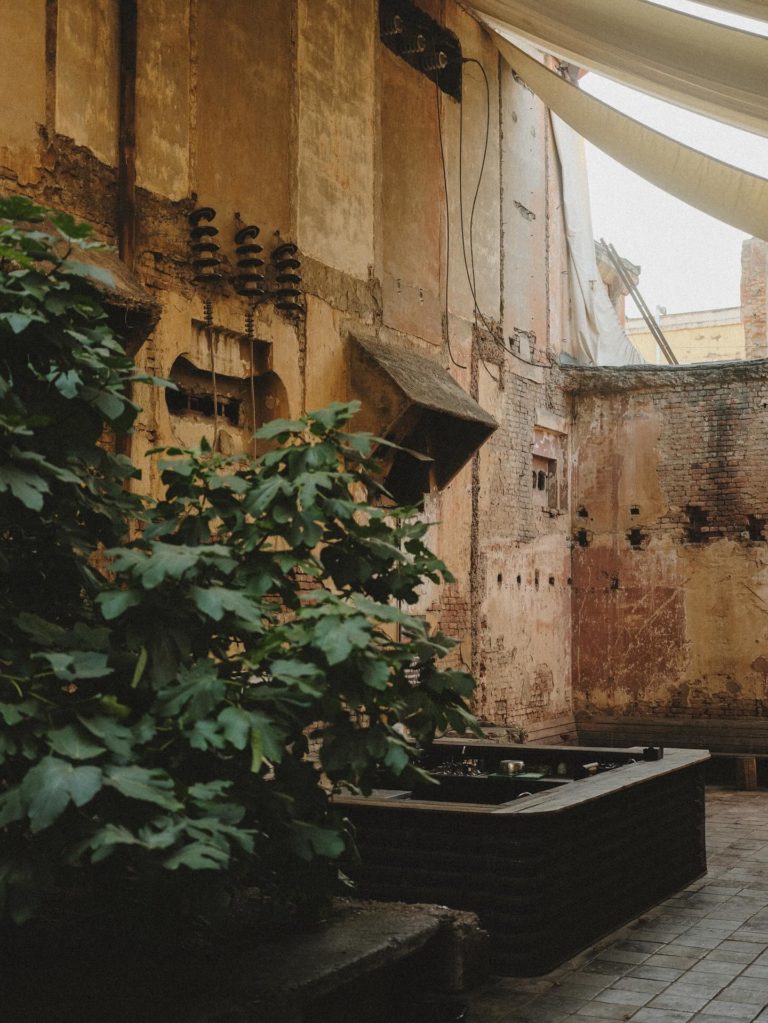
Mutant Radio emerged in 2019 in Tbilisi, Georgia, as a community platform dedicated to music, culture, and sonic experimentation. Its streaming hub broadcasts everything from DJ mixes and live performances to intimate interviews, talks, and educational projects, thus creating a dynamic space where artists, DJs, curators, and cultural voices converge to share sounds and ideas across borders. The platform sustains an ecosystem of over 90 resident broadcasters and approximately 50 weekly international guests, fostering collaborations with festivals, independent labels, record stores, and cultural institutions worldwide. Today, Mutant Radio operates from its original space in Tbilisi, a fully equipped studio caravan housed at a former electro station acting as a broadcast hub, as well as from its new studio in Berlin, Germany.
To learn more about Mutant Radio we spoke with Mariam Otarashvili, who is a cultural advocate with roots in journalism. At Mutant Radio, she orchestrates communication and programming. Her multidisciplinary practice extends beyond broadcasting: through Cultures of Resistance, she supports documentary projects and international initiatives that fuse activism and art, centering justice, peace, and solidarity. This year's Reset! General Assembly brought Mariam to Athens, and, for once, we found ourselves in the same city. We seized the rare chance to meet in person, arranging the interview for the morning after the Assembly had come to a close. Under the warm Athenian sun, Mariam welcomed us onto the terrace of a friend's home in Kypseli, where she was staying.
ALMARE: How did Mutant Radio begin?
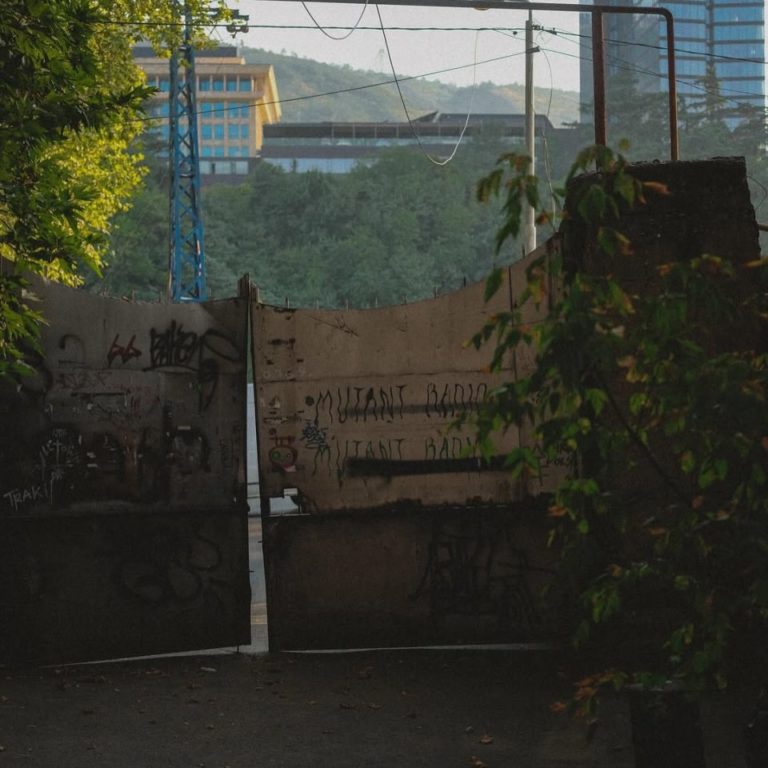
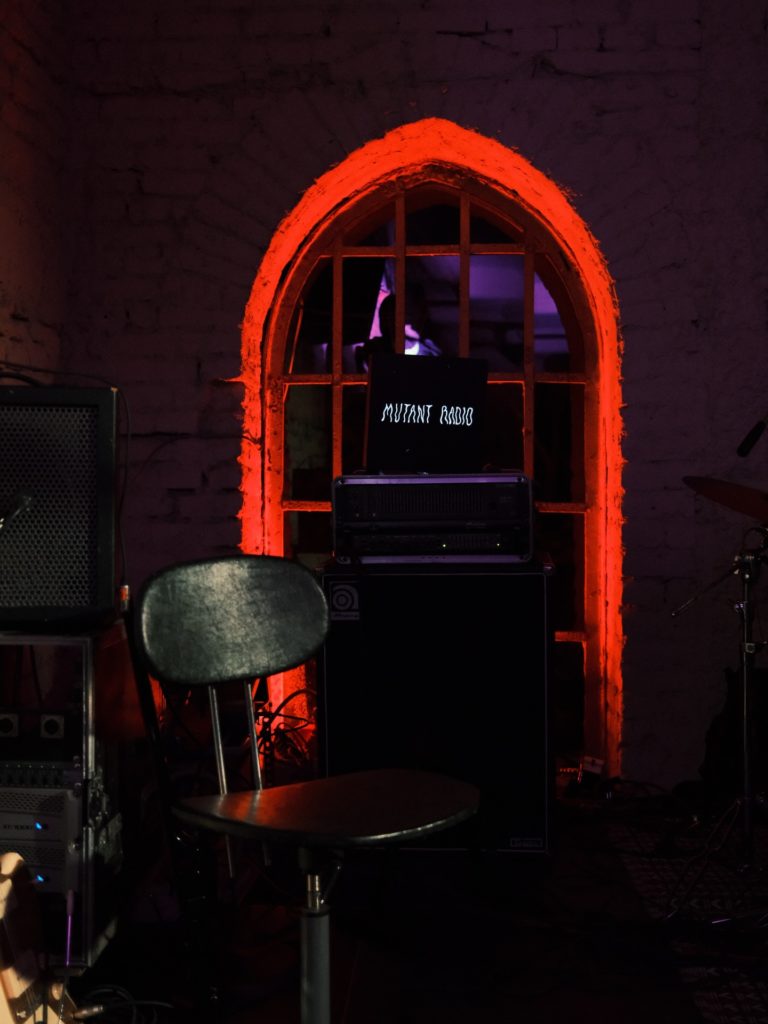
Mariam Otarashvili: Mutant Radio was founded at the end of 2019 by two women: Tata Janashia and Nina Botchorishvili. It’s rare in Georgia that a business is entirely owned by women. Our radio is female-led and our team structure is fairly balanced, and we are very proud of this. The initial idea was to create a platform for experimental and avant-garde electronic music—scenes that already existed but were confined to underground club culture. In Georgia, there was really no alternative, and perhaps there still isn't. We are the only community radio in the entire country. The initial project involved a caravan that could easily move through Tbilisi and beyond. We didn't realise how difficult it would be from a physical and practical standpoint. But then every time artists saw the caravan they would tell us: ‘Oh my God, I want to play from there!’, so we just kept going. Today the caravan is fixed in Tbilisi, in a post-industrial area that once housed a power plant. In one corner we mainly broadcast live streams, then there's an open bar outdoors, and we also have a space where we hold live concerts and workshops. It's a very large place, it looks like a kind of beautiful squat, but actually it isn't.
Mutant Radio in Tbilisi, Georgia — © Giorgi Zatiashvili
ALMARE: What role did the space play in shaping the radio's mission?
MO: The idea was to offer people (cultural sector workers, artists, and so on) a space where they could experiment and open themselves to other music genres beyond the nightclub and the kind of music one is compelled to play or programme inside it. In 2019, this experimental approach was something new for Georgia. Today, DJs that once were more ‘traditional’, shall we say, are opening up to experimenting through the radio.
ALMARE: The nomadic approach embodied by the caravan is something inherent to Mutant’s identity. What compelled you to move to Berlin?
MO: In 2025, we decided to open a physical space in Berlin because we went there often to collaborate with some local clubs. We already had hosted many DJs from Berlin who had passed through Tbilisi or had regular programming slots on our radio. So it made sense that we offered them a physical space to come and meet other community members, because IRL is always better than online. The operation now spans two cities on two different channels: one is the audio channel, the streaming channel; the second one is ‘live.’ Each week, we stream from Berlin for three days, and for three other days from Tbilisi, so we don't clash with each other.
ALMARE: Was the move to Berlin a turning point in Mutant’s history, or were there others?
MO: I think the Covid years were a peak time, some sort of milestone... Not from a financial standpoint, to be clear, but in terms of audience engagement in streaming, it was a real moment. Everyone wanted to tune in... Even the artists wanted to produce as much as possible and stay in contact with the world outside. Borders were closed, everything was locked down and people felt this need for connection, you know? And for Mutant, this was particularly interesting because it was a newly born radio and was still trying to establish itself.
© Irinka Murghulia
ALMARE: How many people are part of the Mutant team today?
MO: We are about seven people: the two founders, technical managers and a designer in Tbilisi, as well as two people in Berlin. But everyone does a bit of everything—artist management, legal and financial matters, taking photos, posting on social media during broadcasts, and everything else that's needed. However, none of the Mutant team members live solely from the radio.
ALMARE: What are the main funding challenges?
MO: It's difficult to get money from the State. The main problem is that in Georgia there is no real public funding for the independent scene. But the real issue is being present in two different countries, which requires understanding quite different bureaucratic processes. In Germany, we are a GbR (Gesellschaft bürgerlichen Rechts), which is a mix between a profit and a non-profit organisation. It's the only legal status in Germany that allows you to do something outside State funding. If you're a non-profit organisation, you can't get any funding outside the State. And it was a situation we didn't want to find ourselves in, because the situation in Germany is very politicised, you’ll find some degree of control over the programmes of cultural organisations—around what they are and what they represent. We support the Palestinian cause, and many cultural centres have been closed or had their funding cut because of this position. For what concerns us, independence is non-negotiable.
ALMARE: How does this approach translate to your curatorial approach, and how does it differ from other radios?
MO: Unlike many German community radios that operate as Genossenschaften (cooperatives), we don't integrate stiff bureaucratic processes in our own governance, for example by having internal voting systems: we just make decisions together. This approach gives us some degree of curatorial flexibility. In my view, Mutant is very curated and not much is left to chance or doesn’t have some reasoning behind it. Residents and guests who participate in our programmes highlight this all the time. They also thank us for the fact that we always seek to prioritise quality over quantity. I don't want to be disrespectful to other radios, I think they are all as important as ours, but I like to emphasise this aspect, because there is a lot of work behind it. We're like a family, we don't consider ourselves just a radio. I recently discovered that some community radios ask people to pay membership fees in order to participate. It surprised me at first, but I also understand that many projects rely on different strategies to sustain themselves. For us, though, it is important to find ways of remaining sustainable without asking people to pay in order to take part.
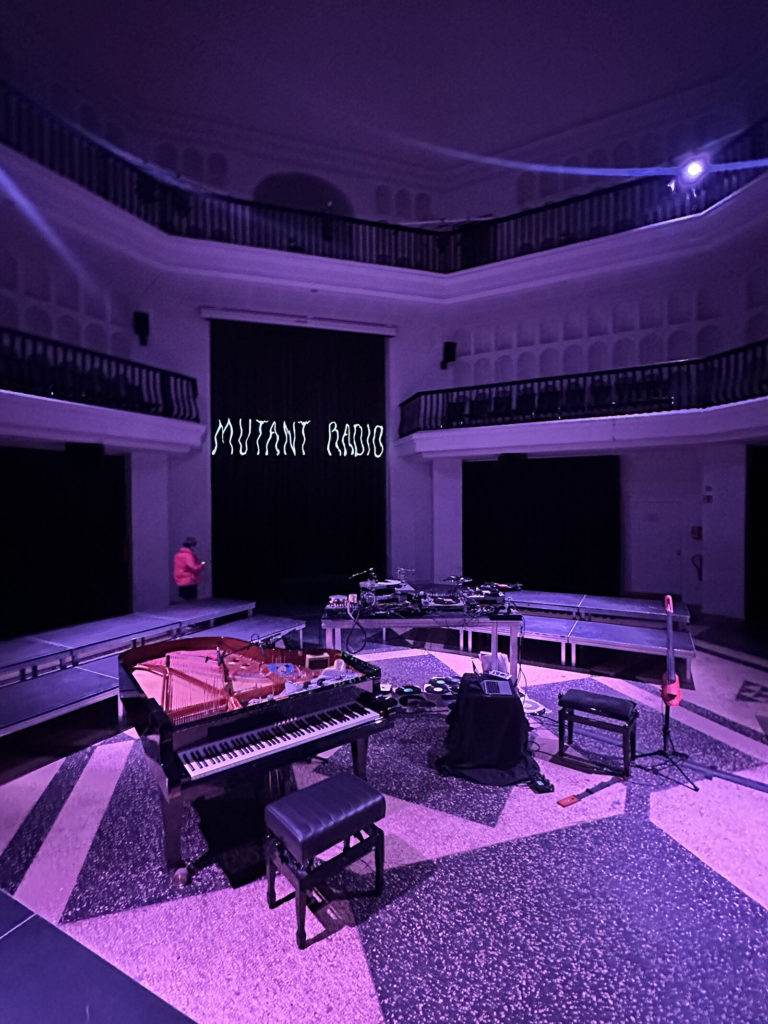
Mutant x Silentgreen in Berlin, Germany — © Mariam Otarashvili
ALMARE: Do you think community radios are inherently sustainable?
MO: Well, to run an online radio you don't have to get on planes all the time, for example: being online allows you to reach many corners of the world and involve many different artists, it lets you travel without traveling. Also, there are now countless platforms and strategies that allow you not to waste resources, to save the money needed to physically produce a programme. Then there's the whole question of cultural heritage and conservation—we're doing the work that institutions should be doing, you know? They could for example help us preserve archives so that they are accessible and don't get lost.
Governments should build a system for community radios so that they can do their work, a work that is sustainable. Just build a system to put them in relation and share knowledge among them, give them the possibility to be independent so they can reach the widest possible audience. So, please: fund us [laughs].
ALMARE: Wrapping up, do you have a final transmission?
MO: Community radios can talk about anything, journalism, history, science… they don't have to be necessarily all about avant-garde music. At the end of the day, every radio is a historical document of the time we live in.
Published on September 17th, 2026
About the author:
Founded in Turin in 2017, ALMARE is an organisation dedicated to contemporary practices that use sound as a means of artistic expression. It operates at the intersection of music and art through the conception and production of events, new commissions, and educational programmes.
Grounded in collaboration and interdisciplinarity, ALMARE fosters artistic experimentation that contributes to broader critical reflections on the present.
ALMARE’s activities engage diverse audiences, with the aim of making artistic experience an accessible space for knowledge and participation.
