

Author: Manon Moulin
As political pressure, funding uncertainty, and corporate concentration impact Czechia’s cultural and media landscape, independent organisations are facing growing challenges to their autonomy and survival. Against a backdrop of mounting uncertainty, independent players' experiences reveal the power of solidarity in defending their place in society.
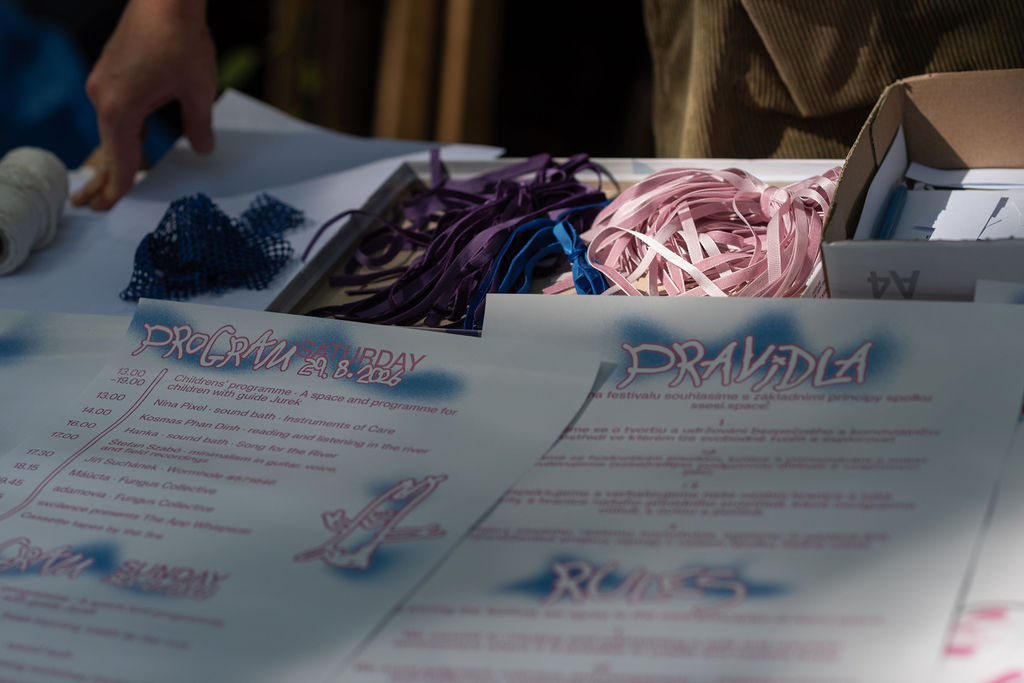
Klabosirna Masky at ssesi space — © Tereza Oprchalová
At the end of 2025, Czechia’s parliamentary elections saw Andrej Babiš returned as Prime Minister with his right-wing nationalist party ANO. While the country was already governed by a right-wing liberal conservative coalition, the new government coalition has welcomed the far right with the Svoboda a přímá demokracie (Freedom and Direct Democracy – SPD) and the Motoristé sobě (Motorists for Themselves – AUTO). This new political coalition enters the circle of nationalist-led European countries. This circle has already proven across the continent the damage it can cause when it comes to socio-cultural policy. Although Babiš’s coalition has been ruling for less than a year, it has already been shifting things around in the cultural and media spheres.
Multifront Crisis and Political Pressures
In July 2026, the new Culture Minister Oto Klempíř (AUTO) proposed replacing the State Cultural Policy 2026-2030+, which was developed and agreed upon in the end of 2025 through thorough consultation between the previous minister and cultural professionals. Approved on October 5th, Klempíř’s new strategy changes the priorities on heritage and culture’s economic potential, while giving less attention to accessibility, participation, democracy, and social aspects of culture. Katarína Kalivodová, member of the board of Kulturní a kreativní federace (Czech Cultural and Creative Federation – KKF) and director of the Institute of Creative Education calls this “a significant setback, particularly in how the state understands the role of culture in society.”
This turnaround brings uncertainty to the sector, which itself extends to funding, with delayed grant calls potentially postponing decisions on some 2027 grants until summer. For organisations operating on tight budgets, this complicates long-term planning. Mižu from Brno-based ssesi.space warns that last minute changes to established rules introduce “structural instability and distrust.”
The pressure intensified on October 21st, when Klempíř announced plans to cut the audiovisual budget by one billion crowns and overhaul the Czech Audiovisual Fund, including replacing its board and all 20 members of its expert councils. Established less than a year ago by merging the former Czech Cinematography Fund with support for related creative industries, including television and gaming, the fund was designed as a shared framework for the wider audiovisual sector. Industry organisations warned on October 23rd that the proposed cuts and legislative changes risk destabilising the system, threatening film incentives, jobs, and studios.
But this change in policy and budget cuts aren't the only pressure. Michal Brenner co-founder and deputy manager of the Česká asociace hudebních klubů (Czech Music Venue Association – CAHK) as well as coordinator of the SHAPE+ platform describes a “multi-crisis” involving “gentrification, economic struggles, core audience transition,” and political conflict. He continues explaining that “the immediate challenge is surviving the next year,” insisting on the need to “help individual players form their long-term strategies.”
Market concentration presents another challenge for the music sector. Live Nation acquired a 51% stake in three major Prague venues this summer: O2 Arena, O2 Universum, and Forum Karlín. Brenner warns that corporate groups “don’t care much for the consequences for the local scene and their future ‘market’,” and points to Prague’s Metronome Festival, which partnered with Live Nation last year before recently announcing its closure.
However, as Tereza Patočková, project manager at research and advocacy for nightlife organisation VibeLab and city manager for Prague at Resident Advisor, stresses, “the independent cultural sector operates in a different environment.” Although these political and commercial developments are distinct, both expose independent organisations’ limited resources and control. The question is whether the conditions necessary for an independent cultural scene are steadily eroding.
Adding up to this multifront crisis in the cultural sphere, proposed changes to public-service broadcasting funding have raised concerns about media and editorial independence in the country. Recently, the government announced their will to “abolish public license fees and financing both Czech Television and Czech Radio directly, thus gaining more control over their contents,” explains Michal Brenner. The proposal moved from announcement to parliamentary action overnight between October 23rd and 24th. At 4:36 a.m. on Saturday, the Chamber of Deputies advanced the bill to the next stage of the legislative process, passing the first reading. While the editorial independence of Czech public media is being erased, the cases of independent journalists and media outlets being pressured or harassed increases.
The parallel between culture and media is here obvious. Both sectors face similar challenges, with the general situation showing the “underlying issue, e.g. whether independent actors can operate freely, express critical views and contribute to public debate without facing political pressure or exclusion,” says Tereza Patočková.
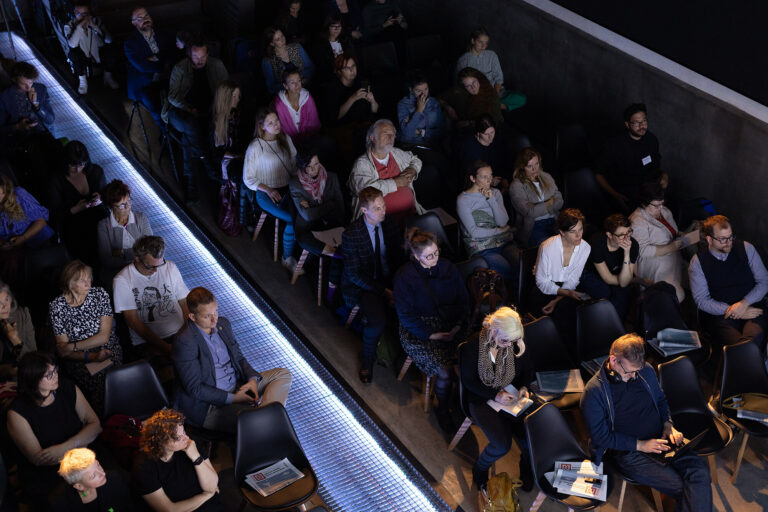
KKF's Manuál pro kulturu conference, September 16th, 2025, Prague — © Adela Vosičková
Culture and Media’s Playing Collective
In response, cultural and media organisations are attempting to turn individual frustration into collective action. The publication of the new cultural policy prompted an open letter calling for its withdrawal, supported by a wider mobilisation across the sector and efforts to establish dialogue with political representatives. Although the policy was ultimately approved, the response has helped renew cooperation between cultural professionals. Kalivodová describes this as “one of the strongest waves of collective mobilisation across the cultural sector since the COVID-19 pandemic.”
Through KKF, organisations are seeking to transform that momentum into sustained advocacy, strengthen the sector’s representation, and make the case for public investment in culture equivalent to 1% of GDP.
CAHK, meanwhile, is working to support venues through long-term strategic planning, access to public and private funding, and research demonstrating their economic and social contribution. For Brenner, the immediate priority is clear: “First and foremost, we need to help the local spaces survive”.
Cooperation with local authorities is another potential lifeline, particularly in Prague, where, as explained by Brenner, “the city is relatively rich and its voters more liberal”—enabling municipal support to counterbalance national policy. This advantage is not shared equally across Czechia, making networks of support essential.
At the same time, independent organisations are now searching for alternative funding sources and support structures, “such as European programmes, community involvement, as well as private foundations and corporate sponsorships,” Mižu points out. Such diversification may offer greater room for manoeuvre, but it cannot fully replace predictable public funding, and commercial partnerships may bring their own compromises.
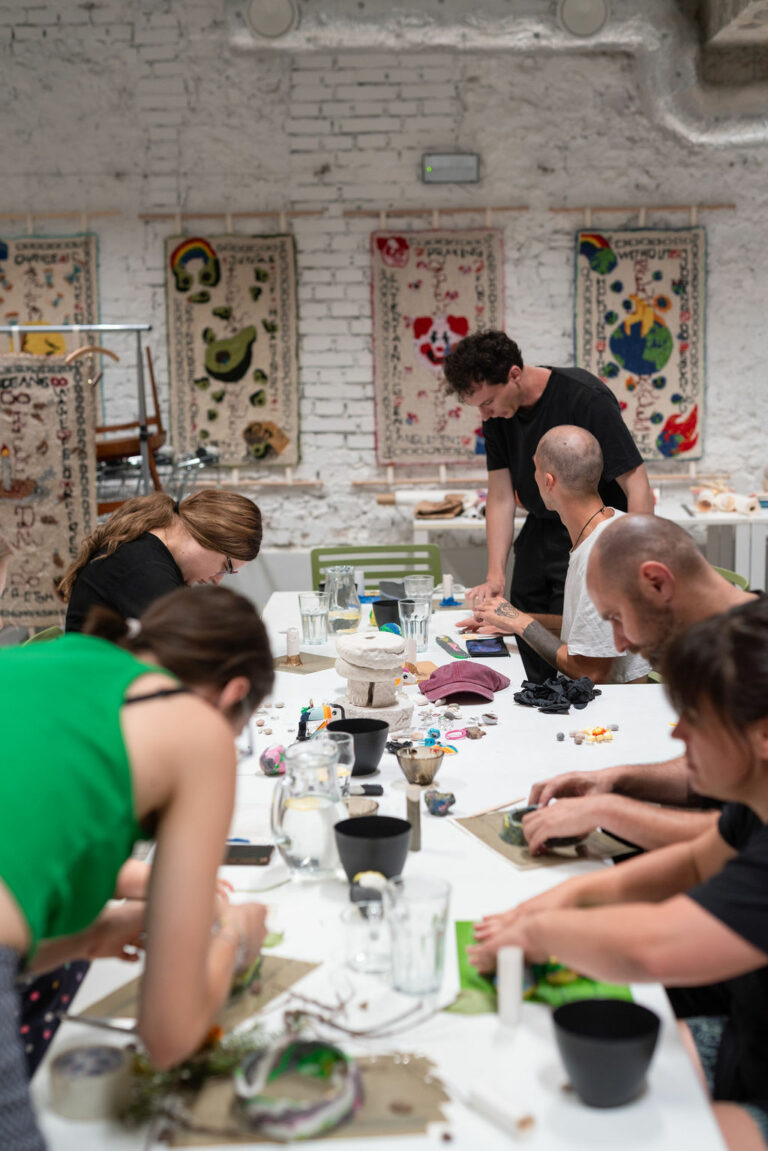
And the limits of adaptation are already visible. Brenner believes that many organisations may have to downsize, while Kalivodová reports that cultural professionals are leaving the sector for other careers. For smaller initiatives such as ssesi.space, the aim remains to sustain locally rooted spaces where communities can meet and create, even as funding becomes less predictable.
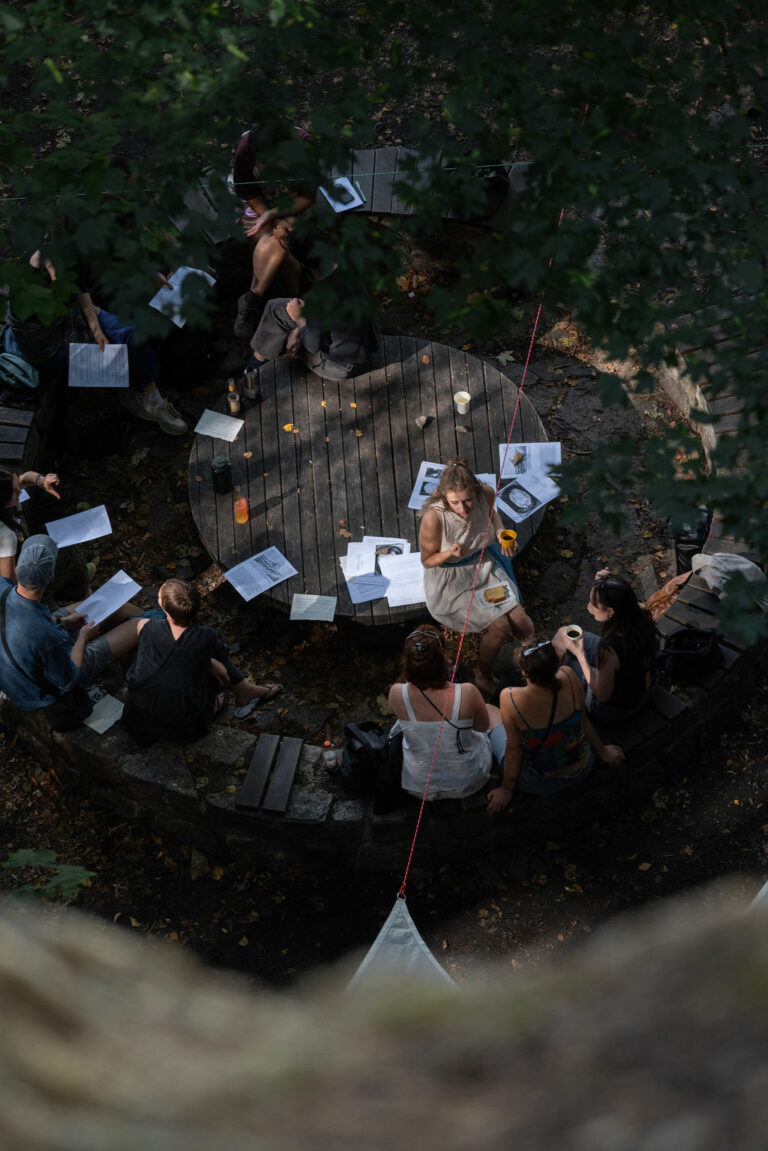
Hydrotherapy festival at ssesi space — © Tereza Oprchalová
On Sunday, October 25, demonstrations took place in several Czech cities, with tens of thousands gathering in Prague’s Old Town Square and surrounding streets. The scale of the protests brought the debate over public-service media funding into the streets and gave visible expression to fears about political pressure on independent cultural institutions.
Whether the current mobilisation can become lasting political influence will depend on the sector’s ability to maintain solidarity, broaden its networks and secure support beyond national borders.
The October municipal and Senate elections dealt a setback to Babiš’s governing coalition, with opposition parties retaining control of the Senate. While the results are unlikely to immediately change the government’s cultural agenda, the Senate’s continued opposition majority could provide an additional check on its legislative plans, including the first reading of the reform of public-service media funding. Whether this political shift will translate into greater protection for independent cultural institutions, however, remains uncertain.
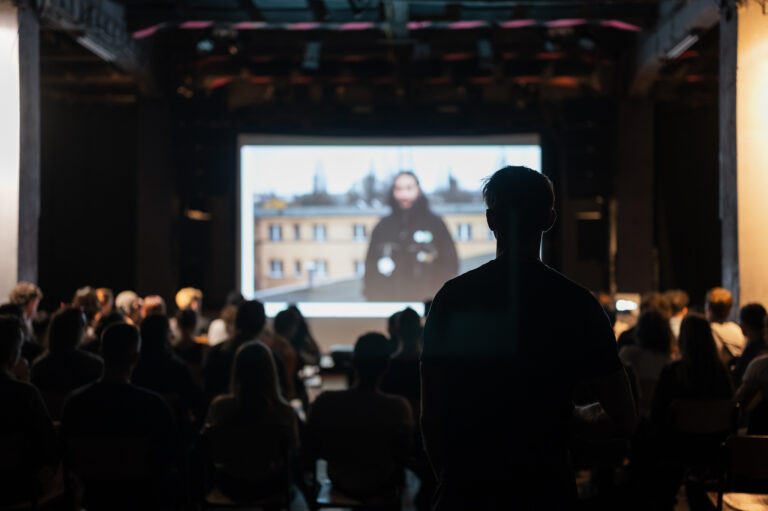
Artist workshop at MeetFactory, Prague — © Libor Galia
References
Jules Eisenchteter, "Slovakia Offers Cautionary Tale for Czech Arts Scene," Reporting Democracy, March 31st, 2026
Czech Culture is Raising the Alarm, Kulturní a kreativní federace, August 2026
Nightivism in Practice, VibeLab, August 2026
Maksym Akimov, "Cultural figures demand Babiš withdraw Klempíř's new cultural policy," Around Prague, Auguts 10th, 2026
Maksym Akimov, "Culture minister Klempíř's strategy comes under fire from other ministries and dozens of organisations," Around Prague, August 12th, 2026
Maksym Akimov, "Thousands protest against Babiš government on Prague's Old Town Square," Around Prague, September 28th, 2026
Pavol Szalai, "Amazing atmosphere at today's protest for democracy in the heart of Prague," LinkedIn, October 2026
Dave Park, "Czech municipal elections 2026: Who were the weekend’s big winners?," Expats.cz, October 11th, 2026
Jules Eisenchteter, "Czech Local Elections Deliver Warning to Babis’s Governing Coalition," Reporting Democracy, October 12th, 2026
Vít Pohanka, "What Czechia’s local election results mean for Andrej Babiš’s government," Radio Prague International, October 12th, 2026
Maksym Akimov, "Czech local elections: ANO loses votes in poorer regions," Around Prague, October 12th, 2026
Petr Kolář, "Na Národní půjdu, dotaci jim nedáme. Klempíř o škrtech, volbách i kritice umělců" (‘I’ll go to Národní; we won’t give them the grant.’ Klempíř on budget cuts, the elections and criticism of artists), iDNES.cz, October 21st, 2026
"‚Totální destrukce české audiovize.‘ Filmaři kritizují Klempířovy škrty" (The total destruction of the Czech audiovisual sector.” Filmmakers criticise Klempíř’s cuts), iDNES.cz, October 23rd, 2026
Vojtěch Kouřímský, "Návrh na zrušení koncesionářských poplatků prošel prvním čtením" (The proposal to abolish licence fees has passed its first reading), Novinky.cz, October 24th, 2026
"‚Média nedáme.‘ Lidé na Staroměstském náměstí protestovali proti rušení koncesionářských poplatků" (‘We won’t give up the media.’ People protested in Old Town Square against the abolition of licence fees), iROZHLAS, October 25th, 2026
Matěj Svozil and Světlana Holečková, "‚Média nedáme!‘ Staroměstské náměstí praskalo ve švech" (“We won’t give in to the media!” Old Town Square was bursting at the seams), Novinky.cz, October 25th, 2026
Published on October 27th, 2026
About the author:
Manon Moulin is the editorial coordinator of all European projects for the non-profit organisation Arty Farty. She specifically works on the European network of independent cultural and media organisations Reset!.
