
Author: Ozan Doğan Avunduk
At the heart of Istanbul’s historic İMÇ market, Oktowallz is redefining what street art can mean in a city shaped by rapid urban change. More than a gallery or studio, the independent initiative founded by Görkem Kızılkayak functions as a collective space where artists can create, collaborate, and sustain one another amid mounting economic and cultural pressures. By transforming a commercial space into a dynamic spot for experimentation and public expression, Oktowallz is helping to build a new infrastructure for Turkey’s contemporary street art scene.
Remap exhibition — © Oktowallz
As an independent cultural hub located in Istanbul’s historic Textile Traders Market (İMÇ), Oktowallz provides a rare sanctuary for collective artistic practice. Founded by curator Görkem Kızılkayak, the platform seeks to overcome the isolation inherent in street art by creating a space centred on solidarity. Offering a physical site for creation, experimentation, and exhibition, Oktowallz serves as a bridge between individual artists and a broader community, providing the infrastructure necessary for independent art to survive and thrive in a challenging economic climate.
Ozan Avunduk: Could you please tell us about yourself? How did you become involved in street art?
Görkem Kızılkayak: I studied archaeology and then art history, focusing on Byzantine art. For many years, I worked in the cultural directorates of various municipalities and at the Foundation for the Protection and Promotion of the Environment and Cultural Heritage (ÇEKÜL). I also have a background in journalism and photography, contributing to titles like Atlas and National Geographic.
My involvement in street art began in 2014 due to a chance encounter at the Pera Museum during the “Language of the Wall” exhibition. The show featured legendary names like Futura, Logan Hicks, Herakut, and Gaia. Since they were in Istanbul, they naturally wanted to paint the city walls, but the museum hadn't planned for street interventions. I managed to locate suitable walls for them, and my reputation grew through word of mouth as a facilitator. I ended up coordinating for artists like Saype, Tobyato, and Ernesto Novo. Eventually, I moved into organising festivals and curating, leading me to open Oktowallz in early 2025 after retiring from my municipal role.
OA: What was the driving spirit behind founding Oktowallz?
GK: Street art is often a lonely pursuit. Artists are like octopuses—independent creatures handling everything alone, from sticking massive stencils to operating cranes in difficult locations. We built Oktowallz to break that isolation. Before opening, we formed an eight-person group including artists like No More Lies and Kaybid to define our goals. The name itself reflects the "Octo" (eight) founders and the multi-armed capabilities of the artists. We built a structure that feeds on solidarity because this work rarely has financial returns. It is a hub modeled after the collective support found in traditional professional gathering spaces; a place where artists can find work and community.
Remap exhibition — © Oktowallz
OA: What exactly happens in this space?
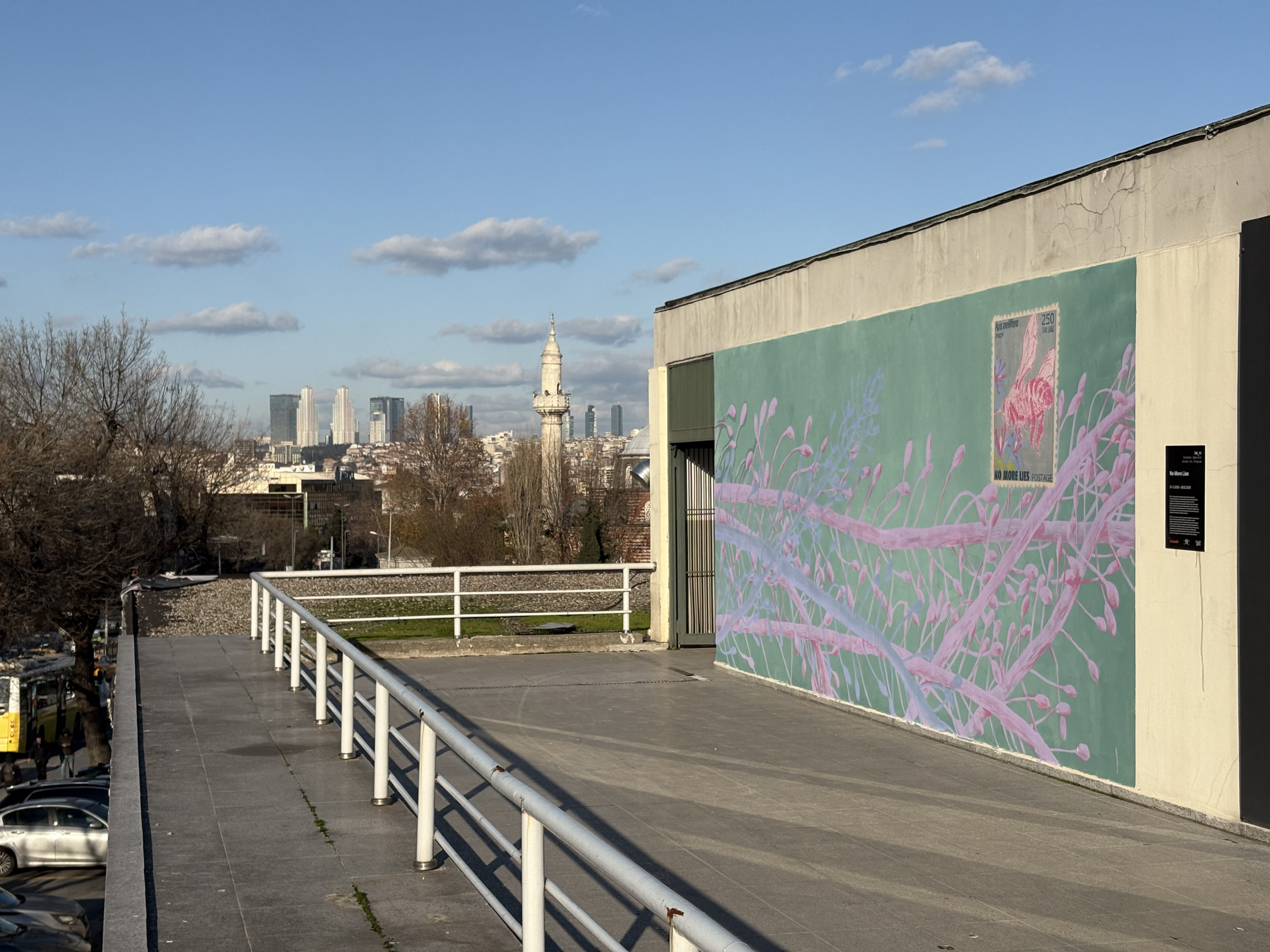
GK: This area is a cross between a studio and a gallery. The process of artistic creation takes place here. For example, No More Lies is currently using our space as a working studio where people can see his production in real-time. Two months ago, we hosted an exhibition here following this same "living studio" philosophy. We also manage a "Wall Gallery" in the second block of İMÇ. This is a legal wall that functions as a rotating gallery; artists express themselves freely and paint over each other's work continuously.
OA: What is the official status of Oktowallz?
GK: Legally, it is an anonymous company, but we function as a "platform." In Turkey, if you are an association, profit-making for sustainability requires special permits. While this space must sustain itself to stay alive, projects like the Wall Gallery are strictly non-profit. Our mindset is that of an association: bringing together people who lack means or experience and opening doors for them. These aren't activities a "real" company would do because they simply aren't profit-focused.
OA: Does Oktowallz connect with other disciplines?
GK: Absolutely. We thrive on interdisciplinary collaboration. In May 2025, we hosted "Street Fight," a collaboration with the restaurant Basta! in Moda. The term "fight" in our world isn't negative; it’s a creative clash that produces something joint. We chose the "Bonito" (Palamut), the fish which was on Istanbul’s first coin as a theme because it comes from the Bosphorus and Golden Horn. While artists painted, guests participated in kitchen workshops. Street art is unique because it grew up alongside music, dance, skateboarding, and even food; it is a whole cultural installation in a public space.
Remap exhibition — © Oktowallz
OA: Why choose the historic İMÇ market as your base?
GK: İMÇ has always evolved throughout its history. It was once the "Record Traders Market" where aspiring 1980s singers slept at the doors to be discovered. Later, it became a hub for textile exports to the Middle East. Today, the 5th block where we are is full of machinery shops, but İMÇ’s core identity is its fusion of art and public space.
In the 1960s, the market's architects commissioned the era’s leading Turkish artists to create massive modernist panels integrated into the building's very structure. Hence, they successfully democratised culture, moving art from elite galleries into the path of every passerby within a bustling commercial hub. We are in continuity with this legacy.
OA: Are the exhibited works for sale?
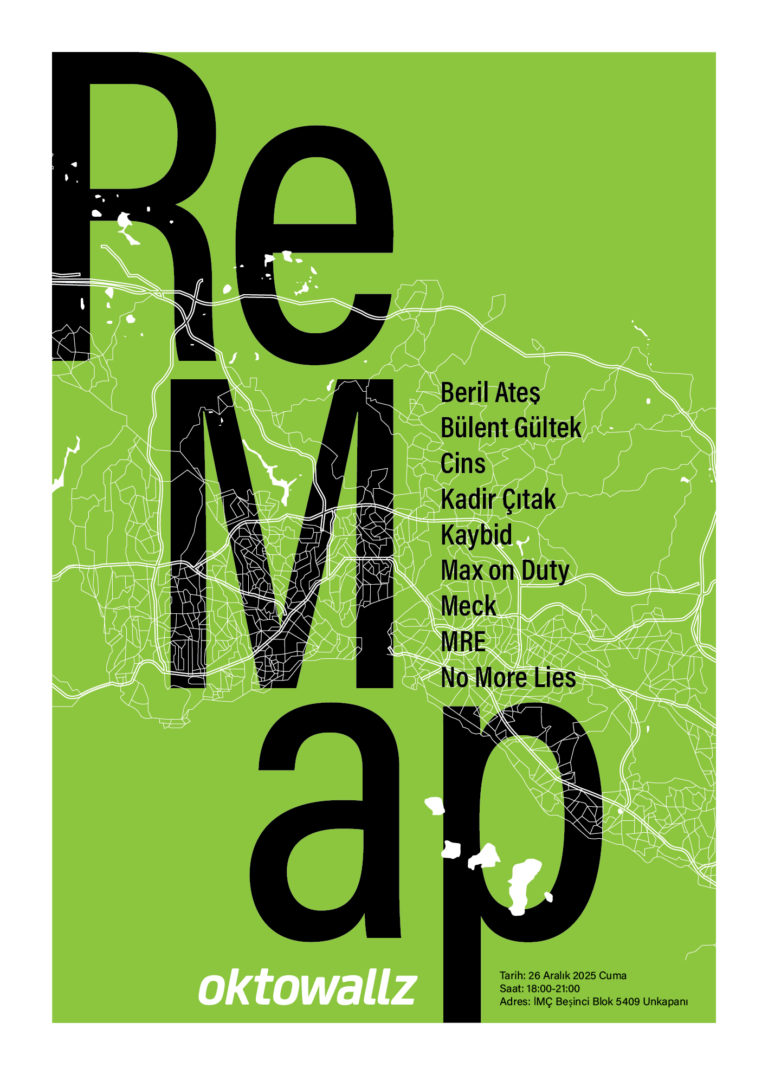
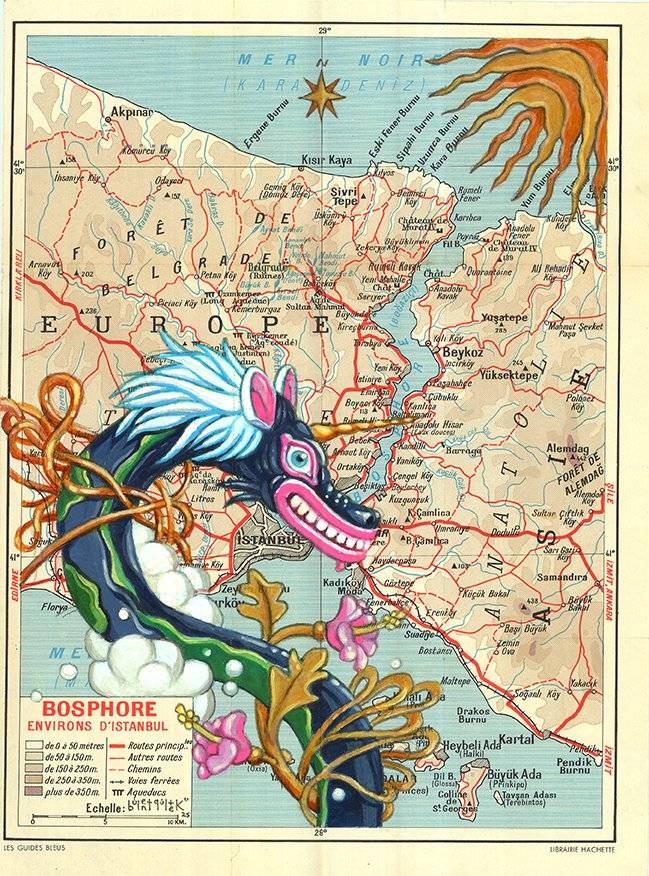
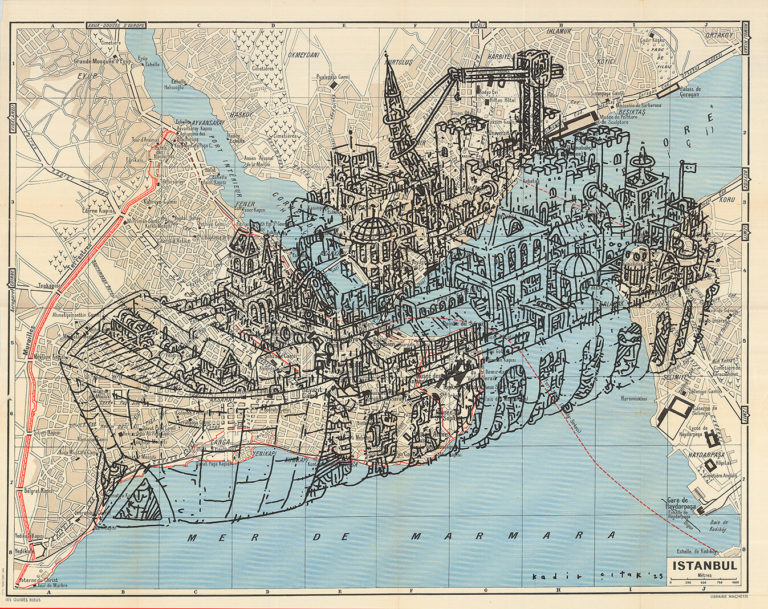
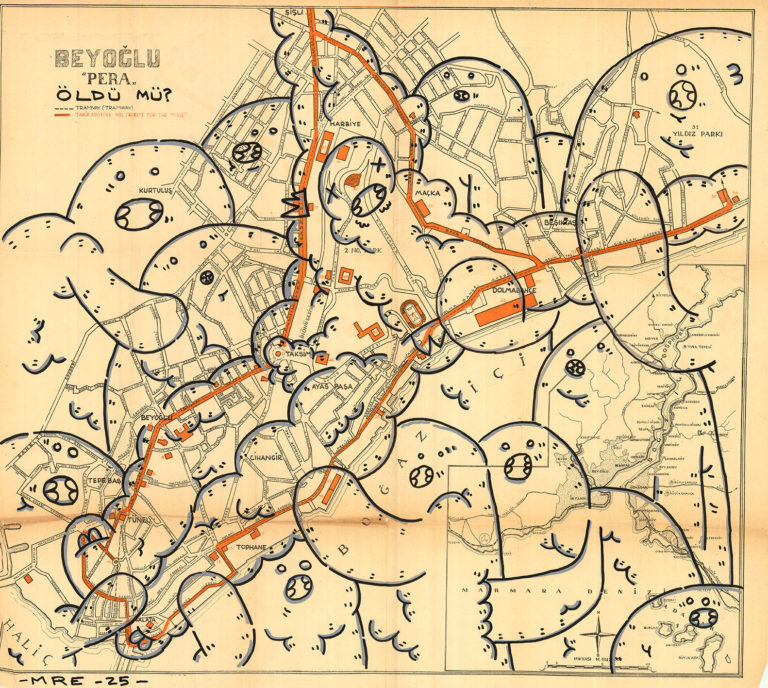
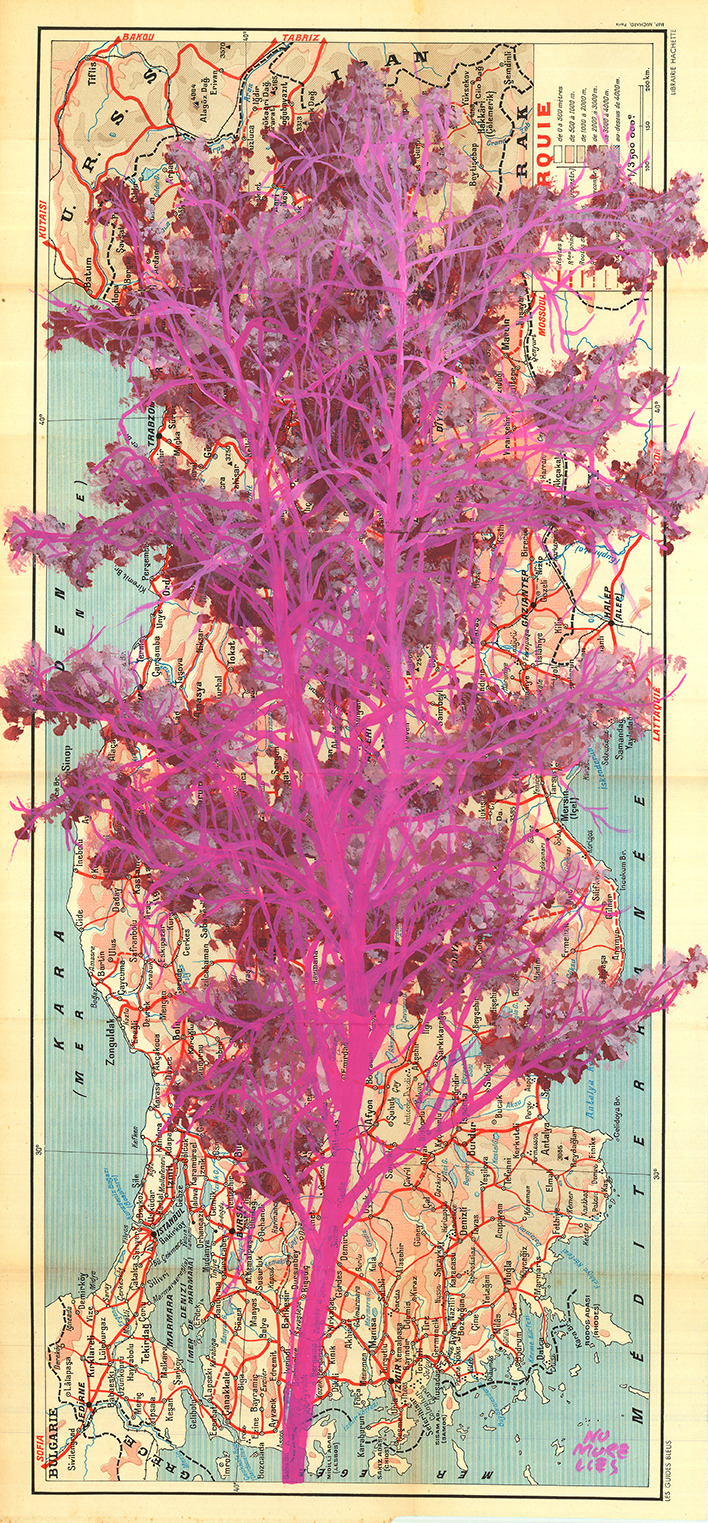
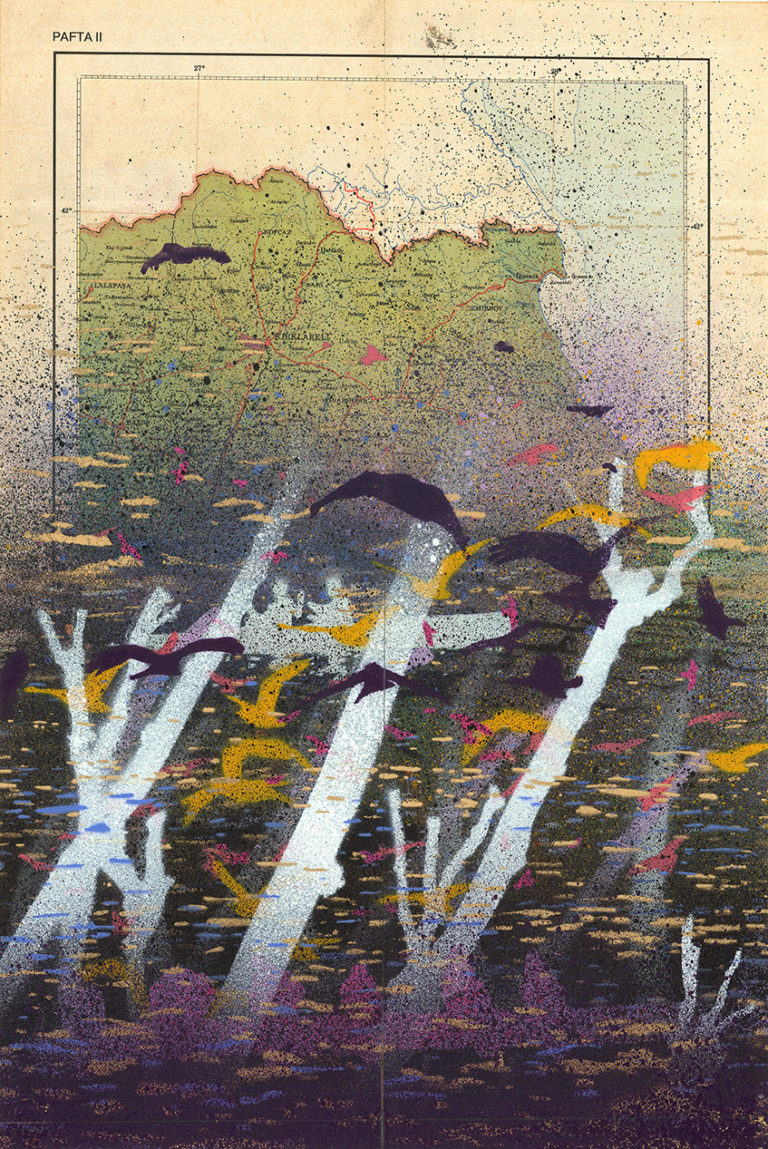
GK: Yes. While the street art collecting community in Turkey is still small, our goal is to show artists that their work has intrinsic value. In our "Remap" exhibition, we took old maps and tourist guides from my personal collection—some dating back to the early 1900s—and gave them to artists to paint over. We also used large 1912 Tsarist banknotes. These experiments provide artists with tools and methods outside of a traditional canvas, helping a community that often lacks the financial means to expand its artistic reach.
OA: How do cultural and economic pressures impact the local scene?
No More Lies: The primary pressure is economic. Street art in Turkey is often a "hobby" because it provides no income. As the economy worsens and inflation rises, the cost of materials prevents young artists from practicing or improving. Furthermore, Turkey’s history with political wall slogans in the 1970s—where people were killed over writing on walls—creates a subconscious fear. Most murals today are artistic rather than political because the "muscles" for political street art weren't much allowed, especially after the repression of Gezi protests, characterised by creative slogans written on walls.
Remap exhibition — © Oktowallz
OA: Can Oktowallz support beginners in this economically pressing environment?
GK: Yes. We specifically exhibit amateurs alongside[1] established artists. Most artists stop after the age of 30 and move to canvas, but we want to foster continuous street production. The up-and-coming street artist, Özce Coşkun, is a great example; she had never held a spray can before joining our community. Through our coordination and tools, she’s now working on her fourth mural in Istanbul’s Beşiktaş district. We want to be a permanent communication point that strengthens this network for anyone who says, "I can do this too."
OA: Where is the heart of street art in Turkey today?
GK: Kadıköy Yeldeğirmeni is prominent, but Beşiktaş is also strong with its "Hall of Fame" walls in Sekbanlar and Ortaköy neighbourhood. Historically, graffiti writers emerged from the rapidly urbanising working-class districts of Bayrampaşa and Gaziosmanpaşa through master-apprentice relationships. Karaköy, another district neighbouring the Bosphorus, was a hub in the 2010s, but as the abandoned buildings there turned into luxury cafes, the walls were "sterilised." Beyond Istanbul, you find quality work in Ankara, Izmir, and Ordu—thanks to initiatives like Uğurcan Ataoğlu’s murals.
OA: What are your structural challenges and future plans?
GK: Finding financial support is the biggest challenge. Local associations have declined to fund our Wall Gallery, yet the community persists—artists like No More Lies paint for free to keep the movement alive. In 2026, we are launching "Under Production" a residency hosting four artists annually for one-month stays. We want to turn our space into a working studio for experiments, making the act of creation visible while exploring how street practice adapts to an indoor environment. We are also planning high school workshops to introduce the history of street art to youth. Finally, we hope to facilitate a major land art project in 2026 with the artist Saype at the Nazca Lines in Peru—Oktowallz’s first major project outside of Turkey. In 2027, we are proud to announce that we will host a photography exhibition by Martha Cooper[2] in Istanbul, bringing her iconic archive back to the city.
References
[1] Initially an environmental sit-in, the Gezi Park Protests in 2013 evolved into a nationwide movement against authoritarianism, characterised by its witty graffiti and satirical slogans.
[2] Martha Cooper is a renowned American photojournalist who has extensively documented New York’s street art scene in the 1970s and 1980s.
Published on June 2nd, 2026
About the author:
With a background in Political Science and Communication from Turkey's Galatasaray University, Ozan Doğan Avunduk holds a master's degree in South West Asia-North Africa Studies from the École Normale Supérieure de Lyon in France. Since 2015, Avunduk's insightful articles and news reports on foreign policy, culture, and minority communities have been featured in various independent outlets. These include Medyascope, Cumhuriyet, and Independent Türkçe in Turkey, and Mediapart, La Lettre du Musicien, and Recherches Internationales in France, where his work continues to appear.
